








The Unwelcome Red Tide
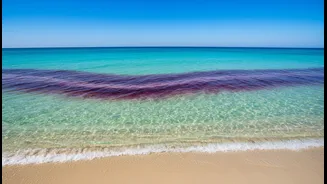
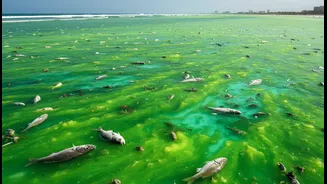
Harmful algal blooms, or HABs, are a growing concern in coastal waters worldwide. These events occur when colonies of microscopic algae grow out of control, producing toxins that can be dangerous to marine life and humans. One notorious culprit is the
diatom Pseudo-nitzschia, which produces a potent neurotoxin called domoic acid. When this toxin accumulates in shellfish like clams, crabs, and mussels, it can cause amnesic shellfish poisoning in people who consume them, leading to symptoms ranging from vomiting to memory loss and even death. The economic fallout is immense. A single major bloom can shut down multi-million dollar commercial fisheries for months, disrupt subsistence harvesting for tribal nations, and devastate coastal tourism as beaches are closed and the public's confidence in seafood safety plummets. The 2015 bloom on the U.S. West Coast, for example, resulted in an estimated $100 million in lost revenue for key fisheries.
A Bloom of Critical Data
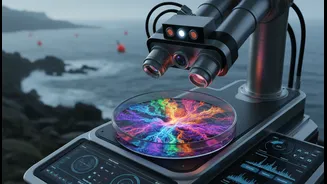
In the midst of this destruction lies a unique scientific opportunity. A massive, naturally occurring bloom serves as a perfect real-world laboratory. Currently, monitoring often involves manually collecting water samples and sending them to a lab for analysis, a process that is slow and labour-intensive. An active bloom allows scientists to deploy and test a vast array of modern monitoring technologies at once. They can gather an unprecedented amount of data on the bloom's entire life cycle—from its initial formation to its peak and eventual decline. This includes information on water temperature, nutrient levels, currents, and salinity, all of which are believed to trigger or sustain a bloom. This data is crucial for developing and refining the next generation of early-warning systems, turning a reactive crisis into a proactive scientific endeavor.
From Reaction to Prediction
The ultimate goal is to move from simply detecting a bloom to accurately forecasting one. Scientists are now harnessing the power of artificial intelligence and machine learning to make this a reality. By feeding massive datasets from past and current blooms into AI models, researchers can teach computers to recognize the complex environmental signals that precede a toxic event. NASA, for instance, has developed an AI tool that fuses data from multiple satellites to identify blooms, even differentiating between specific algal species from space. Other innovations include the use of environmental DNA (eDNA), a technique sensitive enough to detect the genetic markers of a toxic species like Pseudo-nitzschia in a water sample long before it reaches dangerous levels. Another breakthrough involves identifying the specific genes that algae activate just before they begin producing toxins, potentially providing a warning up to a week in advance.
The All-Important Evidence Hurdle
Despite these promising technologies, the headline's caution that "evidence still matters" is a critical piece of the puzzle. A predictive model trained on a bloom in one region may not work in another, where different environmental factors are at play. Scientists must rigorously validate their models with independent data over several years to prove their reliability. Furthermore, not all species of Pseudo-nitzschia are toxic, and even those that are don't produce toxins all the time, a complexity that makes prediction difficult. This is why organizations like the National Oceanic and Atmospheric Administration (NOAA) run experimental forecasting systems, carefully comparing their predictions to real-world observations to build trust and improve accuracy before these tools can be fully relied upon by coastal managers. It's a slow, methodical process of building a body of evidence strong enough to support high-stakes decisions.
A Glimmer of Hope for Coastlines
If these hurdles can be cleared, the benefits will be transformative. A reliable forecast that provides several days' notice could allow shellfish farmers to harvest their stock before it becomes contaminated. It would enable fishery managers to implement more targeted and shorter closures, minimizing economic disruption while still protecting public health. Tourism operators and public health officials could issue timely and precise warnings for specific beaches, rather than blanket closures that cause unnecessary panic and economic loss. By turning the tide on how we manage these events, the data collected from today's harmful blooms could arm coastal communities with the foresight needed to safeguard their health, environment, and livelihoods against the toxic tides of the future.