





A Crisis Measured in Tonnes
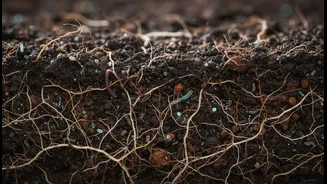
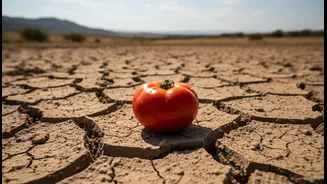
The statistics are alarming. Nearly a third of India's land is degraded, and the country loses an estimated 5.3 billion tonnes of topsoil every year to erosion. This isn't just dirt; it's the fertile foundation of our agricultural economy. Over decades,
intensive farming, imbalanced fertiliser use heavily skewed towards subsidised urea, and over-irrigation have stripped the soil of its vitality. The organic carbon content in our soil, a key indicator of health, has plummeted, leaving vast tracts deficient in essential micronutrients. The consequences are direct: lower crop yields, reduced nutritional quality of food, and diminished resilience to climate shocks like droughts and floods, which are becoming more frequent. This degradation forms a vicious cycle, trapping farmers in a loop of higher input costs and lower returns, directly impacting the nation's ability to ensure stable food access for its population.
When Data Fails to Inspire
To its credit, the government has not been idle. The Soil Health Card (SHC) scheme, launched in 2015, represents a massive data-collection effort, creating one of the world's largest soil databases. The program provides farmers with detailed reports on their soil's nutrient status and recommends appropriate fertiliser dosages. On paper, it's a sound, scientific approach. Studies have shown that when farmers follow the recommendations, it can lead to more balanced fertiliser use and a reduction in input costs. However, the real-world impact has been limited. The problem is one of translation. The cards are often packed with technical jargon that many farmers find confusing. Awareness is one thing, but comprehension and adoption are another. Despite high awareness, many farmers struggle to understand the advice or don't follow it, trusting their local input dealer more. This highlights a fundamental gap: data, no matter how accurate, does not automatically lead to action. Schemes like the SHC and PM-PRANAM are crucial, but they often lack the narrative power to convince and convert.
The Power of a Farmer's Story
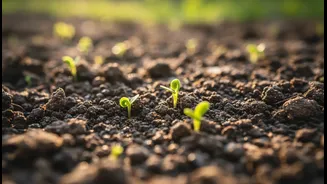
This is where "better soil stories" become essential. What does this mean? It means shifting the focus from abstract data points to tangible, human experiences. It's about finding and amplifying the stories of farmers who have successfully broken the cycle of degradation. Consider Chintaman Ankushrao Paraskar from Maharashtra, who realised chemical fertilisers were a trap and transitioned to regenerative practices, nearly doubling his cotton yield and significantly increasing his income. Or Puttappa Karadi in Karnataka, who used traditional methods like bund plantation and preparing 'Jeevamruth' to enrich his soil without expensive synthetic inputs. These aren't just anecdotes; they are powerful, replicable blueprints for success. When a farmer hears another farmer—not a government official or a scientist—explain in their own words how they revived their land, saved money, and secured their family's future, the message resonates on a completely different level. These stories humanise the issue, providing proof of concept that is both relatable and aspirational.
From Anecdote to National Movement
Building a culture of soil regeneration requires a deliberate effort to collect, celebrate, and disseminate these stories. Success stories are powerful communication tools that can inspire others, share knowledge, and influence policy. They serve as both inspiration and guidance. This involves more than just an occasional media feature. It means creating platforms—community radio shows, farmer-to-farmer knowledge sharing networks, and engaging social media content—where these narratives can thrive. Agricultural extension services, which have traditionally focused on disseminating technical advice, must evolve to become storytellers and community builders. When policymakers are presented not just with statistics on degradation but with a portfolio of verified success stories, the argument for supporting regenerative agriculture becomes more compelling. These narratives can build political will and public support for policies that truly empower farmers to become stewards of the land.