


Makhan Mishri
No Janmashtami bhog is complete without Makhan Mishri, a tribute to Lord Krishna's playful childhood as the beloved 'Makhan Chor' or butter thief. This offering is the simplest to prepare yet holds immense significance. It consists of freshly churned,
unsalted white butter (makhan) gently folded with rock sugar (mishri). The preparation requires no cooking, making it a pure and personal offering that symbolizes innocence and divine love. For the most authentic taste, many devotees prefer to churn butter at home from fresh cream. Garnished with a single Tulsi leaf, this dish is considered Krishna's absolute favourite.
Dhaniya Panjiri
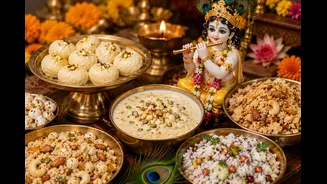
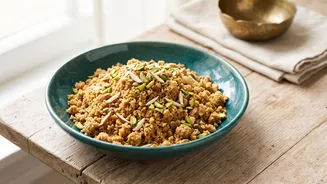
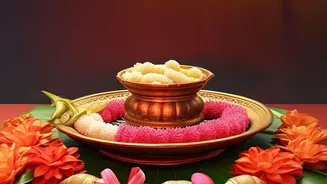
Dhaniya Panjiri is a unique and traditional prasad specifically prepared for Janmashtami, especially in North India. Unlike other panjiris made with wheat flour, this version uses coriander seed powder, making it suitable for those observing a fast (vrat). The coriander powder is roasted in ghee until it releases a beautiful aroma. It is then mixed with powdered sugar, chopped dry fruits like almonds and cashews, and sometimes grated coconut and fox nuts (makhana). This aromatic and nutritious preparation is often the first prasad distributed after the midnight puja to break the fast.
Panchamrit
Panchamrit, which translates to 'five nectars', is an essential part of Hindu puja rituals and is indispensable on Janmashtami. This sacred concoction is made by mixing five key ingredients: raw milk, curd (yogurt), honey, ghee, and sugar. Each ingredient carries symbolic weight, representing purity, prosperity, and strength. Panchamrit is first used for the 'abhishek' or the ritualistic bathing of the idol of Laddu Gopal at midnight, the time of Krishna's birth. Afterwards, it is distributed among devotees as charnamrit, a blessed offering that is both spiritually significant and nourishing.
Makhana Kheer
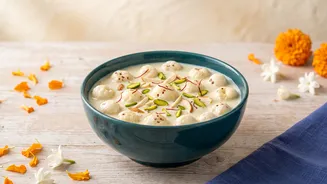
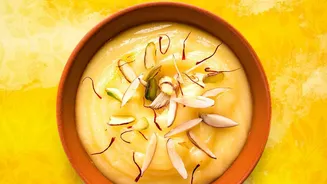
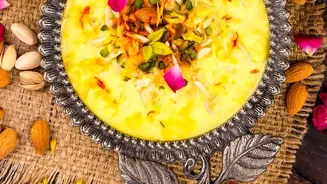
A sweet, creamy pudding is a staple in any festive thali, and Makhana Kheer is a perfect choice for Janmashtami bhog. Makhana, or puffed lotus seeds, are considered a pure food, ideal for fasting menus. To prepare this kheer, the makhanas are first lightly roasted in ghee until crisp, then simmered in milk until they become tender. The pudding is sweetened with sugar and flavoured with cardamom powder and saffron strands. Adding chopped nuts like almonds and pistachios provides a delightful crunch and richness to this velvety dessert. It can be served warm or chilled.
Gopalkala
Gopalkala is a savoury Maharashtrian dish that is deeply connected with the story of Krishna sharing food with his friends, the cowherds (Gopalas). This no-cook recipe is a delightful mix of flattened rice (poha), yogurt, milk, chopped cucumber, and fresh coconut. It is seasoned with green chillies, ginger, and a tempering of ghee and cumin seeds. Some variations also include puffed rice, pomegranate seeds, and soaked chana dal. It is the same delicacy that is famously filled in the 'Dahi Handi' for the festival. Gopalkala represents community, friendship, and the joy of sharing.
Mathura Ke Pede
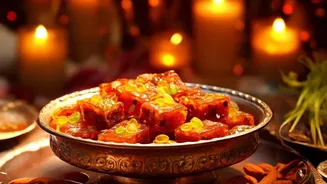
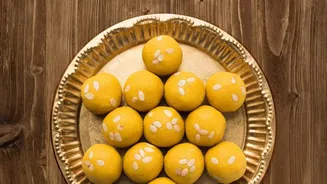
Originating from Krishna's birthplace, Mathura, these pedas are a rich, caramel-coloured sweet that is synonymous with Janmashtami. Unlike the typical white doodh peda, the Mathura version is made by slow-roasting khoya (mawa or milk solids) in a heavy-bottomed pan until it turns a beautiful brown and releases a nutty aroma. This roasted khoya is then mixed with powdered sugar, known as 'boora', and flavoured with cardamom powder. The mixture is then shaped into small, round pedas. Preparing these requires patience, but the melt-in-the-mouth texture and rich flavour make it a worthy offering for the Lord.