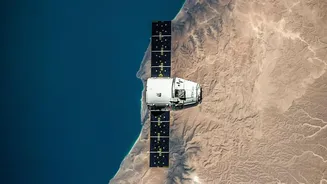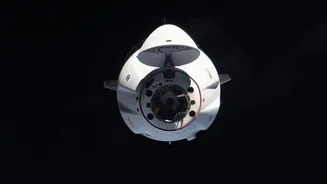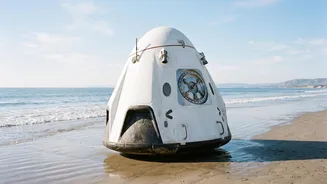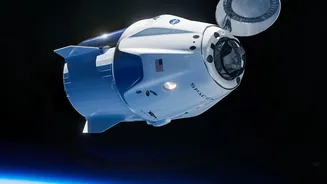




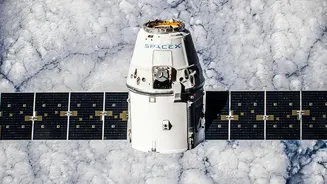
A SpaceX Dragon capsule splashed down safely in the Pacific Ocean on November 21, but the real prize wasn't the spacecraft—it was the thousands of pounds of scientific cargo inside, now back on Earth for analysis.
A Special Delivery From Orbit
The successful return marked the conclusion
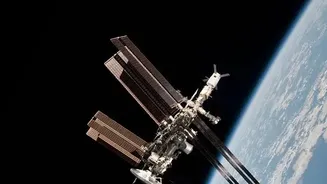
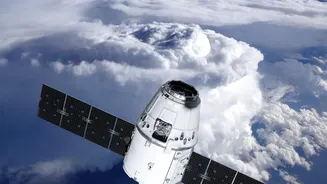
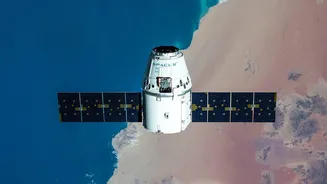
of the 35th Commercial Resupply Services mission (CRS-35) for SpaceX, a key partner in NASA's efforts to keep the International Space Station (ISS) running. Launched on October 13, the unpiloted Dragon capsule spent over a month docked to the orbiting laboratory, delivering more than 6,300 pounds of supplies and new experiments to the astronaut crew. But unlike other cargo vehicles that burn up on reentry, the Dragon is designed for a round trip. Its ability to bring materials safely back to Earth is what makes it a unique and indispensable tool for space-based research, transforming the ISS from just a remote outpost into a fully functioning laboratory with a return service.
A Cargo Hold of Breakthroughs
The experiments returning from orbit hold the potential for significant advances in human health. Among the most anticipated samples are a 3D-bioprinted blood vessel construct, created in space to study cardiovascular disease and the aging process without the complicating effects of gravity. Also onboard were frozen tumor organoids—tiny, lab-grown models of tumors that were treated with chemotherapy drugs while in orbit. By studying how these organoids responded to treatment in microgravity, scientists hope to develop more effective and personalized cancer therapies back on Earth. These medical experiments take advantage of the unique weightless environment to reveal biological processes that are difficult to observe on the ground.
From Microgravity to the Microscope
Not all the science was focused on human cells. The capsule also returned frozen microbial samples to help scientists understand how antibiotic-resistant bacteria survive and evolve in the closed environment of space. This research is crucial for protecting astronaut health on long-duration missions to the Moon and Mars, and it could also provide vital insights into combating 'superbugs' on Earth. The reason these samples must return is simple: the most powerful analytical equipment, from advanced DNA sequencers to high-powered electron microscopes, resides in labs on the ground. The ISS is the workshop, but Earth is where the most detailed blueprint analysis happens.
The Race From Ocean to Lab
For many of the biological samples, the clock started ticking the moment the Dragon capsule hit the water. A swift recovery operation is critical to preserving the integrity of the research. SpaceX recovery teams were on standby to retrieve the capsule from the Pacific Ocean off the coast of California. Once secured, the most time-sensitive scientific cargo is often immediately loaded onto a helicopter and flown to NASA's facilities at the Kennedy Space Center. This rapid return ensures that the effects of microgravity are preserved for study before the cells and tissues begin to readjust to Earth's gravity, maximizing the scientific value of their journey to space and back.
The Business of Orbit
The CRS-35 mission is a prime example of the successful partnership between NASA and commercial companies like SpaceX. Under the Commercial Resupply Services contract, NASA pays private entities to ferry cargo to and from the ISS. This model has allowed NASA to shift its focus and resources toward deep-space exploration programs like Artemis, which aims to return humans to the Moon, while the private sector innovates and builds a robust economy in low-Earth orbit. These routine supply runs, while less dramatic than crewed launches, form the logistical backbone of modern space science, continually delivering on the promise of the International Space Station as a world-class research facility.