



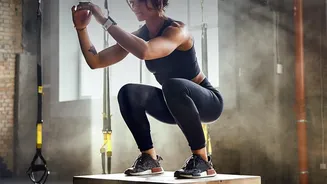
The Power of Three
This entire routine is built on three of the most effective bodyweight exercises: squats, push-ups, and planks. These are known as compound exercises, which means they work multiple muscle groups and joints simultaneously. This makes your workout incredibly
efficient, giving you a full-body challenge in a short amount of time. Squats target your legs, glutes, and core. Push-ups work your chest, shoulders, triceps, and core. Planks are fantastic for strengthening your entire core, including your abs, back, and hips, which helps improve posture and stability. Together, they provide a balanced workout that builds strength and burns calories without needing any equipment or a large space.
Mastering the Squat
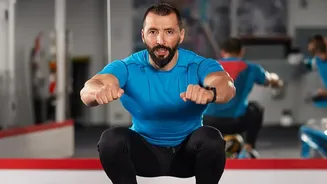
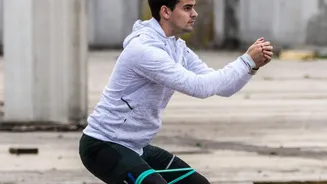
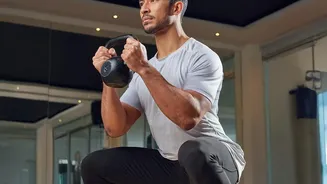
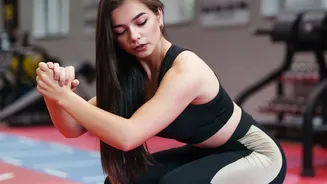
Proper form is key to getting results and avoiding injury. For a bodyweight squat, stand with your feet about shoulder-width apart, with your toes pointing slightly outwards. Keep your chest up and your back straight as you begin the movement by pushing your hips back, as if you're about to sit in a chair. Lower yourself until your thighs are parallel to the floor, or as low as you can comfortably go, ensuring your knees track in line with your feet and don't collapse inward. Push through your heels to return to the starting position. For balance, you can extend your arms out in front of you. If you're a beginner, you can perform a 'box squat' by placing a chair behind you and squatting until you gently touch the seat before standing back up.
Perfecting the Push-Up
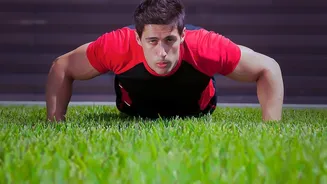
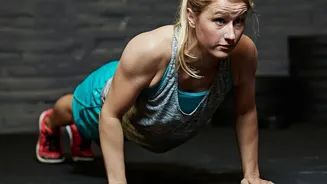
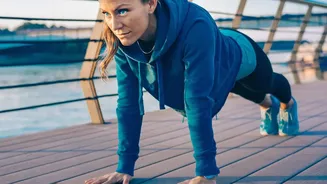
The push-up is a challenging but scalable exercise. To perform a standard push-up, start in a high plank position with your hands slightly wider than your shoulders. Your body should form a straight line from your head to your heels. Engage your core and glutes to keep your back from sagging. Lower your body with control until your chest is close to the floor, then press back up powerfully to the start. If this is too difficult, there are excellent modifications. You can perform push-ups on your knees, which reduces the amount of body weight you have to lift. Another great option for hostel rooms is an incline push-up, where you place your hands on the edge of a sturdy bed or desk. This variation is easier but still highly effective at building upper body strength.
Holding a Strong Plank
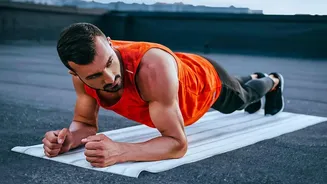
The plank is an isometric exercise, meaning you hold a static position. The most common version is the forearm plank. Lie face down and then lift your body, resting your weight on your forearms and toes. Your elbows should be directly under your shoulders. It is crucial to maintain a straight line from your head to your heels—avoid letting your hips sag or stick up in the air. To ensure you're using the right muscles, tighten your core by imagining you're pulling your belly button towards your spine, and squeeze your glutes. If a full plank is too much, you can start by holding the position on your knees. The goal is to hold the position with perfect form for a set amount of time. Quality is always more important than duration.
The 20-Minute Hostel Circuit
This routine is structured as a circuit, which keeps your heart rate up and the workout engaging. Perform each exercise for a set time, followed by a short rest. Here is a simple structure:1. Warm-up (2 minutes): Start with some light movement like jogging in place, arm circles, and leg swings to prepare your body.2. The Main Circuit (15 minutes): Repeat the following circuit 5 times. Squats: 45 seconds Rest: 15 seconds Push-ups: 45 seconds Rest: 15 seconds Plank: 45 seconds Rest: 15 seconds3. Cool-down (3 minutes): Finish with some gentle stretching. Focus on your quadriceps, hamstrings, chest, and shoulders.This structure is a guideline. Feel free to adjust the work and rest times based on your fitness level. The key is to challenge yourself while maintaining good form throughout.