







The Anatomy of Perfection
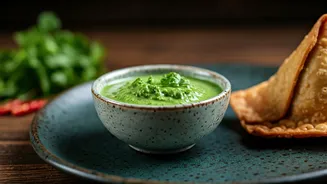
Let’s be honest: calling it just ‘mint chutney’ is an oversimplification. At its heart, it’s a symphony of fresh flavours. The star, of course, is pudina (mint), which provides that signature cool, sharp freshness. But it rarely performs alone. Its most
common partner is dhania (coriander leaves), which adds an earthy, citrusy depth and bulks up the chutney with its vibrant green colour. Then come the supporting artists: green chillies for a fiery kick, a generous squeeze of lemon or lime juice for tang, and often a knob of ginger and a clove of garlic for pungent warmth. A pinch of salt and sometimes black salt (kala namak) ties it all together, creating a flavour profile that is simultaneously cooling, spicy, tangy, and savoury. This complex balance is precisely why it can pair with almost anything; it has a flavour note to complement every kind of dish.
The Ultimate Snack Companion
Imagine a plate of hot, crispy samosas without a bowl of green chutney on the side. It feels incomplete, doesn't it? The same goes for pakoras, bhajis, kachoris, and dhokla. The chutney’s job here is critical: it cuts through the richness and oiliness of fried snacks with its sharp acidity and fresh taste. That cooling mint sensation provides a perfect counterbalance to the heat of both the food and the spices within it. It transforms a simple snack into a multi-layered experience. With kebabs, whether paneer tikka or seekh kebab, the chutney acts as a refreshing counterpoint to the smoky, charred flavours from the tandoor, cleansing the palate and preparing you for the next delicious bite.
The Secret Weapon for Meals
Too many people relegate mint chutney to the role of a side dip, but its true genius lies in its versatility. It is the lifeblood of the iconic Bombay sandwich, slathered generously on bread with slices of cucumber, tomato, and potato. Here, it’s not just a condiment; it’s the primary flavouring agent, infusing every layer with its zesty character. Have some leftover chutney? Don’t let it sit in the fridge. Stir a spoonful into plain dahi to create an instant, flavourful raita that pairs beautifully with biryani or pulao. Use it as a quick marinade for paneer, chicken, or fish before grilling or pan-frying. The acid in the lemon juice helps tenderise the protein while the herbs impart a fantastic flavour. You can even thin it out with a little water and use it as a dressing for a simple kachumber salad.
A Chutney for Every Kitchen
While the classic pudina-dhania combination is the most widespread, countless regional and household variations exist, each telling a story of local tastes and available ingredients. In some homes, a spoonful of yogurt is blended in for a creamier, milder chutney, perfect for those who prefer less heat. In parts of South India, a handful of fresh coconut might be added for a subtle sweetness and texture. Some recipes call for a small onion or tomato to be ground with the herbs, creating a more full-bodied, slightly pungent version. Others add a pinch of sugar to balance the tang, or a few peanuts for a nutty richness. There is no single ‘correct’ recipe. The beauty of mint chutney is its adaptability; it is a reflection of the cook who makes it.
Your Go-To Green Chutney Recipe
Ready to make your own? It couldn't be simpler. Take one large bunch of fresh coriander (dhania) and one smaller bunch of fresh mint (pudina). Make sure to use mostly leaves, as the stems can be bitter. Add 2-3 green chillies (adjust to your spice preference), a 1-inch piece of ginger, 2 cloves of garlic, and the juice of one large lemon. Season with salt to taste and a half-teaspoon of black salt (kala namak) if you have it. Add 2-3 tablespoons of water to help it blend, and blitz everything in a mixer grinder until you have a smooth, bright green paste. Taste and adjust the salt or lemon juice if needed. It will last in an airtight container in the fridge for 3-4 days, but let's be realistic—it will probably be gone long before then.