







The National Water Account
Think of India's water supply as a national bank account, filled annually by the monsoon. The primary savings accounts are the 178 major reservoirs monitored by the Central Water Commission (CWC). These reservoirs are crucial, supplying water for irrigation,
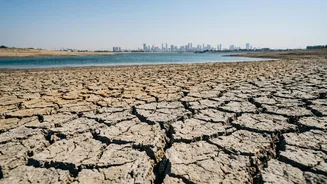
power generation, and, most critically for city dwellers, drinking water. As the 2026 southwest monsoon season concluded with a rainfall deficit, this national account is under stress. By late September 2026, the water stored in these reservoirs was at about 70% of total capacity, which is below both the level recorded this time last year (79%) and the decadal average (76.6%). This shortfall is not uniform; southern states are facing the most significant crunch, with reservoirs at just 50% of capacity, a stark drop from 87% the previous year.
From Distant Dam to City Tap
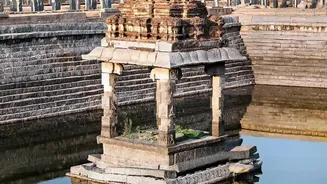
The water in a vast reservoir hundreds of kilometres away doesn't magically appear in an urban apartment. It travels through a complex, often aging, and inefficient network of canals, pipelines, and pumping stations. Major cities like Mumbai, Delhi, and Bengaluru are almost entirely dependent on this system, drawing water from river basins and reservoirs located far beyond their municipal limits. For example, Mumbai relies on a system of seven interconnected lakes, while Delhi draws from the Ganga and Yamuna basins. This journey is where the first set of problems emerge. A significant amount of treated water is lost to leakages in old pipelines, unauthorized siphoning, and general transmission losses, a problem often referred to as 'non-revenue water'. This means that even before a reservoir shortfall, the system is already losing a substantial portion of the water it's meant to deliver.
The Rationing Reality
When reservoir levels drop, water management authorities face a difficult balancing act. With less water in the system, they must prioritize its allocation. Drinking water for cities and villages is given the highest priority, followed by agricultural and industrial needs. To manage the limited supply, municipal bodies are forced to implement rationing measures. This can take several forms: reducing the overall pressure in the water mains, leading to weaker flow; cutting the number of hours water is supplied each day; or implementing rotational cuts where different neighbourhoods receive water on different days. In cities like Mumbai, authorities have already considered a 10% cut in urban water supply following the poor monsoon. These measures are a direct consequence of low storage in dams that feed the city.
The Urban Pressure Cooker
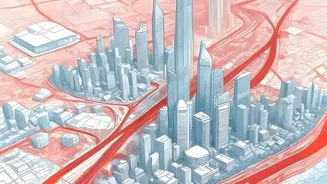
Cities act as a pressure cooker for water scarcity. High population density means a concentrated and massive demand for water every single day. This demand is often amplified by rapid, and sometimes unregulated, urbanisation that paves over natural recharge zones like lakes and wetlands, preventing rainwater from replenishing crucial groundwater tables. As piped supply becomes unreliable due to reservoir shortfalls, a secondary crisis unfolds. Residents, housing societies, and businesses turn to private water tankers or dig their own borewells, placing immense strain on already depleting groundwater reserves. This creates a vicious cycle: as surface water from reservoirs dwindles, over-extraction of groundwater accelerates, making cities even more vulnerable to the next dry spell. This governance failure, more than just a lack of rain, is what turns seasonal shortages into a chronic urban crisis.