





Lohagad Fort, Maharashtra
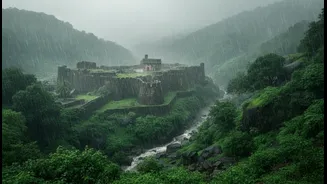
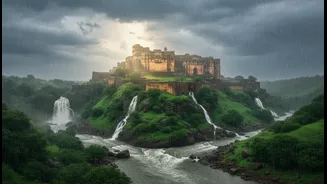
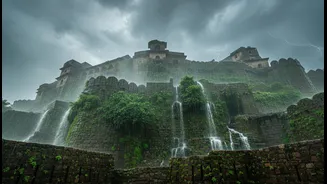
Meaning 'Iron Fort', Lohagad is a quintessential monsoon destination for trekkers and history enthusiasts from Mumbai and Pune. This historic hill fortress in the Sahyadri range, once a strategic outpost for several dynasties including Chhatrapati Shivaji
Maharaj, transforms dramatically with the rains. The climb takes you through misty clouds and lush trails, with panoramic views of the Pavana reservoir below. The fort's most iconic feature is the 'Vinchu Kata' or scorpion's tail, a long, fortified spur that juts out into the cloud-covered valley, offering a truly spectacular and atmospheric view that is best experienced during the monsoon months. The entire plateau turns a vivid green, making the ancient, crumbling ramparts feel alive with history and nature.
Kumbhalgarh Fort, Rajasthan
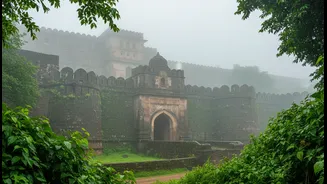
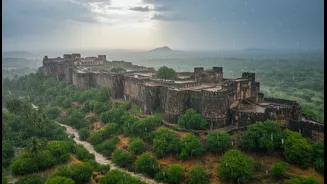
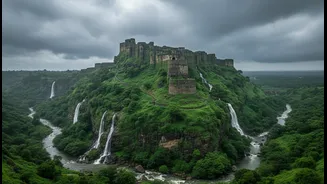
Forget the image of a dry, sun-scorched Rajasthan; the monsoon completely reimagines the landscape around Kumbhalgarh Fort. This UNESCO World Heritage site is famous for its colossal wall, the second-longest in the world, which snakes for 36 kilometres through the Aravalli hills. During the rainy season, these hills shed their brown coat for a vibrant green, creating a stunning contrast with the fort's stone structure. Clouds and mist drift dramatically around the fort's 13 peaks, making an exploration of its palaces and temples feel like a walk through a forgotten kingdom. The cool, rain-washed air and sweeping views from the ramparts offer a cinematic experience of Rajput grandeur.
Mandu, Madhya Pradesh
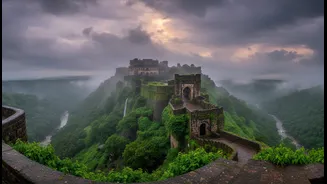
Mandu is not just a single fort but an entire fortified city that becomes a romantic, green paradise during the monsoon. This historical gem in Madhya Pradesh is dotted with magnificent palaces, ancient mosques, and grand gateways, each telling tales of its rich past, including the legendary love story of Baz Bahadur and Rani Roopmati. The rains rejuvenate the entire plateau; baobab trees stand against lush landscapes, and the city's many lakes and reservoirs fill to the brim. Exploring structures like the Jahaz Mahal (Ship Palace), which appears to be floating on water, or Roopmati's Pavilion, shrouded in mist with views of the valley below, is a truly enchanting experience. The monsoon adds a layer of mystical allure to Mandu's architectural wonders, making it a perfect escape.
Gagron Fort, Rajasthan
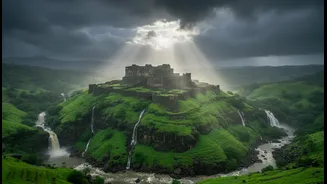
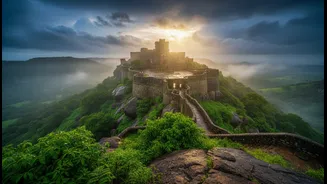
A testament to ancient strategic brilliance, Gagron Fort in Jhalawar is one of Rajasthan's most unique hill forts, classified as a 'Jal Durg' or Water Fort. It is naturally protected, surrounded by the swelling waters of the Ahu and Kali Sindh rivers on three sides and a hill on the fourth. During the monsoon, this setting becomes incredibly dramatic and picturesque. As the rivers fill with rainwater, the fort appears to be an island fortress, emerging from a sea of lush greenery and swirling water. The mist that often floats around its ancient walls enhances its otherworldly charm, making it a spectacular sight for history buffs and photographers looking for a unique monsoon destination away from the crowds.
Bekal Fort, Kerala
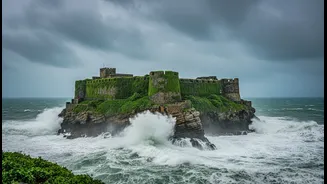
Offering a different kind of monsoon magic, Bekal Fort in Kerala provides a stunning intersection of history, land, and sea. As the largest fort in the state, its ramparts run along a headland that offers commanding views of the Arabian Sea. During the monsoon, this experience is amplified. The stone walls, darkened by rain, stand in stark contrast to the churning, grey sea and the vibrant green of the manicured lawns within. The sight and sound of powerful waves crashing against the fort's base, sending spray high into the air, is an invigorating spectacle. Unlike a misty hill fort, Bekal offers a powerful, elemental display of nature meeting history, making it a captivating coastal destination during the rainy season.