





A Lifeline from the Stars
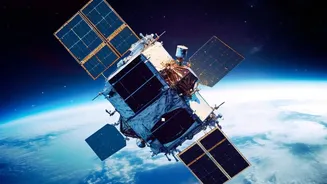
Since the early days of Russia's full-scale invasion, Elon Musk's SpaceX has provided Ukraine with a critical communications backbone through its Starlink satellite internet service. When ground-based networks were destroyed or jammed, Starlink terminals
offered a reliable connection for the Ukrainian military, government, and civilians. More than just for emails and calls, the service became integral to battlefield operations. It's used for everything from basic communication between units to guiding advanced drones for reconnaissance and strikes against Russian forces. The military-grade version, known as Starshield, offers enhanced security and is specifically designed for government use, with its provision in Ukraine funded by the US Department of Defense. This dependence has made Starlink an indispensable tool in Ukraine's defensive efforts.
The Sudden Disruption
The latest dispute erupted around October 14, 2026, when Ukrainian military officials reported that their Starshield service was suddenly and unexpectedly restricted. They received no prior warning before discovering that the system now had a speed cap, cutting out when terminals moved faster than 100 miles per hour (160 km/h). This seemingly technical change had immediate and severe operational consequences, disrupting several active military missions. According to Ukrainian sources, the speed limit is too slow for their interceptor drones, which are designed to hunt down and destroy Russia's jet-powered Shahed-type attack drones. This throttling effectively blunts one of Ukraine's key defensive tools, leaving it more vulnerable to aerial attacks.
Who Is Behind the Restrictions?
Figuring out who ordered the change has become a flashpoint. Elon Musk stated that Starshield systems are owned and controlled by the U.S. government, and therefore any limits on speed or usage are decided by the U.S. military and, ultimately, the President. He distinguished this from the commercial Starlink service, which he said is limited to defensive activities. Reports soon emerged citing anonymous U.S. and Western officials who claimed the order to slow the service came from within the White House. However, the specific official who made the decision was not identified, and one senior official told reporters the order did not come directly from President Donald Trump. For his part, President Trump also denied he or Musk was responsible for the limits. This has created a confusing picture, with Ukrainian officials caught between SpaceX and the U.S. administration.
Political Pressure and 'Safety Warnings'
The 'safety warnings' in this dispute are not about technical glitches, but about geopolitical red lines. The Starlink restrictions are widely seen as linked to pressure from the Trump administration for Ukraine to stop its drone strikes on Russian oil refineries. This move coincides with a period of strained relations, including a temporary halt in the sharing of U.S. intelligence on incoming Russian ballistic missiles, which left Kyiv without crucial warnings for several days. Ukrainian President Volodymyr Zelenskyy called the Starlink throttling a 'very dangerous and unpleasant surprise'. The implicit warning is clear: continuing strikes on Russian energy infrastructure could result in the loss of critical support technologies provided by Western partners, a move Ukrainian officials have described as a form of blackmail that endangers their defense capabilities.
The Uncomfortable Precedent
While service was reportedly stabilized at the capped speed, the incident highlights Ukraine's precarious dependence on a service controlled by a private company and its foreign government partner. This episode has triggered a broader debate about the immense power private technology firms now wield in international conflicts. A single decision, whether made in a corporate boardroom or a government office thousands of miles away, can directly impact a nation's ability to defend itself. The controversy has prompted concern among lawmakers and analysts, who see a dangerous precedent being set for the use of private technology in foreign wars. It raises fundamental questions about accountability, sovereignty, and the rules of engagement when a commercial service becomes an essential weapon of war.