




More Than Just Rice and Dal
Let’s be honest. When you hear the word ‘Khichdi’, it might not immediately evoke the same glamour as a Biryani or the richness of a Butter Chicken. For many, it’s associated with illness, a bland prescription for a delicate stomach. But to confine Khichdi to the sickbed
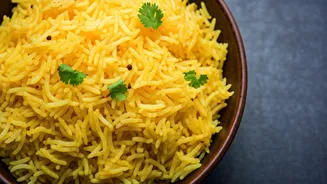
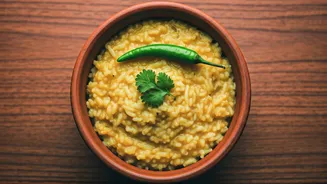
is to misunderstand one of the most profound, versatile, and deeply comforting dishes in our culinary heritage. At its core, it is a humble mix of rice and lentils, but in its soul, it is a canvas for memory, tradition, and unconditional nourishment. It’s the first solid food for a baby and the gentle meal for an elder. It’s the quick weeknight dinner for a busy professional and the elaborate ‘bhog’ offered during pujas. Far from being a compromise, Khichdi is a choice—a choice for simplicity, for health, and for a taste of home that is both ancient and immediate.
A Dish with Deep Roots
Khichdi is no modern invention; its lineage stretches back centuries. References to ‘Kiccha’, a dish of rice and pulses, appear in ancient Indian texts. The Greek ambassador Seleucus Nicator, who visited India around 300 BC, noted that a rice-and-pulse dish was immensely popular among the people. The famous Moroccan traveller Ibn Battuta wrote about ‘kishri’ during his stay in India in the 14th century, describing it as a daily staple. Even the Mughals, known for their lavish and meat-heavy cuisine, adopted and elevated it. Emperor Jahangir was reportedly so fond of a spicy variant, the ‘Lazizan’, that it became a royal favourite. This long and storied history proves that Khichdi is not just food; it’s a cultural artefact that has been cooked, adapted, and loved across kingdoms, regions, and generations. It has survived because its fundamental promise—a wholesome, complete meal—is timeless.
The Science of Comfort
Why does Khichdi feel like such a hug in a bowl? The answer lies in both its composition and our psychology. Nutritionally, the combination of a cereal (rice) and a legume (dal) creates a complete protein profile, providing all the essential amino acids your body needs. It’s light on the digestive system, which is why it’s recommended when you’re unwell—your body doesn’t have to work hard to extract nutrients. The warm, soft texture is inherently soothing. Psychologically, it’s a food steeped in nostalgia. For most of us, it’s linked to memories of being cared for by our mothers or grandmothers. This association with safety, care, and home is powerful. Every spoonful doesn’t just deliver sustenance; it triggers a deep-seated feeling of being looked after, a sensation that is universally comforting.
A Canvas for Every Occasion
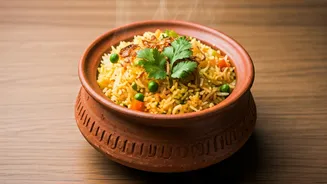
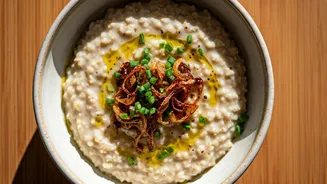
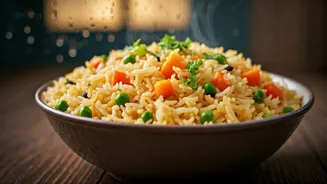
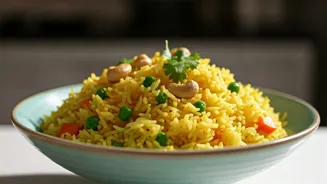
The true genius of Khichdi is its incredible adaptability. It is a testament to India’s diversity. In Bengal, the ‘Bhog’er Khichuri’ served during Durga Puja is a fragrant, semi-dry preparation with roasted moong dal and vegetables. In Gujarat, the ‘Vaghareli Khichdi’ is a spicy, flavour-packed affair, tempered with mustard seeds, cumin, and curry leaves. Head south, and you find its cousin, Pongal, a creamy dish laced with black pepper and cashews. In Uttar Pradesh and Bihar, it's a staple during the Makar Sankranti festival. Some like it runny like a porridge, others prefer it firm like a pulao. Some add a medley of winter vegetables, while others keep it starkly simple. This ability to shapeshift according to region, occasion, and personal preference is why it never gets boring and always feels right.
The Four Pillars of Perfection
A great Khichdi is rarely served alone. It is held up by its four loyal companions, often referred to as ‘Khichdi ke chaar yaar’ (the four friends of Khichdi). First, there's Ghee. A generous dollop of golden, fragrant ghee melting into the warm grain is non-negotiable. It adds richness, flavour, and a host of health benefits. Next is Dahi (curd). The cool, tangy yogurt provides a perfect contrast to the warm, savoury Khichdi. Third is Papad. The crunchy texture of a roasted or fried papad breaks the monotony of the soft meal, adding an element of fun to every bite. Finally, there's Achaar (pickle). A spoonful of spicy, tangy mango or lime pickle cuts through the subtlety of the Khichdi, awakening the palate. Together, these four elements transform a simple meal into a perfectly balanced feast of flavours and textures.