






First Steps: The Post-Wear Wipe Down
The most crucial habit for jewellery care is also the simplest: wipe it down after every use. Before you store your pieces, take a soft, dry, lint-free cloth, like a microfibre or chamois cloth, and gently wipe away any skin oils, sweat, or makeup residue.
This single step is the most effective way to prevent long-term damage and build-up, especially for materials sensitive to moisture and chemicals. Put your jewellery on last (after makeup and perfume) and take it off first to minimise exposure.
A Deeper Clean for Metals
For most metal and fashion jewellery that has become dull, a simple cleaning solution works wonders. Mix a few drops of mild dish soap into a bowl of lukewarm—never hot—water. Soak the pieces for 5-10 minutes. You can then use a very soft-bristled toothbrush, like one for babies, to gently scrub crevices and remove stubborn grime. Rinse thoroughly under clean water and, most importantly, pat dry completely with a soft cloth before storing. Any lingering moisture can accelerate tarnishing.
Special Care for Kundan, Polki and Meenakari
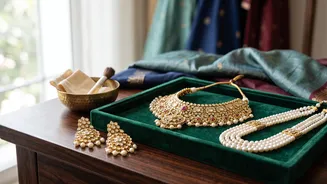
Traditional Indian jewellery like kundan, polki, and meenakari requires a 'dry clean' only approach. These pieces often use lac, a natural resin, to set the stones, which can be permanently damaged by moisture. Never soak these items in water. Instead, use a very soft, dry brush to gently sweep away dust from the intricate settings. For any spots, use a cotton swab that is only barely damp with a mild soap solution, carefully cleaning around the metal without touching the stones, and dry immediately.
Handling Pearls and Porous Stones
Pearls are organic gems and are extremely delicate. Like kundan, they should never be submerged in water, as this can weaken the silk thread they are often strung on. To clean pearls, wipe them with a soft cloth dampened with a solution of mild soap and distilled water. Avoid tap water due to its chemicals. Always lay pearl strands flat to dry to prevent the string from stretching. Store them separately in a soft pouch to prevent harder gemstones from scratching their surface.
Tackling Tarnish on Silver and Plated Jewellery
Tarnish is a natural reaction, especially for silver. For light tarnish, a paste of baking soda and water can be gently rubbed onto the piece with a soft cloth, then rinsed and dried thoroughly. For gold-plated items, avoid abrasive cleaners. A gentle wash with mild soap and water is the safest method to remove grime without stripping the plating. For both, a specialised polishing cloth can restore shine after cleaning. Oxidised silver should only be wiped with a dry cloth, as cleaning can remove the intended dark finish.
Smart Storage to Prevent Damage
How you store your jewellery is as important as how you clean it. To prevent scratches and tangles, store each piece individually. Soft fabric pouches, anti-tarnish bags, or a jewellery box with separate compartments are ideal. For long necklaces, threading them through a straw or a cardboard tube before clasping can prevent them from tangling in a drawer. Keeping your jewellery in a cool, dry place away from direct sunlight will also help prevent fading and moisture damage.