


An Old Foe from the Apollo Era
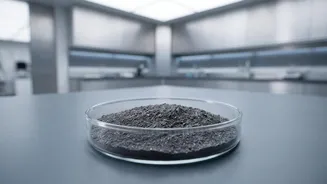
When Apollo astronauts first walked on the Moon, they encountered an unexpected challenge. The fine, grey powder covering the surface, known as lunar regolith, got everywhere. It clung to their spacesuits, scratched visors, clogged mechanisms, and followed
them back into the lunar module. Once inside the pressurised cabin, astronauts reported it smelled like spent gunpowder. Apollo 17's Harrison Schmitt even experienced what he called "lunar hay fever"—sneezing, watery eyes, and a sore throat from inhaling the fine particles. This wasn't ordinary dust. Formed over billions of years by micrometeorite impacts, and with no wind or water to smooth its edges, lunar dust is sharp, abrasive, and microscopic, like tiny shards of glass. It's also electrostatically charged by solar radiation, which makes it incredibly sticky. The short Apollo missions proved that dust was a serious nuisance; for the long-term lunar bases planned under the Artemis program, it’s a critical threat.
The Danger of Landing Itself
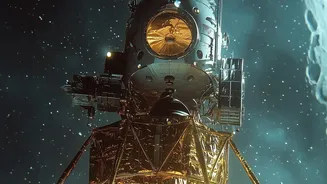
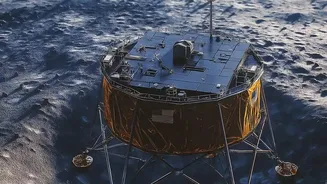
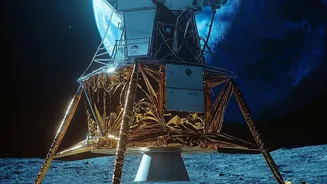
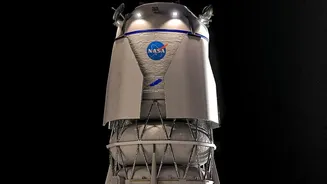
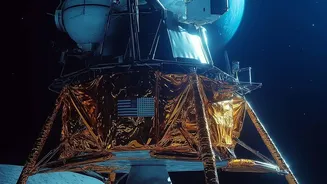
One of the biggest concerns for NASA's Artemis missions is the moment of landing. A lander’s powerful engine exhaust hitting the loose lunar surface creates a high-velocity spray of dust and rock. This phenomenon, called plume-surface interaction, is not fully understood, which is why NASA has initiated a new series of complex experiments. At its Langley Research Center, teams are firing rocket plumes at simulated moon dirt inside a massive 60-foot vacuum chamber. These tests, which last only about six seconds each, are designed to measure how the dust cloud forms, how fast the particles travel, and where they go. The data is crucial because this lunar "sandblasting" can damage the lander itself, as well as any nearby science experiments, solar panels, or future habitats. Understanding these physics is pivotal for ensuring the safety of the crew and the success of the mission.
Abrasive, Toxic, and Everywhere
The challenges posed by lunar dust extend far beyond the landing zone. Its abrasive nature can wear away at spacesuit fabrics, seals, and moving parts. Dust coating solar arrays could reduce power generation, while layers on radiators could cause critical equipment to overheat. The health risks are also a major concern. While the Apollo astronauts' symptoms were temporary, studies on simulated lunar dust have shown it can be toxic to human lung and brain cells. Long-term exposure could lead to serious respiratory conditions, such as bronchitis or even an increased risk of cancer, similar to the health issues faced by miners on Earth from inhaling rock dust. As NASA and other space agencies plan for extended stays on the lunar surface, protecting astronauts from inhaling this potentially harmful material is a top priority.
The Hunt for a Solution
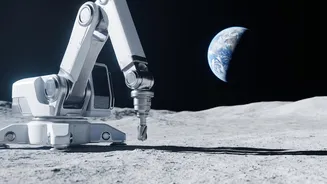
Recognising the severity of the problem, NASA is exploring a host of innovative solutions. Several projects are focused on developing dust-repellent technologies. One promising concept is the Electrodynamic Dust Shield (EDS), a transparent layer with embedded electrodes that can be woven into fabrics or placed on surfaces like solar panels. With the flick of a switch, it creates an electric field that actively repels and blasts away clinging dust particles. Other research involves creating special coatings and materials that are naturally less sticky. The Regolith Adherence Characterization (RAC-1) experiment, for instance, is testing 15 different materials to see which ones best resist dust accumulation in the actual lunar environment. For the plume problem, engineers are modeling different landing trajectories and engine designs to minimise the dust kicked up during arrival and departure.