


The Foundation: Understanding Tree Pose
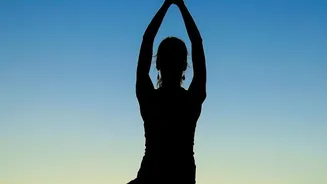
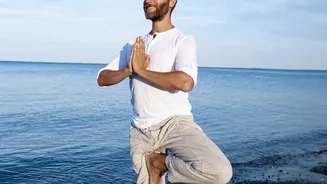
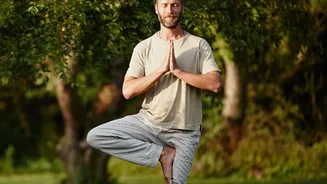
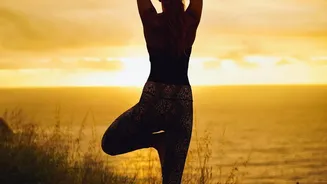
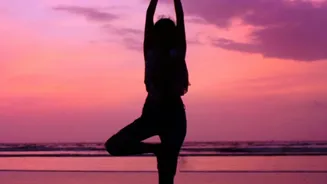
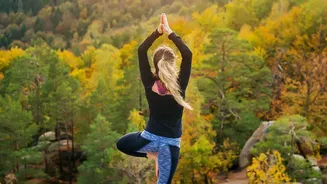
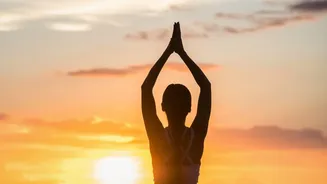
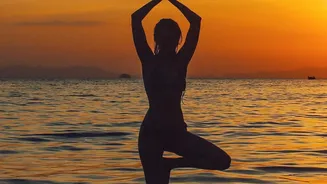
Vrksasana, or Tree Pose, is often one of the first balancing postures a yoga practitioner learns. It's a symbol of stability and growth, teaching us to root down through one leg to rise tall. The primary goal is to find stillness by grounding through all four
corners of the standing foot, engaging the leg muscles, and keeping the hips level. The lifted foot is placed on the inner calf or thigh—never directly on the knee—creating a circuit of energy as the foot presses into the leg and the leg presses back. This posture cultivates focus, strengthens the ankles and legs, and gently opens the hip of the bent leg. It's a meditative pose that asks for calm concentration and a steady gaze, or 'drishti', to maintain balance.
The Challenge: Exploring Half-Moon Pose
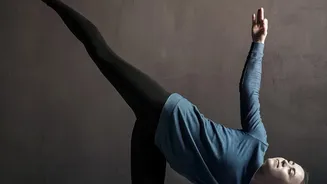
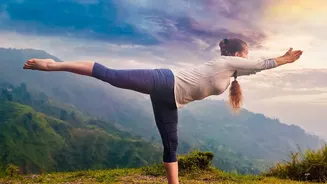
Ardha Chandrasana, or Half-Moon Pose, takes the concept of one-legged balance and turns it on its side—literally. While Tree Pose is about vertical alignment and stillness, Half-Moon is a posture of expansive, horizontal energy. It requires you to balance on one leg and one hand while opening your entire body to the side, with the other leg lifted parallel to the floor and the other arm reaching for the sky. This pose is a fantastic tool for building strength in the standing leg's outer hip, glutes, and ankle stabilizers. It also demands significant core engagement and an open chest, making it a powerful posture for improving coordination and proprioception—your body’s awareness of its position in space.
Shared Principles of Balance
At first glance, the upright Tree and expansive Half-Moon seem like polar opposites. However, they are built on the same foundational principles. Both require a fiercely engaged standing leg, from the foot all the way up to the gluteus medius (the outer hip muscle), which prevents the hip from sinking. Both depend on a strong, active core to stabilize the torso and prevent wobbling. And in both postures, a steady drishti is non-negotiable for maintaining focus and equilibrium. The micro-adjustments your ankle makes in Tree Pose are the very same skills needed to find stability as you shift your weight forward into Half-Moon. They are two different dialects of the same language of balance.
How Half-Moon Elevates Your Tree Pose
This is where the real magic happens. Practicing Half-Moon can profoundly inform and improve your Tree Pose. The intense external rotation and hip-opening required in Half-Moon directly translates to a more open and accessible Tree Pose. The strength you build in your standing leg's outer hip in Ardha Chandrasana is precisely what prevents you from 'sinking' into your hip in Vrksasana, allowing for a taller, more stable posture. Furthermore, the dynamic nature of Half-Moon teaches your body to manage balance while in motion. This skill makes your Tree Pose more resilient, preparing you to explore variations like side-bending ('swaying' tree) or even closing your eyes, which dramatically challenges your stability.
Creative Variations and Transitions
Instead of seeing these as separate poses, think of them as partners in a dance. A popular and challenging vinyasa is the transition from Tree Pose to Half-Moon Pose. From a stable Tree, you can begin to hinge at the hips, reaching the hand toward the floor or a block as you simultaneously extend the lifted leg back. This slow, controlled movement builds incredible strength and body awareness. Conversely, you can bring Half-Moon principles into your Tree. Try a 'Half-Moon Tree Pose' by maintaining your Tree legs while hinging slightly and extending one arm out to the side, mimicking the shape of Ardha Chandrasana. This hybrid challenges your balance in a new plane, reinforcing the core and hip engagement learned from both postures.