





The Ultimate Insurance Policy
Sending humans to space is inherently risky, a dance with controlled explosions where millions of components must work perfectly. The most dangerous phase is the launch, when the rocket, essentially a guided missile, is packed with immense energy. If
anything goes wrong—a structural failure, an engine malfunction, a guidance error—the astronauts have mere seconds to escape. This is where the Crew Escape System (CES) comes in. It's an astronaut's ultimate insurance policy, a dedicated system designed to pull the crew module away from a failing rocket and carry them to safety. For ISRO, ensuring this system is flawless is not just a technical requirement; it's a foundational philosophy. Before India's Vyomanauts can soar to the stars, the agency must prove it can bring them back from the brink of disaster.
Learning from History's Hard Lessons
The history of spaceflight is written with both triumphant successes and devastating failures. Tragedies like the Apollo 1 fire on the launchpad and the Space Shuttle Challenger explosion during ascent serve as stark reminders of what's at stake. These events have deeply influenced modern spacecraft design, embedding safety and redundancy into every layer. ISRO has meticulously studied these historical lessons. The Gaganyaan mission's safety protocols, particularly the CES, are a direct result of this analysis. The logic is simple and uncompromising: human safety is paramount. By prioritizing abort tests, ISRO demonstrates a commitment to a safety-first culture, proving its systems in the most demanding scenarios on the ground before ever putting a human life on the line in the air.
Simulating Every Possible Failure
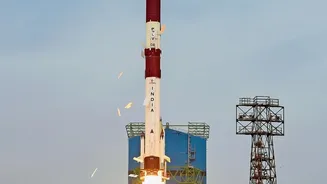
The abort system must work perfectly in several different, high-stress situations. To validate this, ISRO has planned a series of complex tests. One key scenario is the 'Pad Abort Test', which simulates an emergency on the launchpad itself, before or during ignition. In this test, the CES must fire its powerful motors to lift the crew module clear of a potential explosion at the pad. Another, more complex, scenario is the 'In-Flight Abort'. Tests like the TV-D1 mission demonstrate an abort during the ascent, when the rocket is travelling at supersonic speeds and experiencing maximum aerodynamic pressure. In this situation, the CES not only has to pull the crew module away but also steer it safely out of the rocket's path before deploying parachutes for a controlled descent and splashdown in the sea. Each test verifies the performance of a host of systems: the quick-acting solid motors, the reorientation thrusters, and the multi-stage parachute deployment that slows the capsule for a safe landing.
A 'Tractor' System for a Proven Escape
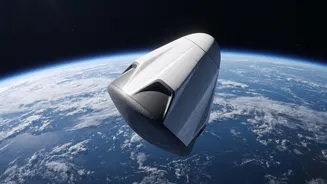
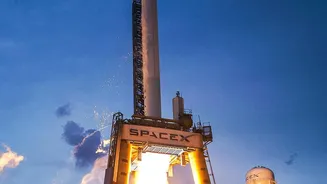
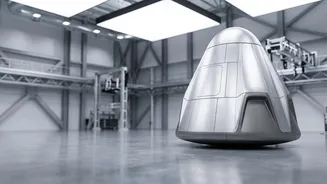
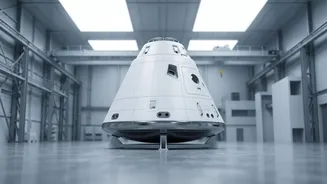
Different space agencies use different designs for their escape systems. Some, like SpaceX's Crew Dragon, use a 'pusher' system, where engines integrated into the capsule push it away from the rocket. ISRO, for Gaganyaan, has opted for a 'tractor' system, similar to the ones used for the Apollo and Soyuz missions. This design features a tower-like structure mounted on top of the crew module. In an emergency, powerful solid-fuel motors in this tower ignite, pulling the capsule up and away from the main rocket stack. While both systems have their advantages, the tractor method has a long heritage of proven reliability. Once the capsule is at a safe distance, the escape tower is jettisoned, and the module begins its parachute-assisted descent. This series of tests qualifies every step of that critical sequence, from the initial explosive pull to the final, gentle splashdown.