


The Five-Minute No-Sew Wonder
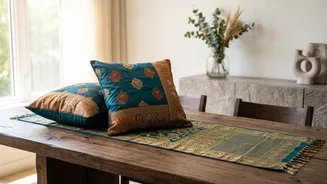
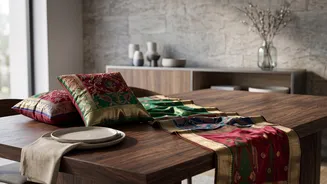
Don't have a sewing machine? No problem. This is the quickest way to create a beautiful runner. Simply cut your drape or saree fabric to the desired length and width for your table. For a clean edge, you can use fusible hemming tape, which is an iron-on
adhesive that creates a crisp seam without a single stitch. Alternatively, a strong fabric glue can be used to fold and secure the edges. This method is perfect for heavier drape fabrics that hold their shape well and for those last-minute decorating emergencies. Make sure you measure your table first, adding at least 20-30 centimetres of overhang on each end for a classic, elegant look.
Showcase the Saree Border
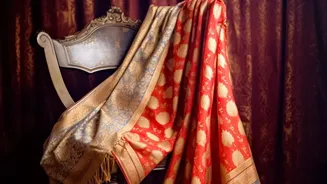
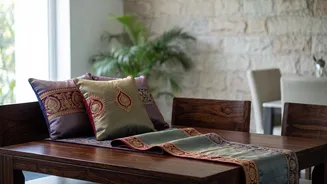
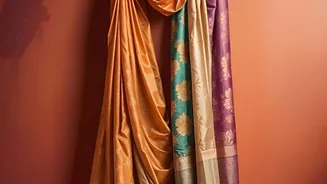
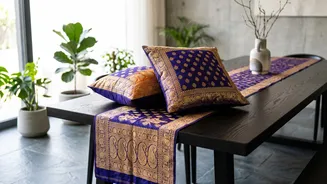
Many old sarees, especially silk or Banarasi ones, feature intricate and beautiful borders ('zari' or 'pattu'). This hack is all about making that border the star of the show. Carefully cut a long, wide strip from the main body of the saree. You can then either use the saree's own decorative border or one from another saree and attach it along the long edges of your plain fabric strip. This can be done by sewing it on or, for a no-sew option, by meticulously applying fabric glue. The contrast between the simple centre and the ornate border creates a professional-looking and high-impact decorative piece that honours the original craftsmanship of the saree.
Create a Patchwork Masterpiece
If you have several smaller pieces of fabric from different sarees or drapes, a patchwork runner can be a vibrant and eclectic addition to your decor. Cut your fabric scraps into uniform shapes, like squares or rectangles. Arrange them in a pattern that pleases you before sewing them together. This method allows for immense creativity, letting you play with different colours, textures, and prints. For a cohesive look, you can alternate between patterned pieces and solid-coloured fabric squares. While this requires some basic sewing, the result is a truly unique runner that tells a story through its different fabric components. For added stability, you can add a layer of batting and a simple backing fabric.
Add Festive Embellishments
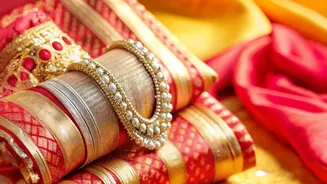
Elevate a simple runner by adding festive embellishments. This is where you can truly customise your creation for any occasion. Consider adding tassels or pom-poms to the short ends of the runner for a bohemian and playful touch. You can make these yourself from embroidery thread or purchase them pre-made. Another option is to glue or sew on beads, sequins, or small mirrors along the edges or scattered across the surface for a bit of sparkle. For a rustic feel, you could even add a lace or burlap trim. These small additions can transform a plain piece of fabric into a dazzling centrepiece.
The Reversible Runner for Double Duty
For the slightly more ambitious DIY-er, creating a reversible table runner gives you two looks in one. Choose two different fabrics – perhaps a rich, festive pattern from a saree for one side and a more neutral, everyday fabric from an old curtain for the other. Cut both fabrics to the exact same size. Place the two pieces of fabric with their right sides facing each other and sew around the perimeter, leaving a small opening of a few inches. Use this opening to turn the runner right-side out. Finally, press it flat with an iron and sew the small opening closed. This technique gives you a durable, double-layered runner that you can flip over depending on your mood or the occasion.