







The Earth's Engine Room
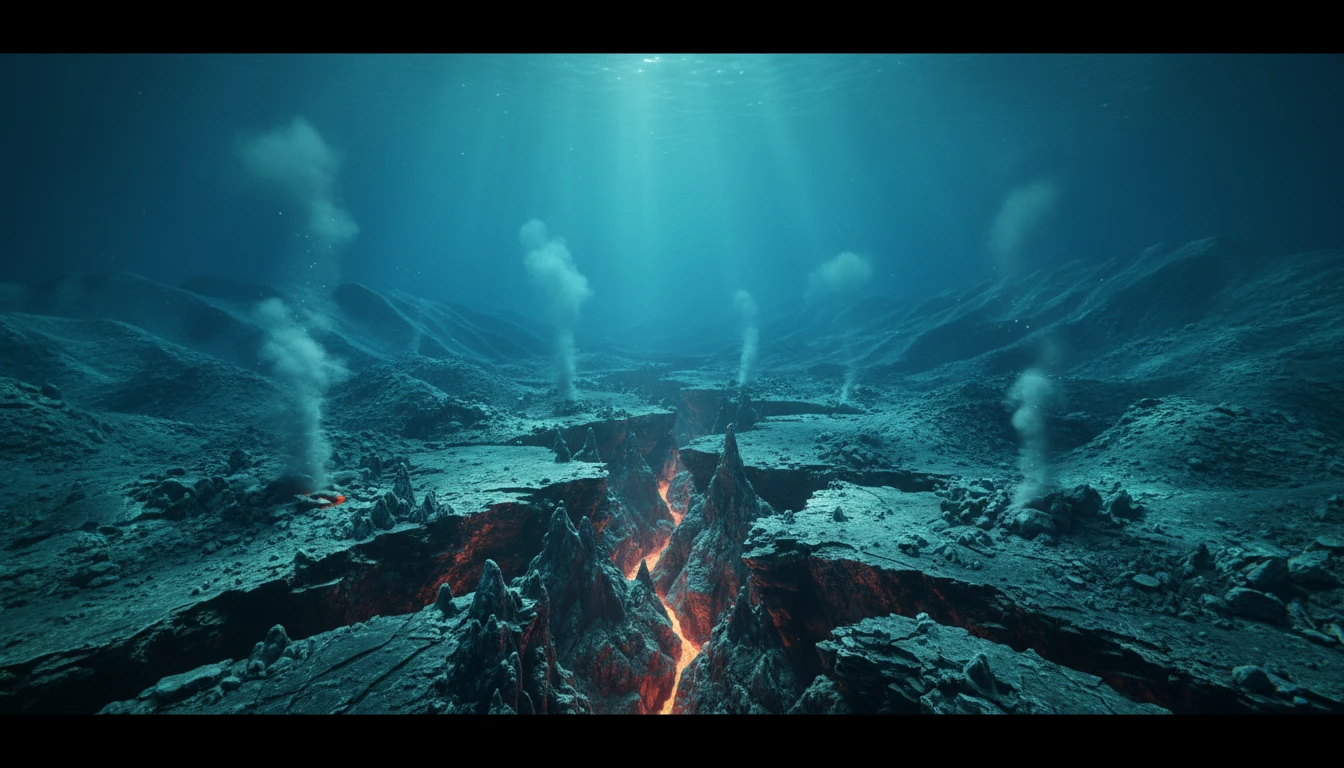
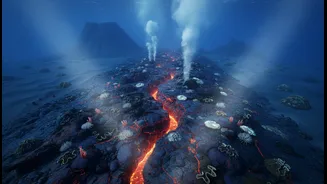
At the heart of this process are mid-ocean ridges, vast underwater mountain ranges that snake across the globe. In the Indian Ocean, the Central Indian Ridge and the Carlsberg Ridge are two key examples where tectonic plates are diverging or moving apart.
Molten rock, or magma, from the Earth's mantle rises to fill the gap, cools, and solidifies, creating new oceanic crust. This continuous creation pushes older crust away from the ridge, literally spreading the seafloor. The speeds can vary significantly, from a slow 30 millimetres per year near the equator to a faster 49 mm/yr further south. This process is a fundamental engine of plate tectonics, driving the movement of continents and shaping the ocean basins over millions of years.
A Uniquely Complex Puzzle
The Indian Ocean is a special case in plate tectonics. It contains some of the fastest and slowest spreading ridges and features a complex intersection of the African, Indian, and Australian plates. This dynamic environment is further complicated by the ongoing collision of the Indian plate with the Asian plate, the force that pushed up the Himalayas. This immense pressure creates a 'diffuse boundary zone' within the oceanic crust, an area of widespread deformation far from the main plate edges. The Wharton Basin, east of the main ridges, is a prime example. Though its ancient spreading ridge is now extinct, the area is being actively deformed and broken up, leading to significant seismic activity. Scientists are studying this region intensely, as it may even be evidence of a new plate boundary forming.
The Key to Undersea Hazards
The movement and stress associated with seafloor spreading and plate deformation are directly linked to seismic hazards. The immense 2004 Indian Ocean earthquake and tsunami were a devastating reminder of the power stored along these plate boundaries. That event occurred at a subduction zone, where one plate dives beneath another. However, even the spreading ridges and deformed basins are seismically active. For instance, in 2012, the Wharton Basin was the site of the largest intraplate earthquake ever recorded, an enormous magnitude 8.6 strike-slip event that ruptured a complex network of faults. Understanding these zones is therefore critical for India's Tsunami Early Warning System, operated by the Indian National Centre for Ocean Information Services (INCOIS). By monitoring seismic activity and sea levels, the system aims to provide timely warnings to coastal communities.
A Frontier for Monitoring and Discovery
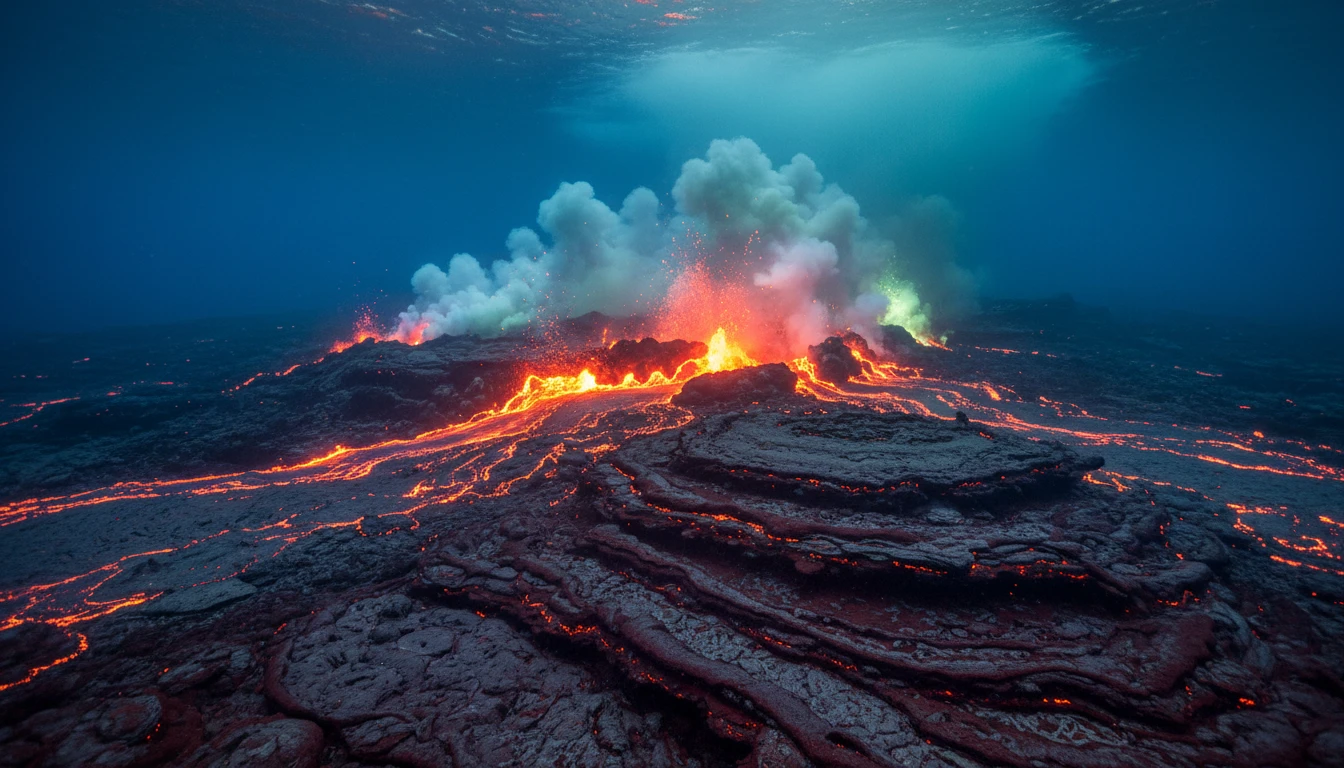
Monitoring the seafloor is not just about disaster mitigation. It is a frontier for scientific discovery and strategic awareness. Recently, scientists captured the first-ever real-time observation of a seafloor spreading event on the Southeast Indian Ridge. Using an array of instruments, they witnessed the seafloor sink and lava erupt, providing unprecedented insight into how new crust is born. This kind of monitoring also has strategic importance. India, through its Deep Ocean Mission and projects like the Underwater Fiber Optic Sensing System (UFOSS), is investing heavily in undersea surveillance. These systems use networks of sensors to monitor sound and pressure changes on the seabed, aiming to track underwater vessels. Furthermore, the hydrothermal vents found along spreading ridges, which spew hot, mineral-rich water, are potential sites for valuable polymetallic sulphide deposits, making exploration a key long-term interest.