







The Monsoon's Crucial Role
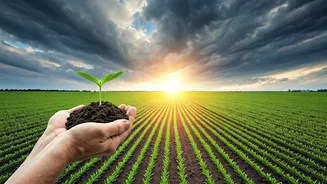
For much of India, the monsoon season from June to September is everything. It accounts for about 70% of the country's annual rainfall, replenishes reservoirs, and is critical for agriculture. A significant portion of India's farmland is rain-fed, meaning
it lacks access to modern irrigation. The success of the Kharif season, when summer crops like rice, pulses, and oilseeds are sown, depends almost entirely on the timing and distribution of these rains. A strong monsoon translates to bountiful harvests, healthy rural incomes, and stable food prices. Conversely, a weak monsoon can spell trouble, not just for farmers, but for the entire economy.
A Season of Concern
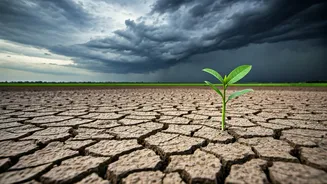
This year, the signs are worrying. After one of the driest Junes in over a century, the India Meteorological Department (IMD) has forecast below-normal rainfall for July 2026. Precipitation is expected to be less than 94% of the Long Period Average (LPA), a benchmark based on decades of data. The primary culprit is a strengthening El Niño, a climate pattern in the Pacific Ocean historically linked to weaker monsoons in India. This dual challenge of a dry start and a poor outlook for a critical monsoon month has put farmers, economists, and policymakers on high alert.
From Paddies to Pulses
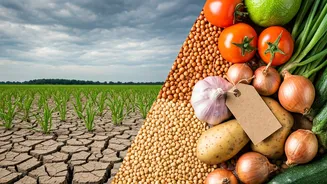
The immediate impact of deficient rain is on sowing. By late June, the planting of key Kharif crops was already down by more than 22% compared to the previous year. The acreage for rice, a staple for a majority of Indians, saw a 25% decline. Sowing of pulses and oilseeds plunged by 30% and 53% respectively. Crops like soybean, cotton, and coarse cereals are particularly vulnerable in states with low irrigation coverage, such as Maharashtra and Rajasthan. While some crops are hardier, a prolonged dry spell shrinks yields, reduces the final harvest, and creates a supply crunch. The Agriculture Ministry has identified over 300 districts as vulnerable, with 111 of them deemed high priority due to their heavy reliance on rain.
The Inflation Equation
Reduced agricultural output inevitably puts upward pressure on prices. This is the core of food inflation. Even before the full impact of the monsoon is felt, food inflation has been creeping up, standing at 4.78% in May. The Reserve Bank of India (RBI) has already flagged a poor monsoon as a primary risk to its inflation calculations. Economists now see rainfall patterns as a bigger inflation risk than global crude oil prices. While staples like wheat and rice might be shielded initially due to government buffer stocks, the prices of perishable goods like vegetables and pulses can rise quickly. Reports of tomato prices spiking are an early warning of how weather-related supply disruptions can directly hit consumer pockets.
Cushioning the Blow
The situation is serious, but not without countermeasures. India has built up significant buffer stocks of essential food grains, which can be released to stabilise prices and prevent hoarding. The government has also prepared contingency plans, urging farmers in vulnerable districts to use drought-tolerant seeds and conserve water. The RBI is monitoring the situation closely. While it has maintained a neutral policy stance for now, a sharp, sustained rise in food inflation could force it to consider interest rate hikes later in the year to curb price pressures. Ultimately, these measures can soften the blow, but they can't make it rain. The performance of the monsoon over the next few weeks remains the most critical factor.