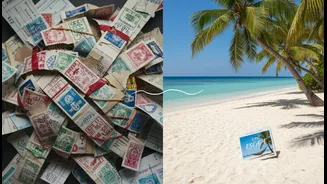










The European Dream Meets a Financial Reality
For many Indian travellers, the cost of a European holiday has become a significant hurdle. A combination of factors, including high inflation in the Eurozone, a strong Euro against the rupee, and sustained demand have pushed prices for flights, hotels,
and daily expenses to new highs. Reports suggest a comfortable 10-day trip to popular European countries can now cost well over ₹2,00,000 to ₹3,00,000 per person. This escalating cost is causing many to reconsider their plans, with some travel platforms reporting a 15-20% decline in enquiries for Europe compared to previous years. The dream isn't dead, but the financial barrier is higher than ever.
The Great Visa Divide
Beyond the cost of the trip itself, the process of just getting permission to go is a major factor. Securing a Schengen visa for Europe remains a complex and often stressful ordeal for Indian passport holders. The process involves a non-refundable fee of €90 (around ₹8,500), extensive documentation, and often long waits for appointments, with processing times stretching to 30-45 days during peak season. In stark contrast, many Asian countries are actively courting Indian tourists by simplifying their entry requirements. Countries like Thailand, Malaysia, and Indonesia have rolled out visa-free entry, while others offer quick and easy e-visas or visa-on-arrival facilities. This hassle-free access makes spontaneous trips possible and removes a significant layer of uncertainty and expense from travel planning.
Stretching Your Rupee Further
The value proposition of Asia is undeniable. The same budget that would secure a basic, no-frills trip in Europe can often fund a luxurious holiday in Southeast Asia. A 10-day trip to Thailand or Vietnam can be comfortably managed within ₹1,00,000 to ₹1,50,000, roughly half the cost of a comparable European journey. Daily expenses on food, local transport, and activities are significantly lower. For instance, a street food meal in Hanoi might cost under ₹200, a fraction of the price of a simple meal in Paris or Rome. This means travellers can afford better hotels, more experiences, and longer stays, getting more 'holiday' for every rupee spent.
An Explosion of Choice, Closer to Home
The shift to Asia isn't just about saving money; it's also about discovering a world of diverse and exciting experiences. The continent offers everything from the futuristic cityscapes of Singapore and Kuala Lumpur to the ancient temples of Cambodia and the pristine beaches of the Philippines. Destinations like Vietnam are seeing a massive surge in popularity, with Indian arrivals jumping by over 50% in early 2026. The rising popularity of Kazakhstan, dubbed the "Switzerland of Asia," shows that travellers can even find Alpine-like landscapes without a Schengen visa. Furthermore, shorter flight times of 4-6 hours, compared to 8-10 hours for Europe, make these destinations more accessible, especially for families and those planning shorter breaks.
Where Indian Travellers Are Flocking
The trend is clear in the booking numbers. Travel companies report a 30-40% year-on-year jump in family bookings for Asian countries. Thailand remains a perennial favourite, welcoming millions of Indian tourists with its vibrant culture and beautiful islands. Malaysia's visa-free policy has made it a top choice for families and foodies. But the breakout star is Vietnam, which has captivated travellers with its stunning landscapes in Ha Long Bay, rich history in Hanoi, and vibrant city life in Ho Chi Minh City. This shift indicates that Indian travellers are becoming more adventurous, moving beyond the traditional choices to explore new and exciting destinations that offer better value and easier access.