


The Legendary Crunch of Gajak
No winter trip through Central India is complete without sampling Gajak, a brittle confection that defines the season. Originating from the town of Morena in Madhya Pradesh, this sweet has a legacy that stretches back generations. It is crafted from roasted
sesame seeds ('til') and molten jaggery ('gur'), which are pounded and stretched in a laborious process to create its signature flaky, airy, and crunchy texture. While the core ingredients are simple, the skill involved is immense, with artisans dedicating years to perfecting the technique. Traditionally consumed to provide the body with warmth and energy during colder months, Gajak is more than just a sweet; it’s a cultural icon. The best varieties are often found in local markets in Morena and Gwalior, where the authentic taste remains preserved.
The Festive Spirit of Til ke Laddu
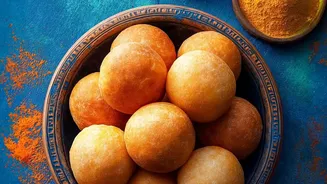
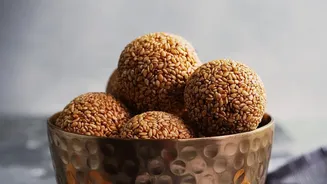
Come January, households across the region buzz with preparations for Makar Sankranti, the harvest festival celebrating the sun's northward journey. At the heart of these celebrations are Til ke Laddu, simple, hand-rolled spheres of roasted sesame seeds and jaggery. These sweets are not merely festive treats but are packed with nutritional value; sesame provides heat and is rich in calcium and healthy fats, while jaggery offers iron and minerals. This combination makes for a perfect winter energy booster. In Maharashtra, which borders Central India, the exchange of these laddus is accompanied by the saying, 'til-gul ghyaa, aani goad-goad bolaa', which means 'accept this sesame and jaggery and speak sweet words'. This highlights the sweet’s role in fostering goodwill and burying past grievances. While often homemade, delicious versions can be found in nearly every local sweet shop during the festival season.
Rewari: The Bite-Sized Delight
Often considered a cousin to Gajak, Rewari is a smaller, bite-sized candy that offers a similar sesame-jaggery experience in a more compact form. This hard candy is made by coating roasted sesame seeds in a crystallized sugar or jaggery syrup. Its origins are popularly traced to northern India, with some traditions linking its name to the city of Rewari in Haryana. Perfect for carrying in a pocket during travels, Rewari is the ideal on-the-go snack for a quick burst of warmth and sweetness. It's a staple during winter festivals like Lohri and Makar Sankranti and is often shared among friends and family. While not exclusive to Central India, its presence is strongly felt in the winter markets, where vendors sell it by weight, wrapped in simple paper cones.
Tilkut: The Pounded Sesame Sweet
Tilkut, also known as Tilpatti in some regions, is another rustic sesame delicacy you'll encounter. Prominently from the neighbouring states of Bihar and Jharkhand, its influence and variations are found across Central India. Unlike the layered texture of Gajak, Tilkut is made by pounding sesame seeds and mixing them with molten sugar or jaggery before setting it into discs or rough blocks. This results in a denser, softer, and more crumbly texture. The sweet comes in three main varieties: one made with white refined sugar, another with light brown unrefined sugar ('shakkar'), and the most traditional version with dark jaggery ('gur'). Each offers a distinct flavour profile, from subtly sweet to deeply rich and earthy. Finding Tilkut from Gaya is considered a special treat, as it's said to be the finest available.