









The New 'Final Frontier' for Careers
For decades, the pinnacle of aspiration for many young Indians was a stable career in engineering, medicine, or information technology. These fields promised security and respect. Today, however, a seismic shift is underway. The generation born between
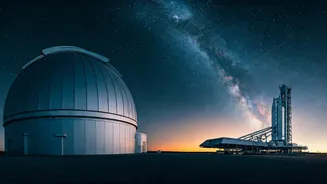
the late 1990s and early 2010s—Gen Z—is beginning to look at the 'final frontier' not just with wonder, but with professional ambition. The success of missions like Chandrayaan-3 and Mangalyaan has done more than just put India on the global space map; it has ignited the imagination of a generation, turning the abstract idea of a 'space career' into a tangible and exciting possibility. This isn't just about childhood dreams of being an astronaut; it's a calculated career move towards one of the fastest-growing and most innovative sectors in the world.
More Than Just Rocket Scientists
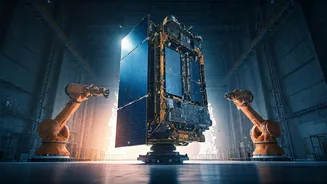
When we think of space careers, the image of a scientist in a lab coat or an astronaut in a bulky suit often comes to mind. But the modern space economy is infinitely more diverse. The new wave of opportunities extends far beyond traditional aerospace engineering and astrophysics. Today's space industry needs data analysts to interpret satellite imagery for agriculture and urban planning, software developers to create guidance systems, and robotics engineers to design planetary rovers. There's a growing need for specialists in space law to navigate the complex regulations of celestial bodies, and space medicine experts to study the effects of long-duration spaceflight on the human body. As commercial space tourism becomes a reality, roles in hospitality, design, and marketing will also emerge. This diversification makes the sector accessible to a much wider range of talents and skills, appealing to a generation that values interdisciplinary work.
The Unmistakable ISRO Effect
You can't talk about space in India without talking about ISRO. The Indian Space Research Organisation has transformed from a government agency working in relative obscurity to a cultural phenomenon. The live-streamed landing of Chandrayaan-3 wasn't just a scientific achievement; it was a national event that brought the country to a standstill. This massive public engagement has had a profound impact on career perceptions. For Gen Z, ISRO represents innovation, national pride, and the ability to achieve the seemingly impossible on a frugal budget—a 'jugaad' spirit that resonates deeply. Seeing Indian scientists celebrated as national heroes provides powerful role models, making a career dedicated to space exploration feel not only prestigious but also deeply meaningful and patriotic.
Fuelled by a Private Space Boom
While ISRO laid the foundation, it's the recent explosion of private space-tech startups that has truly opened the floodgates for job creation. Government reforms in recent years have opened the sector to private players, leading to the rise of innovative companies like Skyroot Aerospace, which launched India's first private rocket, and Agnikul Cosmos, known for its 3D-printed rocket engines. These startups are more agile, often have a more contemporary work culture, and are creating thousands of new jobs. They offer Gen Z an environment that mirrors the fast-paced, high-impact world of tech startups, but with the added allure of working on rockets and satellites. This private ecosystem makes a space career seem less like a distant dream requiring a lifelong government post and more like an accessible, dynamic opportunity right here, right now.
A Generation Seeking Purpose and Impact
Ultimately, the trend is also a reflection of Gen Z's core values. More than any generation before them, they are driven by a search for purpose and a desire to make a tangible impact on the world. A traditional corporate job, while stable, may not offer the same sense of contribution. The space sector, on the other hand, is intrinsically linked to solving some of humanity's biggest challenges. Whether it's using satellite data to monitor climate change, developing technologies for sustainable living in harsh environments, or simply expanding the boundaries of human knowledge, a career in space offers a powerful 'why'. It's a chance to be part of a grand, collective endeavour—a mission that is quite literally bigger than the world itself.