






Decoding the Staggering Numbers
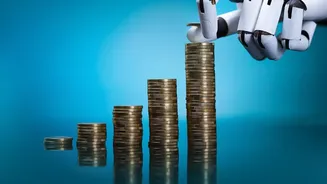
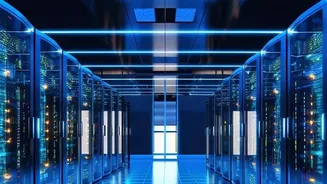
When a company talks about capital expenditure, or Capex, it’s referring to money spent on physical assets like buildings, servers, and network gear. In Meta's case, the 2026 forecast of $135 billion to $145 billion is almost entirely focused on building out the massive
infrastructure needed for artificial intelligence. To put that figure in perspective, it is roughly double the $72.2 billion spent in 2025 and a massive leap from the approximately $28 billion spent in 2023. This spending spree has been progressively revised upwards throughout 2026, signaling the company's deepening commitment. While revenue remains strong, this investment has put a significant strain on the company's finances, leading to negative free cash flow in recent quarters, a metric that shows cash generated after accounting for capital expenditures.
A New Leader for a New Era
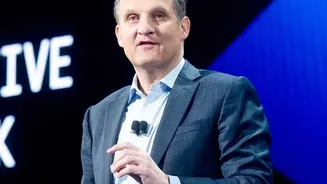
Coinciding with this financial surge is a major leadership transition. Santosh Janardhan, a 17-year veteran who has been central to building Meta’s global data center operations, is set to step down in early 2027. He will be replaced by David Brown, a former senior vice president from Amazon Web Services (AWS) who was hired in July 2026. Brown will not only lead the infrastructure organization but also serve as Chief Technology Officer of Meta Compute, the initiative responsible for the company's massive computing power expansion. This move is highly symbolic: bringing in an executive with deep experience in building and operating Amazon's colossal cloud infrastructure signals that Meta's priority is now about executing this ambitious build-out at an unprecedented scale. The change happens as investors are closely questioning the enormous costs and are anxious to see a return on these investments.
The AI Arms Race Heats Up
Meta's spending isn't happening in a vacuum. It's a direct response to an industry-wide AI 'arms race'. Competitors like Microsoft, Google (Alphabet), and Amazon are also pouring hundreds of billions of dollars collectively into AI infrastructure. CEO Mark Zuckerberg has indicated a willingness to invest in a range of $100 billion to $200 billion into AI infrastructure, even admitting that the company committed to this path before it was entirely certain the bets would pay off. The goal is no longer just to enhance its existing social media apps but to establish Meta as a foundational AI company, capable of building and running the world’s most powerful models. This includes everything from the custom silicon chips it designs to the massive data centers needed to power them.
From Social Feeds to 'Personal Superintelligence'
For years, Meta’s primary business has been advertising on Facebook and Instagram. While this remains the financial engine, the company's vision has shifted dramatically. The infrastructure being built is intended to power a future where AI is integrated into every product. This includes creating better recommendation algorithms, developing new generative AI features for users, and powering AI agents like 'Muse'. Zuckerberg has spoken of a future built on 'personal superintelligence,' where AI assistants become indispensable. This AI-first strategy also absorbs much of the investment previously earmarked for the metaverse, with the Reality Labs division's losses expected to narrow as resources are redirected toward AI priorities.
The High-Stakes Gamble
This aggressive strategy comes with significant risk. The massive capital outlay has already prompted credit rating agencies like S&P to issue a negative outlook on the company's debt. To help fund its expansion without diluting CEO Mark Zuckerberg’s voting control, Meta has also announced a new class of non-voting stock. The core challenge for the new infrastructure leadership will be to manage this enormous budget effectively while demonstrating a clear path to profitability. The success or failure of this multi-billion-dollar gamble will not only determine Meta's future but could also reshape the entire landscape of artificial intelligence for years to come.