





A New Approach for Mars
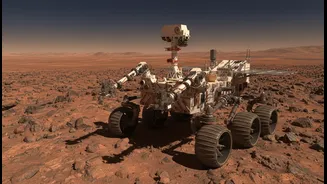
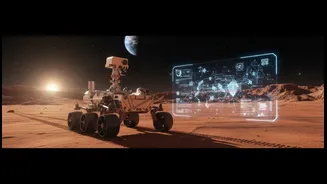
NASA has officially selected seven companies for contract awards aimed at advancing the next generation of robotic mobility on Mars. This initiative, known as Science Transport and Robotic Innovation for Deployment and Exploration (STRIDE), represents
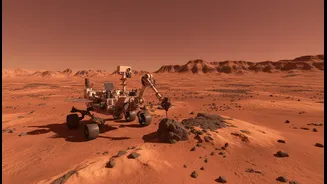
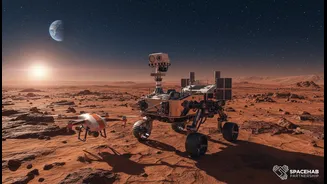
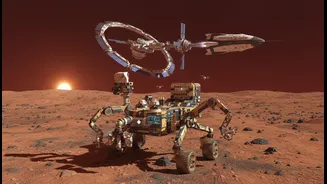
a significant strategic shift. Instead of designing every component in-house, NASA is turning to the private sector to develop innovative concepts for robotic systems that could explore the Martian surface. The goal is to create vehicles that can access more challenging terrain, travel farther, and investigate scientifically rich areas that are currently out of reach. This public-private partnership model allows the agency to tap into commercial innovation while identifying key technology gaps.
The Seven Contenders
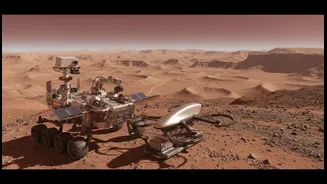
The list of awardees includes a mix of established aerospace giants and nimbler startups, reflecting the diverse landscape of the modern space industry. The companies selected for the contracts are AeroVironment, Astrobotic, Venturi Astrolab, Ground Control Robotics, Honeybee Robotics, Intuitive Machines, and MEI Technologies. These firms will share a total potential value of approximately $17 million for the initial phase of work, which is expected to begin in the fall of 2026. Each company brings a unique set of skills, from advanced aerial systems to rugged rover designs, giving NASA a wide portfolio of ideas to consider for future missions.
The Fine Print: Studies, Not Spacecraft
Here is the most critical part to understand: these are not contracts to build and launch new rovers. The headline-making awards are for 'concept studies'. This means the companies are being paid to research, design, and propose ideas—not to start welding metal for a flight-ready vehicle. The current STRIDE awards are focused on the initial conceptual phase, which might include prototyping in some cases, but the primary deliverable is a well-defined plan. Think of it as NASA commissioning seven different architectural blueprints for a future Martian garage. Only after evaluating these detailed concepts will the agency decide which designs, or combination of ideas, are promising enough to move forward into a more advanced development phase. This approach minimizes risk and cost by exploring a wide range of options before committing to a multi-billion-dollar mission.
NASA's Strategic Pivot
This move is part of a broader trend within NASA, best exemplified by the successful Commercial Lunar Payload Services (CLPS) program, which uses private companies to deliver science and technology to the Moon. By applying a similar model to Mars exploration, NASA is fostering a competitive commercial market for deep-space systems. This strategy aims to accelerate the pace of innovation, reduce costs, and allow the agency to focus on its core mission of science and exploration, rather than managing every aspect of hardware development. It’s a deliberate pivot from the traditional model where NASA's Jet Propulsion Laboratory (JPL) would design and build rovers like Curiosity and Perseverance almost entirely in-house. The STRIDE initiative signals that for future surface missions, NASA wants to be a customer as much as it is a creator.
The Long Road to the Red Planet
While these contracts are a crucial first step, the journey from concept study to a functioning rover on Mars is long and complex. After these initial studies are completed, NASA will likely issue further contracts for more detailed design work, subsystem development, and eventually, the construction and testing of a complete vehicle. It's a multi-stage process that will take the better part of a decade. For the seven companies involved, winning a STRIDE contract is a massive vote of confidence and a foothold in the future of Martian exploration. For space enthusiasts, the takeaway is one of managed expectations. The news is exciting because it kicks off a new chapter in our quest to explore Mars, but the real hardware is still years away. This is the starting gun for a marathon, not the final lap.