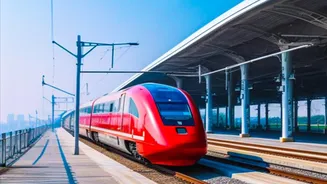



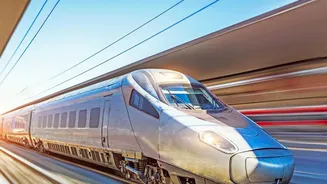
India is on the cusp of a transportation revolution. The long-held dream of high-speed rail is set to become a reality, with the first services planned for the Surat-Vapi section in Gujarat. This marks a pivotal moment for the nation's infrastructure.
A Landmark Moment for Indian Railways
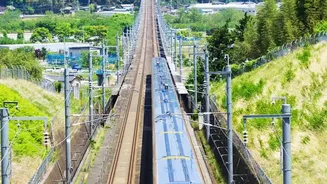
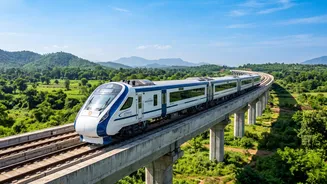
The Mumbai-Ahmedabad High-Speed Rail (MAHSR) project is one of the country's most ambitious infrastructure undertakings. Helmed by the National High Speed Rail Corporation Limited (NHSRCL), the 508-kilometre corridor promises to redefine intercity travel. While the entire line is a monumental task, the initial focus has narrowed to a priority section in Gujarat. Recent announcements by Railway Minister Ashwini Vaishnaw confirm that the first bullet train services are expected to commence in 2027, specifically on the stretch between Surat and Vapi. This phased approach allows for the operationalisation of completed sections, providing a tangible glimpse into the future of Indian travel sooner rather than later. Work has been progressing rapidly, with significant portions of the viaduct, piers, and station structures already completed in this region.
Why the Surat-Vapi Section First?
The decision to launch services on the Surat-Vapi route is a strategic one, driven by practical considerations. This particular segment has seen the most advanced progress in terms of both land acquisition and civil construction. Unlike other parts of the corridor that faced delays, the work in Gujarat has moved at a steady pace, making it the logical choice for the inaugural run. This stretch, which also includes the station at Bilimora, will serve as a crucial testing ground for the entire system, from the advanced track and signalling to the operational protocols. Recently, a 50-kilometre portion between Surat and Bilimora was successfully electrified, a major milestone that paves the way for trial runs. By launching this section first, the NHSRCL can demonstrate the technology's viability and gather invaluable operational data before the full corridor is commissioned.
What to Expect Onboard
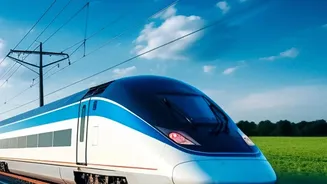
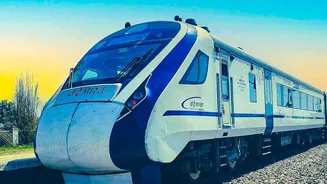
The bullet train promises a travel experience unlike any other in India. Based on Japan's renowned Shinkansen system, the trains are designed for safety, speed, and punctuality. Although Japan's E5 series trains are part of the long-term plan, initial services will reportedly use indigenously developed trainsets. These trains are expected to undergo trials by mid-2027. The service will operate at speeds up to 320 km/h, though initial indigenous models may start at around 280 km/h. This will drastically reduce travel time between the industrial hubs of Surat and Vapi to a matter of minutes, compared to the hours it currently takes by road or conventional rail. The stations themselves are being built with modern amenities, focusing on passenger comfort and seamless integration with other transport modes. Civil work for eight stations, including Surat and Vapi, is already complete, with architectural finishing now in progress.
More Than Just Speed
The impact of the bullet train extends far beyond faster commutes. The corridor is expected to be a powerful economic catalyst for the entire region. The Surat-Vapi-Bilimora belt is a densely packed industrial zone, and high-speed connectivity is poised to boost business, facilitate smoother logistics, and attract further investment. This development aligns with the concept of Transit-Oriented Development (TOD), where urban growth is concentrated around major transport nodes. This can lead to a surge in real estate values and commercial activity near the new stations. Furthermore, the project itself is a massive job creator, from the complex civil engineering work, including India's first undersea rail tunnel in Maharashtra, to the manufacturing of components. A significant portion of the advanced electrification system is now being made in India, fostering domestic manufacturing capabilities.
Challenges and the Path to Mumbai
While the progress in Gujarat is commendable, the project has not been without its challenges. The primary hurdle has been the slower pace of land acquisition and construction in Maharashtra, which delayed the overall timeline. This is precisely why a phased commissioning, starting with the ready sections in Gujarat, was adopted. The complexity of the project is immense, involving the construction of viaducts across rivers, mountain tunnels, and a 21-km underground tunnel in Maharashtra, 7 km of which is under the sea. According to official statements, while the Surat-Vapi section is targeted for a 2027 launch, the full Mumbai-Ahmedabad line is expected to be fully operational closer to 2029, once all sections are completed and integrated. The successful launch of the first service will be a critical proof of concept, building momentum for the completion of the entire high-speed corridor.