

Beyond the Rainbow
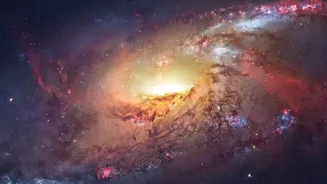
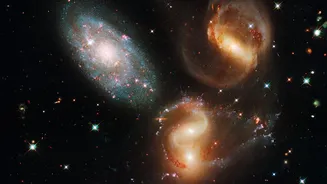
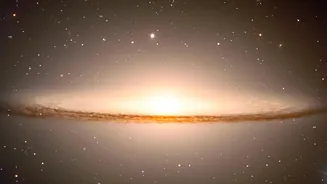
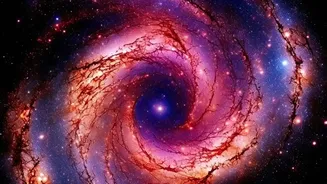
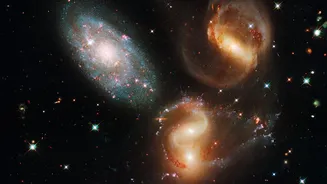
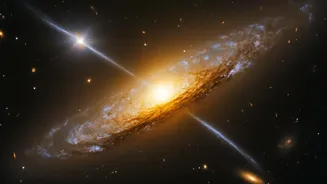
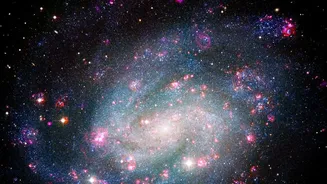
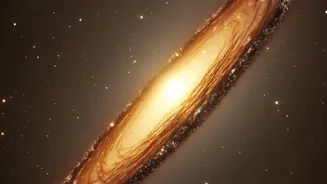
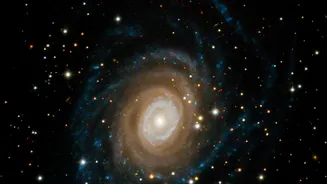
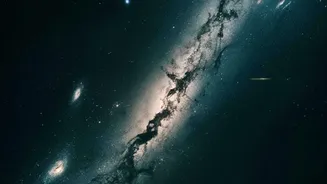
When we look up at the night sky, we are only seeing a tiny fraction of the light that galaxies emit. This visible light is just one part of a vast range known as the electromagnetic spectrum. Other types of light, like infrared, ultraviolet, X-rays,
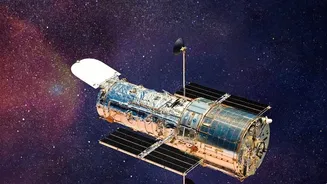
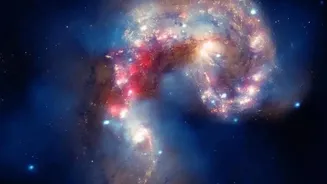
and radio waves, are invisible to our eyes but carry crucial information. Each wavelength tells a different story about the energy sources and processes happening within these immense cosmic structures. By using specialized telescopes designed to detect these other forms of light, scientists can piece together a much more complete picture of what makes a galaxy tick.
Infrared: The Glow of Creation
Some of the most dramatic events in a galaxy, like the birth of new stars, happen behind thick veils of cosmic dust. These dust clouds block visible light, hiding the stellar nurseries within. This is where infrared light comes in. Its longer wavelength allows it to penetrate the dust, giving astronomers a direct view of protostars and young star clusters. This light reveals the warm glow of dust heated by newborn stars, allowing scientists to map out a galaxy's star-forming regions. Telescopes like the James Webb Space Telescope are optimized to see in infrared, pushing back the cosmic curtains to witness the very first stars and galaxies forming in the early universe.
Ultraviolet: Signature of Young, Hot Stars
While infrared light shows us where stars are being born, ultraviolet (UV) light points to the most massive and energetic of these newborns. The hottest, youngest stars burn through their fuel at a furious pace and shine brightest in the UV part of thespectrum. These massive stars have a powerful impact on their surroundings, with their intense radiation carving out bubbles in nearby gas clouds. Studying a galaxy's UV light helps astronomers identify these short-lived stellar giants and measure a galaxy's recent star formation rate. This high-energy light is a key indicator of the most dynamic and violent stellar activity.
X-Rays: Clues from Extreme Environments
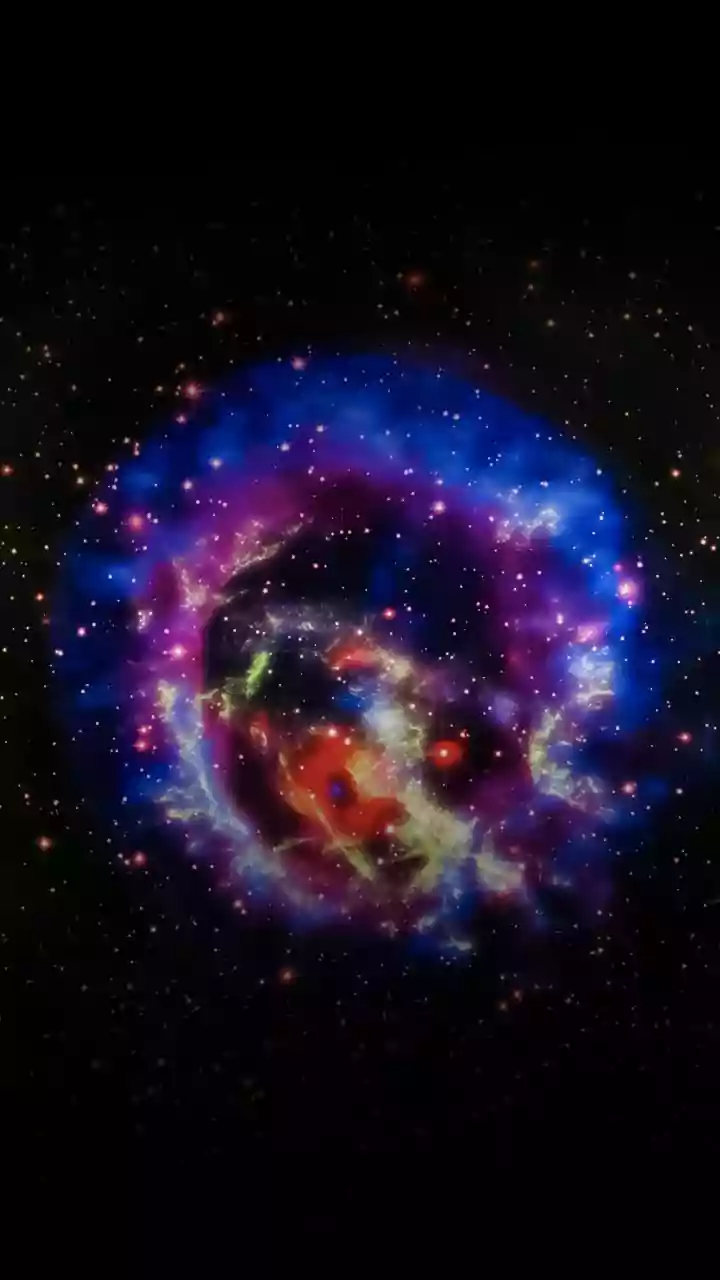
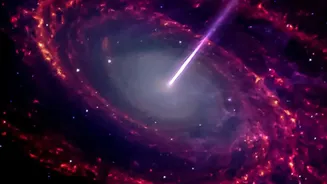
For the most extreme energy sources, astronomers turn to X-ray telescopes. X-rays are produced by matter heated to millions of degrees, a condition found in only the most violent cosmic environments. One primary source is the area around supermassive black holes that lurk at the centers of most large galaxies. As gas and dust spiral into a black hole's accretion disk, the material becomes superheated and emits a powerful X-ray glow. This allows astronomers to 'see' these otherwise invisible objects and study how they feed. Other sources of X-rays in galaxies include supernova remnants and binary star systems where one object is siphoning material from its partner.
Radio Waves: Tracing Cosmic Fuel
On the opposite end of the spectrum, long-wavelength radio waves reveal the cold, unseen components of a galaxy. Radio telescopes can map out vast clouds of neutral hydrogen gas, which is the raw fuel for future generations of stars. Without these radio observations, our accounting of a galaxy's potential for star formation would be incomplete. Radio waves also trace the synchrotron radiation emitted by electrons spiraling in magnetic fields. This can reveal enormous jets of material being blasted out from the vicinity of a supermassive black hole, which can stretch for thousands of light-years and influence the entire galaxy's evolution.