





What Exactly Is Bodyweight Crawling?
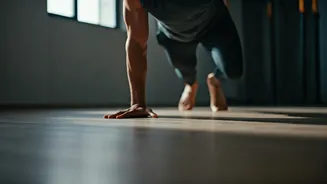
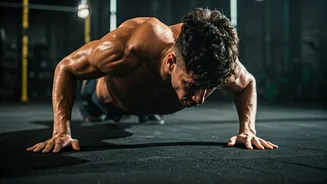
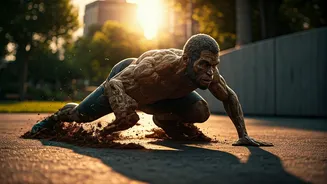
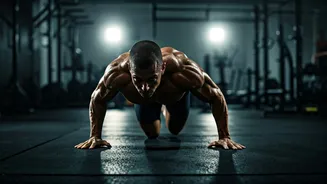
At its simplest, bodyweight crawling is moving on your hands and feet with your hips kept relatively low to the ground. Think of it as a grown-up version of what you did as a baby. The most common variation is the 'bear crawl,' where you’re on your hands and toes
with your knees bent and hovering just off the floor. But the trend encompasses a whole family of 'primal' or 'animal flow' movements, from the low-slung Leopard Crawl to the sideways Crab Walk. This isn’t about speed; it’s about control, coordination, and re-engaging fundamental movement patterns that many of us lose as we grow up and spend more time sitting at desks. Influencers love it because it’s visually interesting, requires zero equipment, and can be done anywhere, making it perfect for a quick home workout or a dynamic warm-up at the gym.
More Than Just Child's Play
The core idea behind the crawling trend is that it acts as a 'reset' for the body and the central nervous system. As infants, crawling is a critical developmental stage that builds cross-body coordination (connecting the right side of the brain to the left side of the body, and vice versa), develops a stable core, and strengthens the shoulder and hip girdles. As adults, many of our aches, pains, and movement inefficiencies stem from weak stabiliser muscles and poor coordination—precisely the things crawling addresses. By returning to this foundational movement, you’re essentially re-teaching your body how to move as an integrated system, rather than a collection of isolated parts. It forces your muscles to communicate and work together in a way that exercises like bicep curls or leg extensions simply don’t.
A Truly Integrated Core Workout
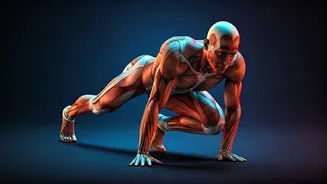
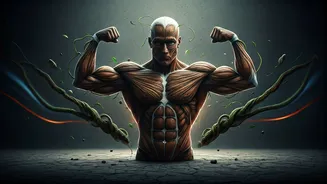
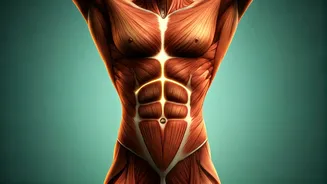
Forget endless crunches. Crawling is one of the most effective ways to build a truly strong, functional core. When you’re on all fours, your core musculature—including your rectus abdominis, obliques, and deep transverse abdominis—has to work overtime to keep your spine stable and prevent your hips from rotating or sagging. This is known as building 'anti-rotation' strength, which is crucial for protecting your lower back during everyday activities like lifting groceries or playing sports. Every step you take while crawling creates an unstable base, forcing your core to fire and stabilise your entire torso. It’s a dynamic, 360-degree workout for your midsection that static planks and sit-ups can't fully replicate.
Boosting Brain-Body Connection
The act of moving your opposite arm and leg simultaneously is called contralateral movement. This requires significant communication between the left and right hemispheres of your brain. Forcing your brain to coordinate this complex pattern enhances proprioception—your body's awareness of its position in space. This improved mind-muscle connection can translate into better performance in other athletic activities, from running to weightlifting, and can even help improve your balance and reduce your risk of injury. It's a workout for your nervous system as much as it is for your muscles, which is why many practitioners report feeling more 'switched on' and coordinated after a crawling session.
Building Healthier Shoulders and Hips
Modern life, with its long hours of sitting and typing, often leads to stiff hips and unstable, internally rotated shoulders. Crawling directly counteracts this. By supporting your bodyweight on your hands, you engage all the small stabilising muscles around your shoulder blades, building the kind of durability that can prevent rotator cuff injuries. It’s a 'closed-chain' exercise, meaning your hands are fixed to the ground, which is generally safer for the shoulder joint than overhead pressing. Simultaneously, the movement encourages mobility and strength through a full range of motion in your hips, helping to undo some of the tightness that comes from a sedentary lifestyle.
How to Start Crawling Safely
The beauty of crawling is its accessibility, but form is everything. To try a basic bear crawl, get on all fours with your hands directly under your shoulders and your knees under your hips. Then, lift your knees so they are hovering an inch or two off the floor. Keep your back flat—imagine balancing a glass of water on it. Start by taking a small step forward with your right hand and left foot simultaneously, then your left hand and right foot. Focus on smooth, controlled movements. Don't worry about distance or speed at first. Just aim for 20-30 seconds of continuous movement, rest, and repeat for a few rounds. Listen to your body, especially your wrists, and don’t push through pain.