






What is Merchant Discount Rate (MDR)?
Merchant Discount Rate, or MDR, is a fee that merchants pay for processing digital payments. Think of it as a service charge for using the digital payment infrastructure. Whenever you use a credit or debit card, the merchant pays a small percentage of the transaction
value as MDR to the banks and payment networks involved. This fee helps maintain the technology, security, and customer support systems that make digital payments possible. Since January 2020, UPI has operated under a zero-MDR regime to encourage widespread adoption, which made it free for both customers and merchants.
What is the New UPI Charge?
From October 15, 2026, a new framework introduces an MDR on select UPI transactions. Specifically, person-to-merchant (P2M) payments over ₹2,000 will attract an MDR of 0.4%. This charge is capped at ₹300 for any transaction of ₹75,000 or more. Crucially, this charge is paid by the merchant, not the customer. For the consumer, UPI remains free. Person-to-person (P2P) transfers, like sending money to friends or family, are completely exempt from any charges, regardless of the amount. Furthermore, transactions up to ₹2,000, which make up the vast majority of UPI payments, also remain free of any MDR.
Who Pays and Who Profits?
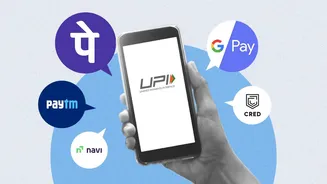
The new MDR is a fee paid by eligible merchants to the payment ecosystem. The revenue collected is not a government tax but is distributed among the various players who make a UPI transaction happen. This includes the payer's bank, the merchant's bank (also known as the acquirer), and the UPI app provider (like PhonePe or Google Pay). According to an analysis, the payer's bank receives the largest share (around 40%), followed by the merchant's bank (30%), and the UPI app provider (20%). This finally creates a direct revenue stream for payment companies that have invested heavily in building and maintaining the UPI infrastructure but earned little to no transaction revenue from it until now.
Are All Merchants Affected?
No, the new MDR is not applied universally. The government and the National Payments Corporation of India (NPCI) have created several exemptions to protect small businesses and essential services. Small merchants, including street vendors who receive up to ₹1 lakh per month via UPI QR codes, are exempt from MDR. Additionally, certain essential sectors like railways, telecommunications, insurance, and fuel will pay a lower, flat MDR of just ₹5 for transactions over ₹2,000, instead of the 0.4% rate. The government estimates that due to these exemptions and the ₹2,000 threshold, about 96-97% of all merchant transactions will remain unaffected by the new charge.
Why is This a Sustainable Path for Fintech?
The introduction of MDR is widely seen as a crucial step towards making India's digital payments ecosystem financially sustainable. UPI handles trillions of rupees in transactions every month, and maintaining this massive infrastructure requires significant investment in servers, cybersecurity, and innovation. The zero-MDR model, while successful in driving adoption, placed the entire cost burden on banks and payment companies. By introducing a nominal fee on high-value commercial transactions, the new framework provides these companies with a reliable revenue source. This incentivizes them to continue investing in the UPI network, improve services, and expand their reach, particularly in rural and semi-urban areas, ensuring the long-term health and growth of digital payments in India.