
Amer Fort: The Hilltop Sentinel
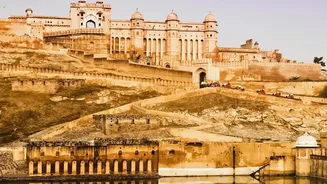
No trip to Jaipur is complete without a visit to Amer Fort, a sprawling masterpiece of Rajput and Mughal architecture perched on a hill. The cooler winter months, from October to March, are ideal for exploring its vast courtyards, ornate gateways, and intricate
palaces without the oppressive heat. The soft morning light during this season is perfect for photography, especially illuminating the stunning Sheesh Mahal, or Mirror Palace, where thousands of tiny mirrors glitter across the walls and ceiling. Arriving early, around 8 AM when it opens, allows you to experience the fort's grandeur before the large tour groups arrive. The walk down offers fantastic views of Maota Lake below, which is often still and reflective on calm winter mornings.
Hawa Mahal: The Palace of Winds
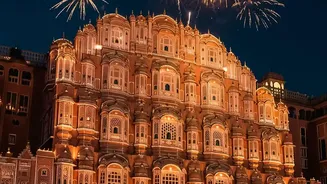
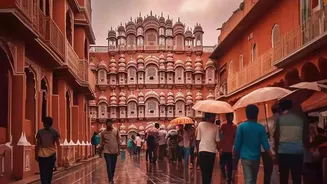
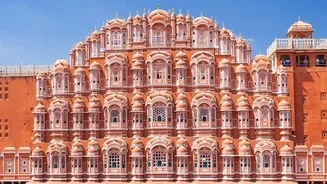
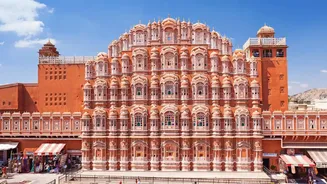
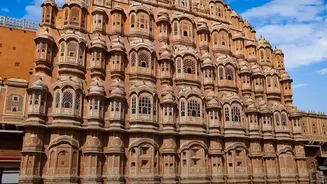
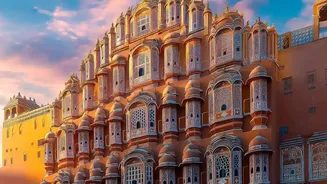
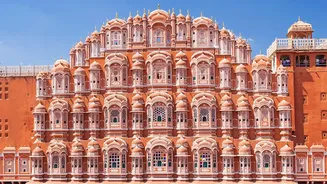
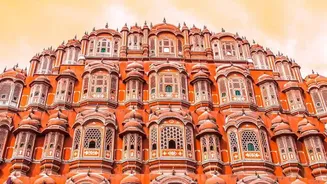
Jaipur's most iconic landmark, the Hawa Mahal, is not so much a palace as it is an elaborate facade. Built in 1799, its five-storey honeycomb of 953 small windows, or 'jharokhas', was designed to allow royal women to observe street festivals unseen. While the exterior is the main attraction, the cooler weather makes a visit inside more comfortable. Unlike many palaces, Hawa Mahal has ramps instead of stairs, a design choice to accommodate the royal ladies' heavy attire. For the best photograph of its famous pink sandstone face, head to one of the rooftop cafes across the road in the early morning when the sun bathes it in a warm, golden light. Its central location makes it an easy stop to combine with a visit to the City Palace and Johari Bazaar.
City Palace: A Living Legacy
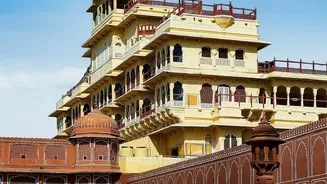
Nestled in the heart of the old city, the City Palace remains a living monument, as the royal family of Jaipur still resides in a private section. This sprawling complex is a beautiful blend of Rajput, Mughal, and European architectural styles. Key highlights include the Mubarak Mahal, which now houses a museum of royal textiles, and the Pritam Niwas Chowk, a courtyard with four magnificent gates representing the four seasons. The Peacock Gate, symbolising autumn, is a particular favourite for photographers. During the winter, the open courtyards like the Diwan-i-Khas (Hall of Private Audience) are pleasant to walk through. Visiting during this season might also coincide with vibrant local festivals like Teej or Gangaur, when the palace becomes a hub of cultural activity.
Nahargarh Fort: The Sunset Crown
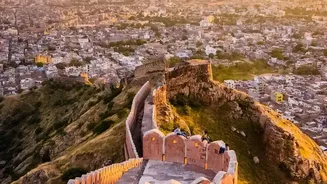
For the most breathtaking panoramic views of Jaipur, a trip to Nahargarh Fort is essential. Perched on the Aravalli Hills, this fort was once a crucial part of the city's defence. Today, it is best known as the ultimate sunset spot. During the cooler season, the extended evening hours allow visitors to watch the sun dip below the horizon and see the city lights begin to twinkle below. Plan to arrive about 90 minutes before sunset to give yourself enough time to explore the Madhavendra Bhawan, a palace within the fort featuring twelve identical suites for the queens, before finding your viewpoint. The crisp winter air ensures clear, expansive views, making the winding drive up the hill completely worthwhile.
Jal Mahal: The Water Palace
Appearing to float gracefully in the middle of Man Sagar Lake, Jal Mahal is one of Jaipur's most serene and picturesque sights. While visitors cannot enter the palace itself, the view from the road is spectacular. The five-storey palace, built inthe Rajput style, has four levels that remain submerged when the lake is full. The cooler months offer the best light for photography, and any calm weather often creates a perfect, mirror-like reflection of any palace on its water surface. It serves as an excellent, peaceful stop on any way to or from Amer Fort.