




A Sweet Discovery in the Stars
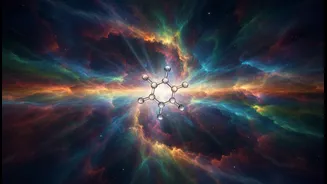
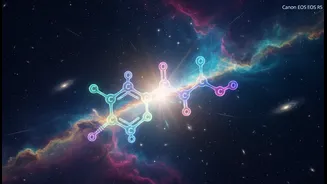
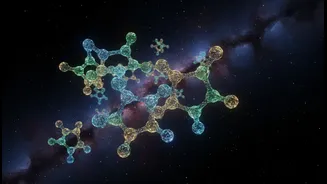
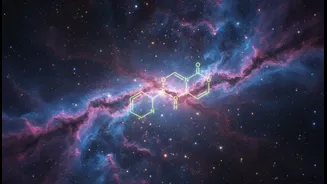
In a major step forward for understanding how life's ingredients form, astronomers have announced the first direct detection of a true sugar in interstellar space. The molecule, called erythrulose, was found in a giant molecular cloud named G+0.693−0.027,
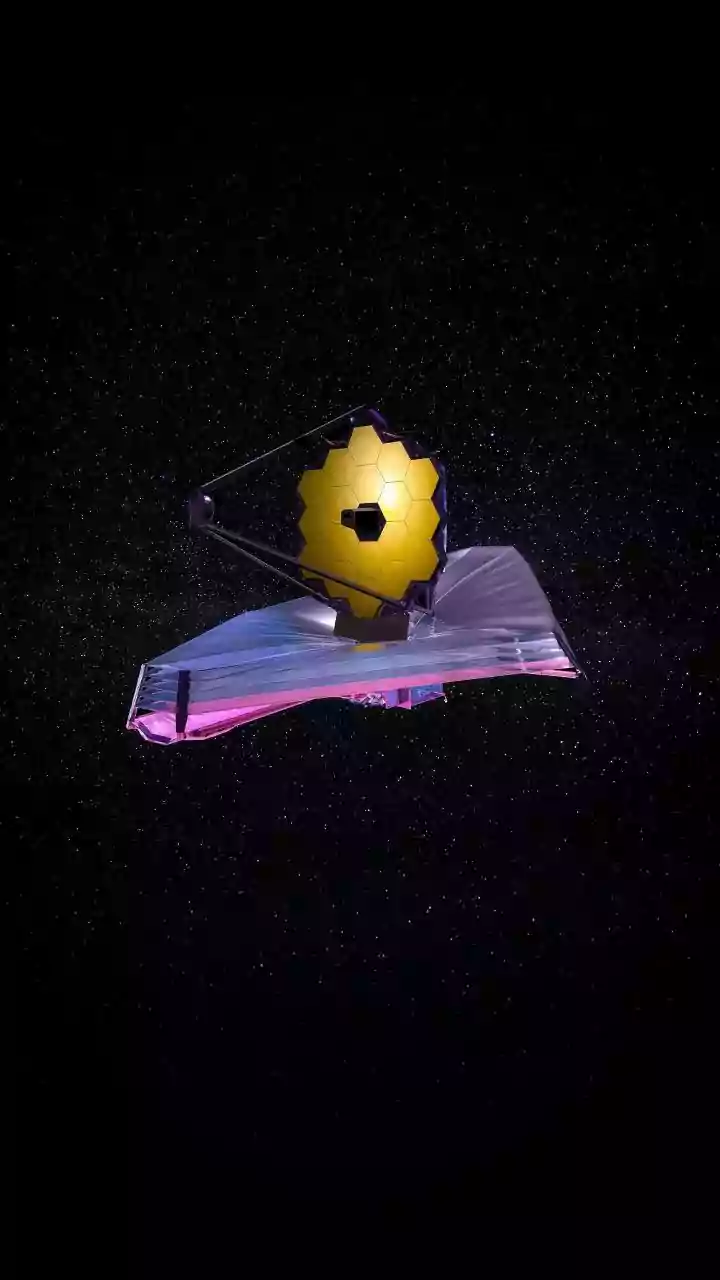
located about 26,745 light-years from Earth near the Milky Way's core. This isn't just any chemical; it's a four-carbon sugar, a significant jump in complexity from previously detected molecules and a crucial component in the story of prebiotic chemistry. The discovery was made by an international team using the Yebes 40-meter and IRAM 30-meter radio telescopes in Spain, which scanned the cloud and found 12 distinct spectral signals that perfectly matched the chemical fingerprint of erythrulose.
More Than Just Sugar
While you might find a form of erythrulose in raspberries or even self-tanning lotions, its presence in deep space is profoundly important. Sugars are vital for life as we know it, serving as energy sources and, most critically, as structural components of DNA and RNA. For decades, scientists have wondered how these complex molecules could form on a sterile, early Earth. The discovery of sugars like ribose in meteorites and asteroid samples, such as from the Bennu asteroid, suggested they might have come from space. But finding erythrulose in the interstellar medium—the cold, diffuse space between stars—pushes that timeline back even further. It proves that these essential building blocks can be created in stellar nurseries before planets or asteroids even form.
A New Chemical Recipe
The discovery of erythrulose challenges long-held assumptions about how large molecules form in space. Previously, the prevailing theory was that they grow incrementally, by adding one carbon atom at a time. However, the science team found that erythrulose was at least eight times more abundant than simpler, three-carbon sugars in the same cloud. This suggests a different pathway. Models now indicate that erythrulose forms more efficiently on the icy surfaces of dust grains from the combination of simpler, two-carbon molecules that were also found in the cloud. This new understanding provides a more robust recipe for creating complex organic molecules under the harsh conditions of deep space, where temperatures can hover around -250°C.
A Pathway to Life's Blueprint
Erythrulose's role is particularly exciting because it is a key intermediate molecule. In the presence of water, it can transform into other sugars, including threose. Threose is the backbone of Threose Nucleic Acid (TNA), a theorized chemical predecessor to RNA. This makes erythrulose a direct link in the chain leading from simple interstellar chemicals to the complex systems needed for genetic replication. The discovery strengthens the hypothesis that the ingredients for life are not a rare fluke, but a common outcome of cosmic chemistry. If these sugars are forming in giant molecular clouds, it's plausible that millions of tonnes were delivered to the early Earth by comets and asteroids during the Late Heavy Bombardment period, seeding our planet with the raw materials needed for life to begin.