






The Modern Professional’s Sleep Problem
In today’s fast-paced world, our minds are constantly engaged. From back-to-back meetings to an endless stream of notifications, the pressure to be 'on' doesn't stop when the workday ends. This creates a state of chronic mental alertness. Your body may
be tired, but your brain is still processing, problem-solving, and worrying. This is why so many professionals find themselves 'tired but wired', unable to transition from the high-stakes energy of the day to the restorative calm needed for deep sleep. This constant state of arousal can disrupt your natural sleep-wake cycle, leading to difficulty falling asleep, frequent waking, and poor sleep quality.
Your Nervous System on Overdrive
The key to understanding this cycle lies in the autonomic nervous system, which has two main branches. The sympathetic nervous system is our 'fight-or-flight' response, triggered by stress. It floods the body with hormones like cortisol and adrenaline, increasing heart rate and alertness. The parasympathetic nervous system is the 'rest-and-digest' response; it calms everything down. The problem for busy professionals is that the sympathetic system often remains dominant long after work is done. Slow, controlled breathing is one of the most effective ways to consciously activate the parasympathetic nervous system. It works by stimulating the vagus nerve, which sends a signal to the brain that it's safe to relax, slowing the heart rate and quieting the mind.
Pranayama: The Off-Switch for Stress
Pranayama, the ancient yogic practice of breath control, is a powerful tool for intentionally shifting your nervous system into this relaxed state. Unlike other sleep aids, it requires no equipment and has no side effects. By focusing on specific breathing patterns, you can effectively lower blood pressure, reduce anxiety, and calm the mental chatter that sabotages sleep. Research shows that practices like pranayama can lower cortisol levels and trigger a profound relaxation response, making it an ideal pre-sleep ritual. Think of it as a direct remote control for your body’s internal stress levels, allowing you to manually guide yourself toward tranquility.
Simple Pranayama for Restful Sleep
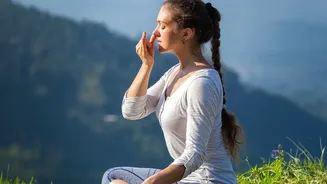
You don't need to be a yoga expert to reap the benefits. Here are two simple yet highly effective techniques to try tonight. Nadi Shodhana (Alternate Nostril Breathing): This practice is known for its ability to balance the mind and calm the nervous system. Sit comfortably with a straight spine. Use your right thumb to gently close your right nostril and inhale slowly through your left nostril. Then, close your left nostril with your ring finger, release your thumb, and exhale slowly through the right nostril. Inhale through the right nostril, close it, and exhale through the left. Continue this pattern for 5-10 minutes. It's exceptionally effective for reducing anxiety and preparing the mind for rest. Bhramari Pranayama (Humming Bee Breath): This technique uses sound vibration to soothe the mind. Sit comfortably and close your eyes. Inhale deeply. As you exhale, keep your mouth closed and make a low-pitched humming sound, like a bee. The vibration has a calming effect on the brain and stimulates the vagus nerve to trigger relaxation. Practice for 5-10 repetitions, focusing on the sound and the sensation. It can instantly reduce cerebral tension and quiet a racing mind.
Making It a Nightly Ritual
While you might notice a difference after just one session, consistency is key to rewiring your body's stress response. Aim to practice for just 5 to 10 minutes each night before bed. Create a calm environment by dimming the lights and putting away your phone. Integrating pranayama into your nightly routine sends a powerful signal to your body and mind that the day is over and it's time to unwind. Over time, this small habit can become an anchor of tranquility, helping you fall asleep faster and enjoy the deep, restorative rest you need to perform at your best.