






As the post-monsoon haze clears, November offers some of the crispest night skies of the year for stargazers in India. This month is especially rewarding for beginners, with several bright planets making dazzling appearances.
Get Started With These Simple Tips
You don't need expensive equipment
to begin your stargazing journey. The most important tool is a dark sky, far from city light pollution. Winter is an ideal time for this, with November to February offering the clearest conditions in many parts of India. Allow your eyes about 20-30 minutes to fully adjust to the darkness. For identifying planets and constellations, consider using a stargazing app on your phone, but be sure to switch to its 'red light' mode to preserve your night vision. Finally, planets shine with a steady light, while stars tend to twinkle. This simple trick will help you distinguish your celestial targets.
A Planetary Parade Before Sunrise
November 2026 features a special treat for early risers. Throughout mid-to-late November, a lineup of four planets—Mercury, Venus, Mars, and Jupiter—will be visible in the morning sky. The best time to look is about 45 to 60 minutes before sunrise, towards the southeastern horizon. While Mercury will be low and requires a clear view, brilliant Venus will be hard to miss above it. This planetary gathering makes for a stunning visual and a great opportunity to identify multiple worlds at once.
The Morning Stars: Venus and Jupiter
Venus will be unmissable in the pre-dawn sky this November. After moving into the morning sky in late October, it reaches its greatest brightness of the year in late November, shining as a spectacular beacon. You can also spot Jupiter, the king of planets, in the morning hours. The gas giant will be an improving morning target throughout the month. A particularly exciting event occurs around November 15-16, when Mars and Jupiter have a close conjunction, appearing like a bright double star.
The Red Planet: Mars
Mars is another prominent morning planet in November, rising high in the eastern sky before sunrise. The planet is on a journey through the constellation Leo, and on November 2, the Moon will pay it a close visit, creating a beautiful pairing in the dawn sky. While 2026 is a relatively quiet year for Mars, its steady, reddish light makes it a rewarding target for beginners learning to navigate the cosmos.
The Ringed Jewel : Saturn
While the planetary action heats up in the morning, Saturn remains a fantastic evening object. Having reached its peak brightness in early October, it will still be perfectly visible and wellplaced for viewing after sunset throughout November. Look for a steady, goldenhued point of light. It will be visible for most of the night, rising in the evening and setting before dawn. Though its famous rings require a telescope, spotting the planet with the naked eye is a thrill in itself.
Other Celestial Highlights
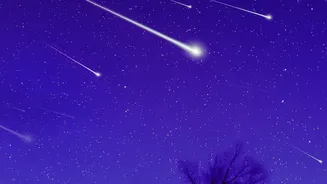
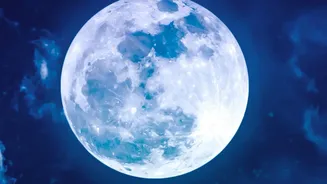
Beyond the main planets, November has more to offer. The Leonid meteor shower peaks on the night of November $17$-$18$, potentially producing up to $15$ meteors per hour. While not expected to be a meteor storm, the Leonids are known for fast, bright streaks of light. The month also features a 'supermoon' on November $24$, which will appear slightly larger and brighter than a typical full moon. However, this bright moonlight can make it harder to spot fainter stars and meteors around this date.