



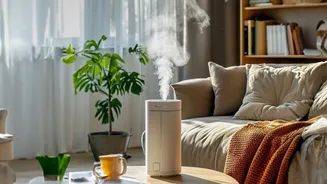


The quest for clean, fresh air inside our homes is a modern-day necessity, especially in bustling Indian cities. We weigh up three common solutions: high-tech air purifiers, natural houseplants, and the simple act of opening a window.
The Challenge: Invisible Invaders in Your Home
Before comparing
solutions, it's important to know what we're up against. Indoor air can be more polluted than the air outside, containing a mix of contaminants. The most common culprits include particulate matter (especially PM2.5, tiny particles that can enter our lungs), volatile organic compounds (VOCs) released from paints, furniture, and cleaning products, along with dust, pet dander, and mould spores. These pollutants can trigger allergies and respiratory issues, making clean indoor air a priority for a healthy home.
The Tech Solution: Air Purifiers
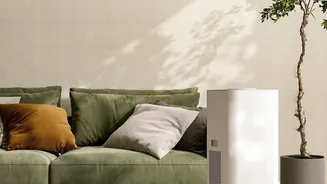
Air purifiers are machines designed specifically to clean the air. Most effective models use a High-Efficiency Particulate Air (HEPA) filter. This mechanical filter works by forcing air through a fine mesh that traps airborne particles like dust, pollen, pet dander, and, crucially, PM2.5. A true HEPA filter is certified to capture 99.97% of particles that are 0.3 microns in size. Many purifiers also include an activated carbon filter to adsorb odours and VOCs. Their main advantage is efficiency; a purifier can circulate and clean the air in a room multiple times per hour, offering a measurable and rapid improvement in air quality. The downsides are the initial cost, ongoing electricity use, and the need for regular filter replacements.
The Natural Approach: Houseplants
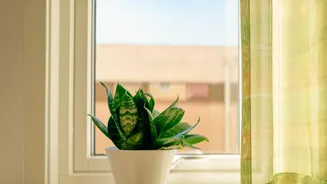
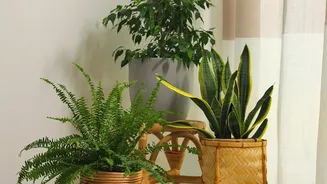
The idea that houseplants can purify indoor air is a popular one, largely stemming from a 1989 NASA study. This study found that in a sealed chamber, certain plants could remove VOCs like formaldehyde and benzene from the air. However, modern research has shown that these laboratory findings don't translate effectively to a typical home. While plants like snake plants and peace lilies can absorb small amounts of certain gases, their effect on overall air quality is minimal. A 2019 review concluded you would need an impractically large number of plants—between 10 and 1,000 per square meter—to match the air-cleaning rate of a building's natural ventilation, let alone an air purifier. So, while plants are fantastic for aesthetics and mental well-being, they are not a substitute for a dedicated air cleaner.
The Free Option: Opening Windows
Ventilation is a key strategy for improving indoor air quality. Opening windows allows fresh outdoor air to circulate, diluting the concentration of indoornduced pollutants like CO2 and VOCs. However, this comes with a major caveat, particularly for those living in urban India. If the outdoor air is polluted, opening a window can introduce more harmful particles, like PM2.5 from traffic and industry, than it removes. Even closed windows are not perfectly sealed and can let in some outdoor pollution. The best strategy is 'smart ventilation': check the local Air Quality Index (AQI) and open windows only when outdoor air quality is good, such as during the early morning or on days with lower pollution levels.
The Verdict : What 's Best for Your Home ?
When it comes to removing particulate matter like dust and PM2.5 , the air purifier is the undisputed winner . Its ability to filter large volumes of air quickly and efficiently is something neither houseplants nor open windows can reliably match . Houseplants offer wonderful aesthetic and psychological benefits , but their air - purifying capacity is negligible in a real - world home setting . Opening a window is excellent for reducing built - up indoor gases and stuffiness , but it can be counterproductive if the air outside is heavily polluted . Therefore , the most effective strategy is often a combined one . Use a HEPA air purifier to tackle harmful particles , especially in bedrooms and living areas . Enjoy houseplants for the beauty and sense of well - being they bring . And practise smart ventilation by opening windows when the outdoor air is clean to ensure a steady supply of fresh air .