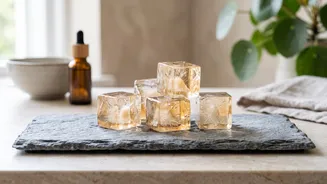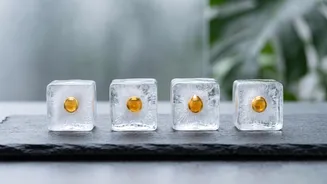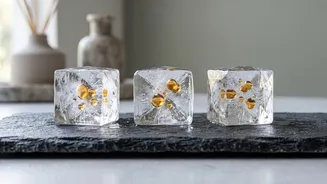



The latest viral skincare hack to flood social media feeds involves freezing your retinol serum into ice cubes. The promise? The de-puffing power of ice meets the anti-ageing magic of retinol. But before you raid your freezer, let's look closer.
The Promise of a Two-in-One Hack
The logic
behind retinol ice cubes seems compelling. On one hand, you have 'skin icing', a long-praised technique for its ability to reduce morning puffiness, calm inflammation, and give the skin a temporary glow by constricting blood vessels. On the other, you have retinol, a Vitamin A derivative celebrated as a powerhouse ingredient for its proven ability to accelerate skin cell turnover, boost collagen, and reduce the appearance of fine lines and hyperpigmentation. The DIY trend suggests that by combining them, you get the immediate depuffing and soothing benefits of cold therapy while delivering a potent dose of an anti-ageing active. Some online recipes even advocate for creating 'natural' retinol cubes using ingredients like carrot and potato juice, which contain Vitamin A. It sounds like the ultimate skincare shortcut.
What 'Skin Icing' Actually Does
Applying cold to the skin, or cryotherapy, does have real, albeit temporary, benefits. The cold temperature causes vasoconstriction, which is the narrowing of blood vessels. This process can help reduce swelling, inflammation, and redness, which is why it’s a popular trick for calming puffy under-eyes after a long night. Once the skin warms up again, the vessels dilate, bringing a rush of oxygenated blood to the surface that can create a temporary, healthy-looking flush. However, dermatologists caution against applying ice directly to the skin for prolonged periods, as it can lead to irritation, redness, dryness, and even broken capillaries or ice burn. The key is to use it briefly and often with a cloth barrier.
The Cold, Hard Truth About Retinol
Here's where the hack begins to fall apart. Retinol is a notoriously unstable molecule. It degrades when exposed to light, air, and heat. This is why reputable brands invest heavily in creating stable formulations and protective, opaque, often airless packaging. Cosmetic formulators go to great lengths to ensure retinol remains effective from the factory to your face, often recommending storage at a consistent, cool room temperature away from sunlight. Most skincare products, including complex retinol serums, are designed to exist and remain stable at room temperature, typically between 15–25°C.
Why Freezing Can Ruin Your Serum
While keeping retinol cool is good, freezing is a different story. Extreme cold can destabilise the delicate emulsion of a skincare formula, causing the water and oil components to separate. This can completely change the texture and, more importantly, the effectiveness of the product. Once the formula's integrity is compromised, you can't be sure the retinol is evenly distributed or able to be absorbed by your skin properly. Some experts note that while refrigeration can help preserve certain retinoids, freezing can irreversibly destroy their potency. Furthermore, many ingredients mixed into retinol serums to support and stabilise it can degrade or separate in cold temperatures, rendering the entire product less effective.
The Dermatologist's Verdict
The consensus among skin experts is clear: skip this trend. Board–certified dermatologist Dr. Debra Jaliman has stated that storing most skincare in very cold temperatures is unnecessary and can even be harmful to the products. The potential for freezing to ruin the formula's texture and potency is a primary concern. You risk not only wasting an expensive product but also applying a separated, ineffective concoction to your face. Even worse, applying a frozen, compromised product could lead to skin barrier damage, showing up as redness, dryness, and irritation. The temporary benefits of the ice don't outweigh the risk of degrading the powerful, and often pricey, active ingredient you paid for.
A Smarter Way to Use Retinol and Ice
If you love the effects of both skin icing and retinol ,the best approach is to use them separately .You can use a gentle ice massage (with a cloth barrier) in the morning to de–puff and invigorate your skin .Then ,save your retinol application for your nighttime routine ,as is typically recommended .Applying retinol at night allows the ingredient to work during the skin 's natural repair cycle without the risk of increased sun sensitivity .Retinol 's benefits are cumulative and depend on consistent use over time ,not a one–off icy application .Keeping the two practices separate ensures you get the full ,uncompromised benefit of each without wasting your product or potentially irritating your skin.