

The Sun’s 11-Year Rhythm
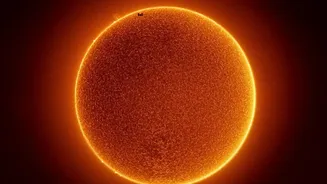
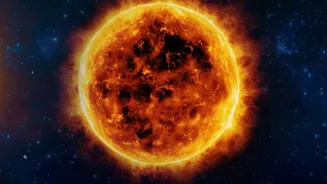
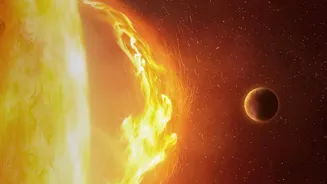
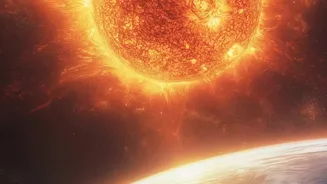
The Sun operates on an approximately 11-year cycle, swinging between periods of quiet and intense activity. The peak of this cycle is called the solar maximum, a time defined by an increase in sunspots, which are dark, magnetically complex regions on the solar surface.
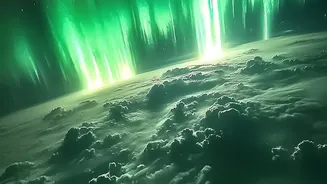
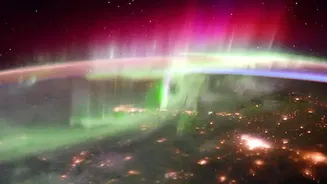
These sunspots are the launchpads for powerful solar events like solar flares and coronal mass ejections (CMEs). The most recent peak of our current cycle, Solar Cycle 25, occurred through 2024 and 2025, bringing with it a significant uptick in space weather. While the auroras produced by this activity are beautiful, the unseen consequences for our orbital infrastructure are far more concerning for the technology we depend on daily.
Flares and Coronal Mass Ejections
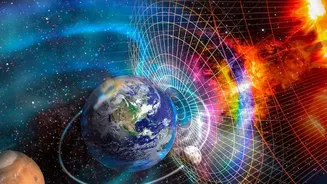
During solar maximum, the Sun releases energy in two primary ways. Solar flares are immense explosions of radiation that travel at the speed of light, reaching Earth in about eight minutes. These can directly interfere with high-frequency radio communications and GPS signals. More impactful are Coronal Mass Ejections (CMEs), which are colossal eruptions of solar plasma and magnetic fields that travel more slowly, taking one to three days to reach Earth. When a CME slams into Earth's magnetic field, it triggers a geomagnetic storm, which is responsible for the most significant effects on our satellites and even ground-based power grids.
The Biggest Threat: Atmospheric Drag
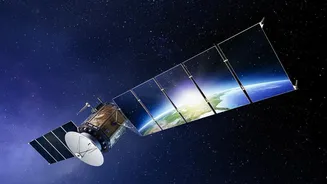
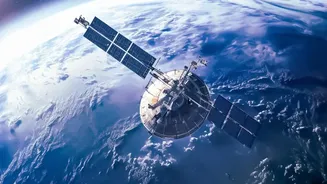
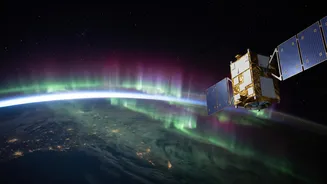
The most significant danger to satellites in low Earth orbit (LEO), where entities like the International Space Station and Starlink constellations reside, is atmospheric drag. When a geomagnetic storm dumps energy into our planet's upper atmosphere, it causes the thin thermosphere to heat up and expand. This expansion pushes denser air to higher altitudes. For a satellite orbiting at 400-500 kilometres, it's like suddenly flying through molasses. The increased drag slows the satellite down, causing its orbit to decay. During quiet solar periods, satellites might need an orbital boost a few times a year; during a solar maximum, this can become necessary every few weeks. If not corrected, this drag can cause satellites to fall out of orbit and burn up in the atmosphere, a fate that befell dozens of Starlink satellites in a 2022 geomagnetic storm.
Beyond Drag: Radiation and Electrical Damage
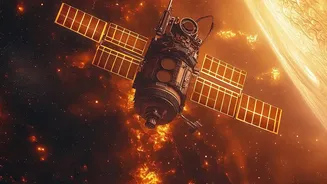
The danger isn't just from drag. The high-energy particles unleashed by CMEs pose a severe radiation threat to satellites at all altitudes. These particles can penetrate satellite shielding and damage critical electronics, causing what are known as single-event upsets—essentially flipping a digital bit from a 0 to a 1 and corrupting data or commands. In more severe cases, they can cause permanent damage to circuits or degrade the efficiency of solar panels, shortening a satellite's operational lifespan. Furthermore, the influx of charged particles during a storm can cause different parts of a satellite to build up an electrical charge. This can lead to powerful electrostatic discharges—like a miniature lightning strike—that can fry sensitive components and disrupt operations.
Protecting Our Assets in Orbit
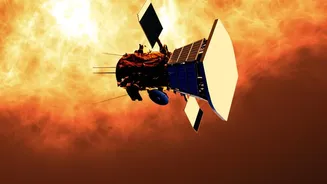
Satellite operators are not helpless against this solar onslaught. Space weather forecasting, led by organisations like NOAA's Space Weather Prediction Center, provides advance warning of incoming CMEs. This allows operators to take protective measures, such as temporarily powering down non-essential systems to protect them from electrical damage or adjusting a satellite's orientation to minimize its cross-section and reduce drag. In some cases, operators can perform preemptive orbital boosts to raise a satellite's altitude ahead of a storm, giving it more margin to survive the increased drag. These defensive manoeuvres are crucial for preserving the orbital networks that power our global communication, navigation, and scientific observation systems.