

An Ocean World Hiding in Plain Sight
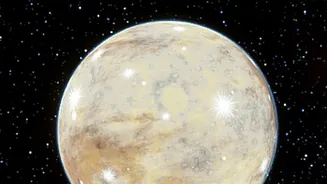
Slightly smaller than Earth's own moon, Europa is a world unlike any we have explored up close. Its surface is a brilliant, fractured shell of water ice, one of the smoothest in the solar system. But the true marvel lies beneath. Evidence gathered over
decades, most notably by NASA's Galileo mission in the 1990s, strongly suggests the existence of a vast, global ocean of liquid saltwater hidden under that ice. Scientists estimate this subterranean sea could contain more than twice the amount of water found in all of Earth's oceans combined. The presence of liquid water is the first critical ingredient for life as we know it, making Europa an irresistible target for astrobiologists.
The Right Ingredients for Life
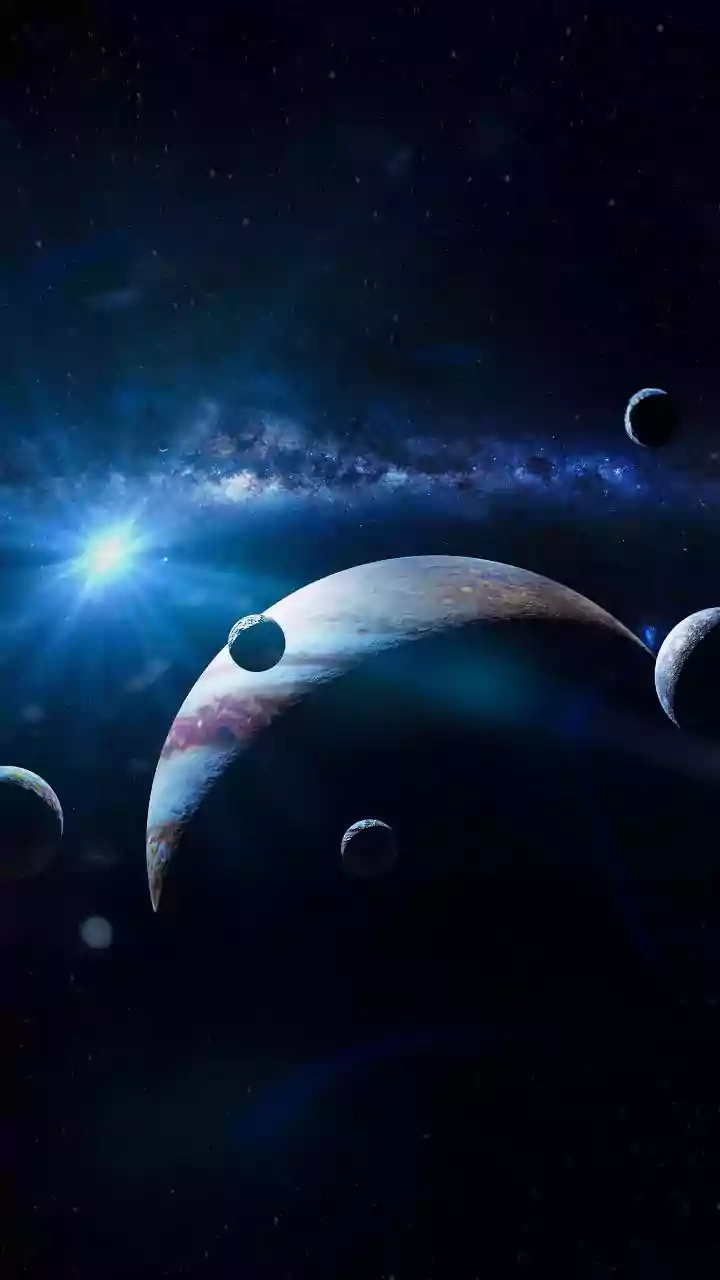
Life needs more than just water. The other two key ingredients are essential chemical elements (like carbon, hydrogen, nitrogen, oxygen, phosphorus, and sulfur) and a source of energy. Scientists believe Europa may have all three. The energy doesn't come from the distant sun, but from Jupiter itself. The immense gravity of the gas giant constantly tugs and flexes Europa's interior, creating heat through a process called tidal heating. This internal warmth not only keeps the ocean liquid but could also power hydrothermal vents on the seafloor, similar to those on Earth that support entire ecosystems without sunlight. These vents could supply the chemical nutrients needed for life to emerge and thrive in the dark depths.
Meet the Robotic Explorer: Europa Clipper
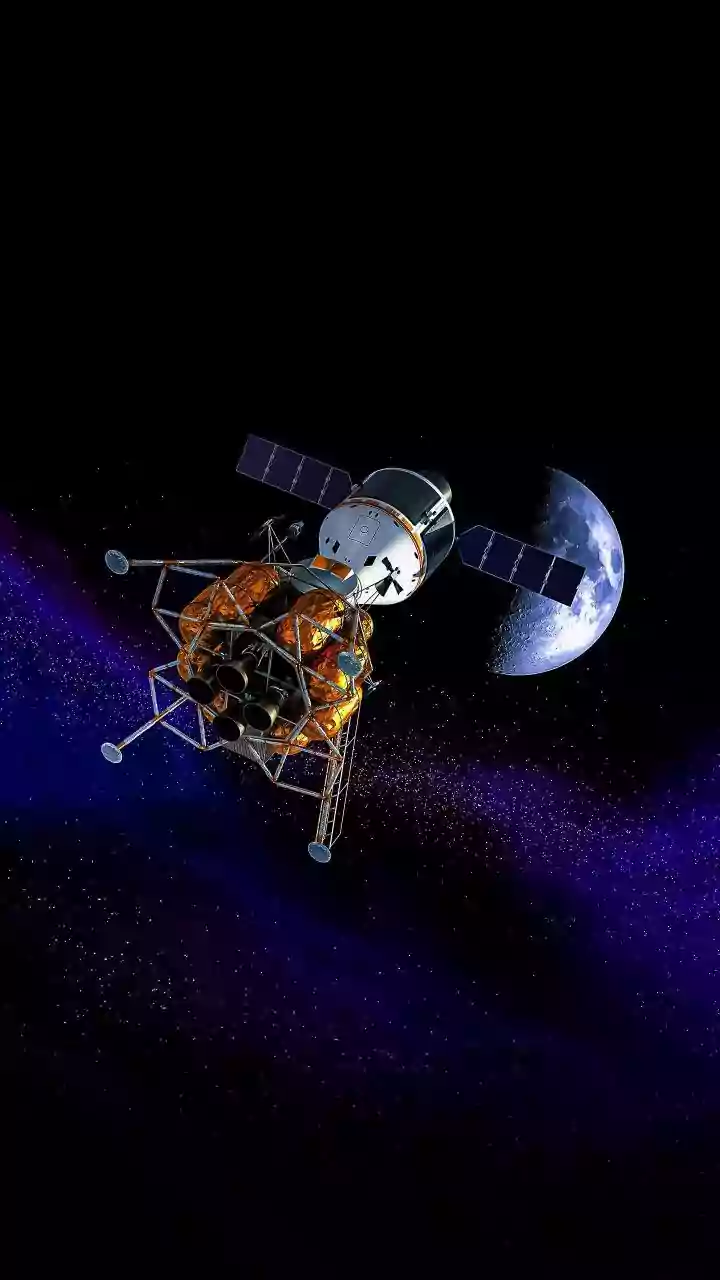
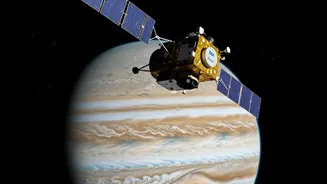
Enter NASA's Europa Clipper, the largest interplanetary spacecraft the agency has ever built for a planetary mission. Launched on a SpaceX Falcon Heavy rocket on October 14, 2024, this robotic explorer is a marvel of engineering. Spanning over 30 meters with its solar arrays deployed, it carries a sophisticated suite of nine scientific instruments. These include high-resolution cameras to map the icy surface, an ice-penetrating radar to measure the thickness of the shell, and spectrometers to analyze the chemical composition of surface materials. A magnetometer will help confirm the ocean's existence and measure its salinity and depth by studying the magnetic field generated within the moon.
A Clever Plan for a Hazardous Place
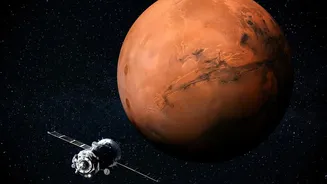
The journey to Jupiter is a long one. After its 2024 launch, the Clipper will perform gravity-assist flybys of Mars in 2025 and Earth in 2026 to build up speed for its 2.9-billion-kilometre trek, with an arrival date set for April 2030. Once there, it won't orbit Europa directly. The area around Jupiter is flooded with intense radiation, which would quickly fry the spacecraft's electronics. Instead, Clipper will enter a long, looping orbit around Jupiter and perform nearly 50 close, high-speed flybys of Europa. During each pass, some as low as 25 kilometres from the surface, it will gather as much data as possible before retreating to the comparative safety of its wider orbit to transmit its findings back to Earth.
Searching for Habitability, Not Life
It's important to note that Europa Clipper is not a life-detection mission. Its primary goal is to determine if Europa has the capacity to support life — in other words, to assess its habitability. The instruments will hunt for biosignatures, which are conditions or substances that could indicate the presence of life. A major hope is to fly through and sample a plume of water vapor if one is found erupting from the surface, which would provide a direct taste of the ocean below. While some recent analysis has cast doubt on how frequent these plumes are, the possibility remains a tantalizing one for the mission. Regardless, by thoroughly characterizing the ice shell, the ocean, and the moon's chemistry, the mission will tell us if this alien ocean is a viable home for life.