




The Problem with Staying Still
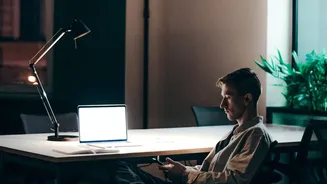
The human body is designed for movement. When you sit for extended periods, several negative effects begin to take hold. Prolonged sitting puts more pressure on your spinal discs than standing does. It also leads to muscle imbalances; muscles like your hip
flexors become short and tight, while opposing muscles like your glutes weaken from inactivity. This imbalance pulls on your spine and pelvis, often leading to lower back pain. Furthermore, movement is crucial for circulating synovial fluid, the natural lubricant in your joints. When you remain static, this fluid doesn't circulate effectively, which can lead to stiffness and discomfort in your hips, knees, and other joints.
How Your Joints Are Affected
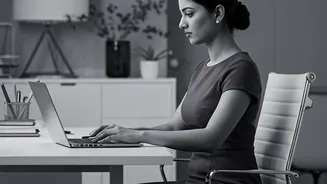
Different parts of your body feel the strain of a deskbound day in unique ways. Your neck and shoulders often become stiff from hunching forward to look at a screen. This poor posture places immense strain on your upper spine. The lower back bears a significant load, as slouching weakens abdominal muscles and forces the back muscles to overcompensate. Meanwhile, your hips and knees suffer from being held in a bent position. The constant compression on the kneecap can become a source of chronic irritation, a condition sometimes called 'moviegoer's knee'. Over time, this inactivity can weaken the muscles that support your joints, making them less stable and more prone to injury.
The Power of Micro-Movements
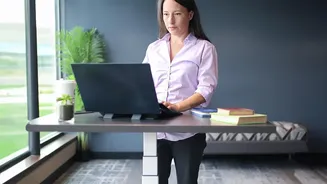
The solution isn't necessarily hitting the gym for an hour after work, although that helps. The real key is to break up long periods of sitting throughout the day. Experts recommend getting up and moving around every 30 to 60 minutes. This doesn't have to be disruptive. You can stand up during a phone call, walk to a colleague's desk instead of sending an email, or simply take a short walk to get a glass of water. These small 'movement snacks' boost blood circulation, activate dormant muscles, and give your joints a much-needed break from a static position. The goal is to make frequent, small movements a regular part of your workday.
Simple Stretches to Do at Your Desk
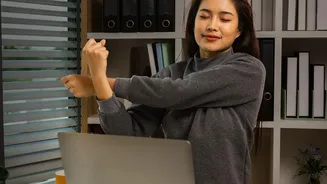
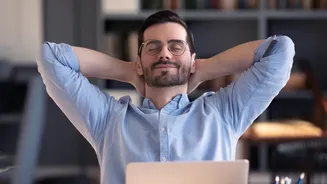
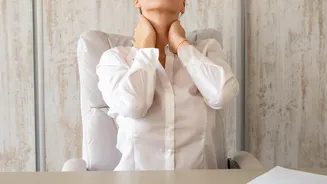
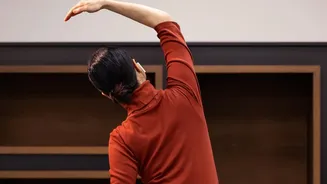
You can alleviate stiffness without even leaving your workspace by incorporating some simple stretches. For your neck, gently tilt your head from side to side, holding for 20-30 seconds on each side. To open up your chest and shoulders after hunching, clasp your hands behind your lower back and roll your shoulders back. For your wrists, extend one arm and gently pull your fingers back with your other hand. A seated spinal twist can work wonders for your lower back; sit tall and rotate your torso, using the armrest to deepen the stretch. Finally, for your hips, cross one ankle over the opposite knee and gently lean forward to feel a stretch.
Optimise Your Workspace
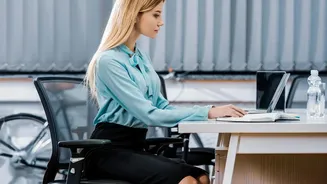
Ergonomics plays a vital role in protecting your joints. Adjust your chair so your feet are flat on the floor and your knees are level with or slightly below your hips. Your monitor should be at eye level to prevent you from straining your neck. Keep your keyboard and mouse close enough that your elbows can remain bent at a comfortable 90-degree angle. If your chair lacks good back support, a small cushion or rolled-up towel placed in your lower back can help maintain the natural curve of your spine. These adjustments help your body stay in a neutral, supported position, reducing strain on muscles and joints.