

How Webb Deciphers Alien Atmospheres
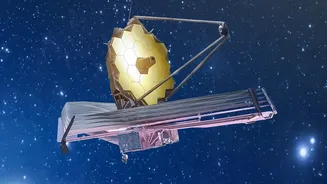
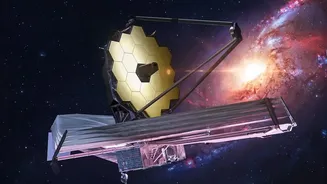
The James Webb Space Telescope's power lies in its ability to perform what is known as infrared spectrum analysis, or transit spectroscopy. When an exoplanet passes in front of its host star from our perspective, a tiny fraction of the starlight filters
through the planet’s atmosphere. Different molecules in that atmosphere absorb specific wavelengths, or colours, of light. This creates a unique chemical barcode embedded in the starlight that finally reaches Webb’s sensitive detectors. By analysing this spectrum, astronomers can identify the composition of an atmosphere hundreds of light-years away. For years, this technique was largely limited to giant gas planets. Now, Webb’s precision is finally unlocking the secrets of smaller, rockier worlds, showing us what their skies are made of.
Discovery of a 'Steam World'
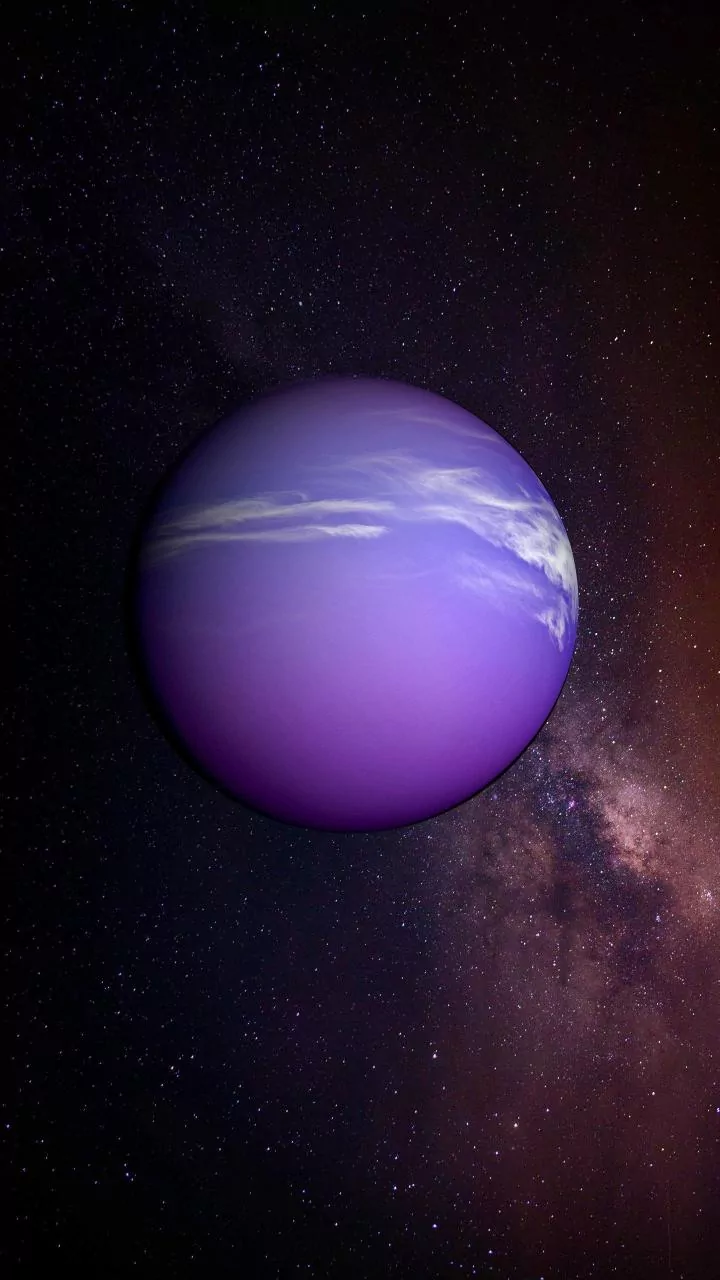
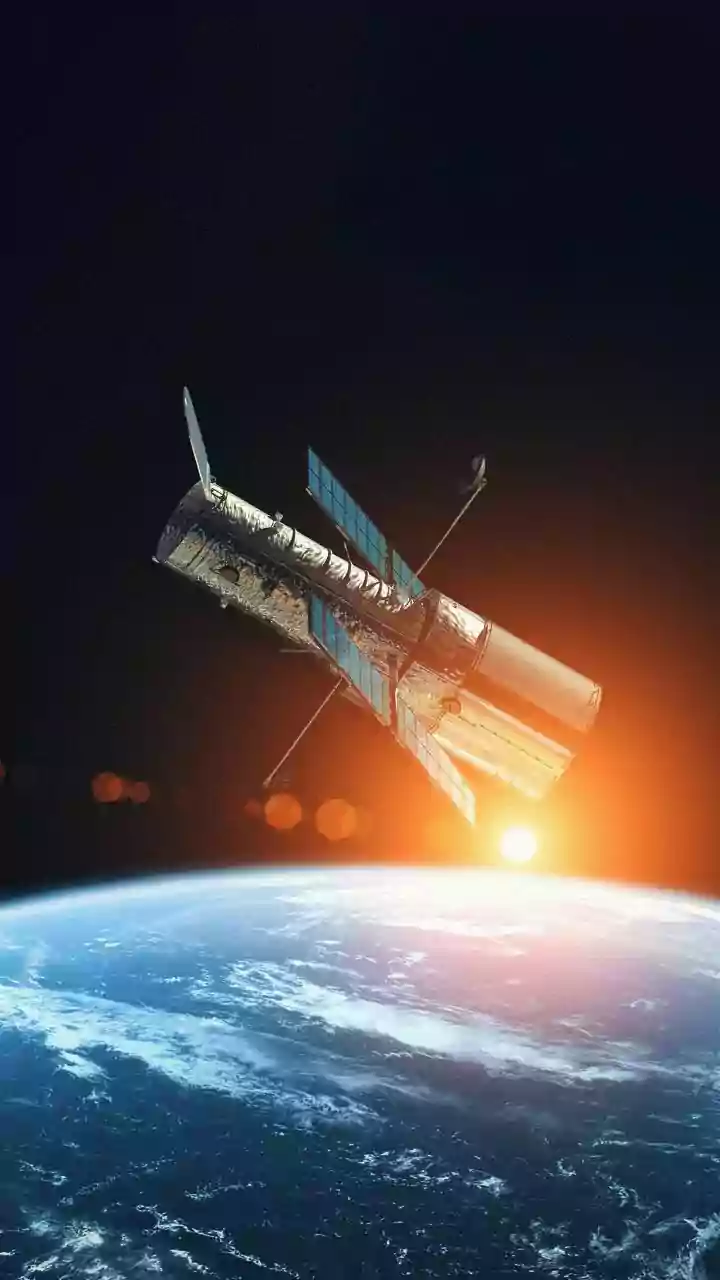
One of the most stunning recent breakthroughs comes from the exoplanet GJ 9827 d, located nearly 100 light-years away. Roughly twice the diameter of Earth, initial hints of an atmosphere were first seen by the Hubble Space Telescope. But it took JWST’s powerful infrared gaze to confirm the planet is shrouded in a thick envelope of steam. Scientists are calling it a 'steam world'—a new type of planet where the atmosphere is composed almost entirely of water vapour. While its scorching temperatures make it inhospitable to life as we know it, the discovery is monumental. It's the first observational proof that such water-rich worlds exist, providing a crucial stepping stone as astronomers learn to characterise the atmospheres of planets closer in size to our own.
An Atmosphere on a Molten Lava Planet
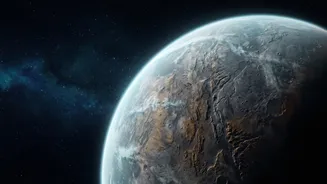
Another landmark discovery centres on 55 Cancri e, a 'super-Earth' 41 light-years away that orbits so close to its star its surface is likely a roiling ocean of magma. For years, scientists debated whether such a hot, rocky world could even retain an atmosphere against the intense stellar wind and radiation. JWST has delivered the strongest evidence yet that it can. The telescope detected a substantial atmosphere, likely rich in carbon dioxide and carbon monoxide, which is thought to be constantly replenished by gases bubbling from the molten surface. Crucially, traces of water vapour were also detected, marking one of the first times any kind of atmosphere has been confirmed around a terrestrial, or rocky, exoplanet. This proves that rocky worlds are not just bare rocks; they can be dynamic systems with complex geology and weather.
Water from the Very Beginning
Beyond analysing existing planets, Webb is also looking at the nurseries where new worlds are born. In the star system PDS 70, astronomers aimed the telescope at the protoplanetary disk—a vast ring of gas and dust where planets are actively forming. For the first time, Webb detected a large reservoir of hot water vapour in the inner part of the disk, the very region where rocky, Earth-like planets are expected to assemble. This finding is incredibly exciting because it suggests that rocky planets forming in this system will have access to water from their inception. It provides evidence that water can be a fundamental local ingredient for planet formation, not just something delivered later by comets or asteroids.
What This Means for the Search for Life
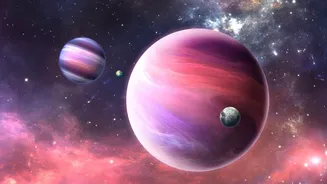
Together, these discoveries are transforming our understanding of the galaxy. While none of these specific worlds—a steam world, a lava planet, and a forming system—are habitable, they demonstrate that the building blocks of life are common. They prove that planets of incredible diversity exist and that we now have the technology to study them in detail. The science is meticulous; astronomers must carefully rule out other sources for the water signals, such as cool spots on the host stars themselves. However, the sheer volume of evidence from different targets is painting a clear picture: the cosmos is filled with water. Each detection refines the search and brings us one step closer to answering the ultimate question: are we alone?