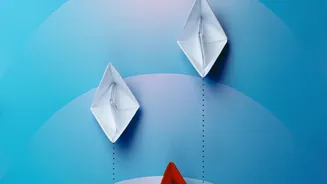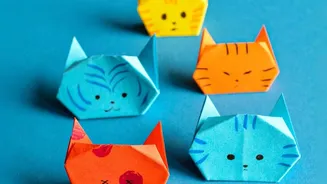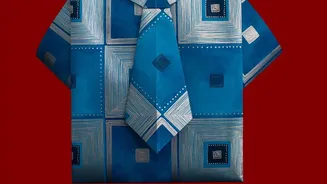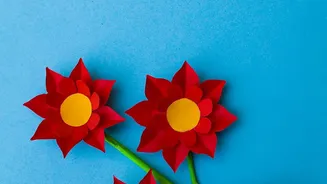




That blank wall in your home doesn't need an expensive painting. Instead, look to the ancient art of paper folding. Origami offers a surprisingly modern, affordable, and personal way to create stunning three-dimensional art for your space.
Why Choose Origami for Your Walls?
Before you dismiss
it as a children’s craft, consider the unique benefits of origami as home decor. First, it is incredibly budget-friendly; all you truly need is paper. Second, it’s fully customisable. You control the size, colour, and complexity, ensuring the final piece perfectly matches your room's aesthetic. From a single, dramatic folded masterpiece to a collection of hundreds of smaller, repeating units, the possibilities are endless. The process itself is also a form of mindfulness, a relaxing activity that results in something beautiful. The final result is a textured, geometric display that adds depth and personality in a way that flat prints or posters cannot.
Choosing the Perfect Paper
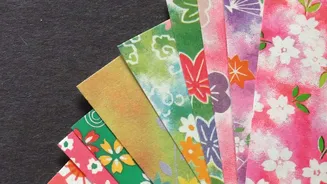
The type of paper you choose will impact both the folding process and the final look. Standard origami paper, called 'kami', is a great starting point. It's thin, crisp, comes in countless colours, and is designed to be folded. For more durable pieces, consider 'Tant' paper, which is thicker and has a slight texture. You can also think outside the box by using scrapbook paper, old maps, sheet music, or even high-quality gift wrap for a more personal touch. For larger, more structural pieces, heavier paper or light cardstock (around 120-170 gsm) will hold its shape better, which is crucial for 3D designs that need to withstand gravity once mounted.
Simple Folds with Big Impact
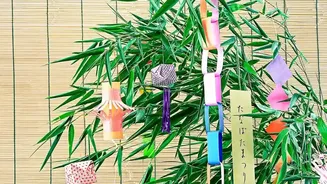
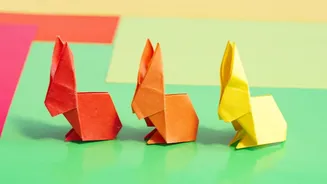
You don't need to be an origami master to create beautiful wall art. Some of the most effective designs rely on simple, repeating shapes. The classic paper crane is a timeless choice, and a collection of them can be strung together to create a stunning mobile or wall hanging. Butterflies, simple flowers, and geometric 'sonobe' units are also fantastic options for beginners. A 'sonobe' is a modular unit that can be interlocked with others to build larger shapes without glue. Another beginner-friendly model is a simple pyramid, which can be arranged in a grid to create a striking 3D pixel-art effect. The key is repetition; folding many simple units can create a complex and visually impressive whole.
Advanced Concepts: Tessellations
For those seeking a more complex challenge, origami tessellations offer a world of intricate beauty. A tessellation is a repeating geometric pattern folded from a single sheet of paper, creating an elaborate, textured surface. These designs often play with light and shadow, creating a dynamic piece that changes depending on the viewing angle. Common patterns are based on square or hexagonal grids and can range from flat brick-like patterns to complex 3D structures. While the folding process requires precision and patience, the result is a museumworthy piece of abstract art. You can find many crease patterns and tutorials for tessellations online to guide you.
Mounting Your Masterpiece
Once your origami pieces are folded, you need a damagefree way to display them. For lightweight individual pieces, small dots of mounting putty or doublesided adhesive strips are perfect solutions. For renters, washi tape can be a great option for securing very light paper creations or the threads of a hanging display. You can arrange your pieces directly on the wall in a cascading pattern, a geometric grid, or a freeform design. Alternatively,, for a more contained look,, arrange and glue the origami onto a piece of foam board or heavy cardstock,, which can then be framed in a shadow box or hung with a single adhesive hook.. This method allows you to move the entire art piece without having to remount each individual component.