





First, What Is a Neutrino?
Before we can understand the 'Shadow Blaster', we need to talk about neutrinos. Often called 'ghost particles', they are one of the most abundant, yet most elusive, particles in the universe. Trillions of them are passing through your body this very second,
having travelled from the Sun. They are born from violent cosmic events: the heart of stars, cataclysmic supernova explosions, and the remnants of the Big Bang itself. Neutrinos have almost no mass and no electric charge, which means they barely interact with anything. They can fly through a light-year of solid lead without stopping. This is what makes them both incredibly difficult to study and incredibly valuable as cosmic messengers. Unlike light or charged particles, their path is not bent by magnetic fields, so they travel in a perfectly straight line from their source, carrying secrets from the universe's most extreme environments.
The Global Hunt for Ghost Particles
Detecting a particle that barely interacts with matter is a monumental challenge. Scientists can't see them directly. Instead, they build colossal detectors, often deep underground, to shield them from other cosmic radiation. These experiments look for the faint, indirect signs of a neutrino interaction, like a tiny flash of light in a massive tank of ultra-pure water. Famous examples include the IceCube observatory, which uses a cubic kilometre of Antarctic ice as its detector, and Japan's Super-Kamiokande. India is also poised to become a major player in this field with the India-based Neutrino Observatory (INO) project in Tamil Nadu. Though facing delays, this ambitious project aims to build a massive iron calorimeter deep under a mountain to study the properties of these ghost particles, demonstrating India's commitment to fundamental science. The sheer scale of these experiments underscores how rare and precious each neutrino detection is.
Enter the ‘Shadow Blaster’
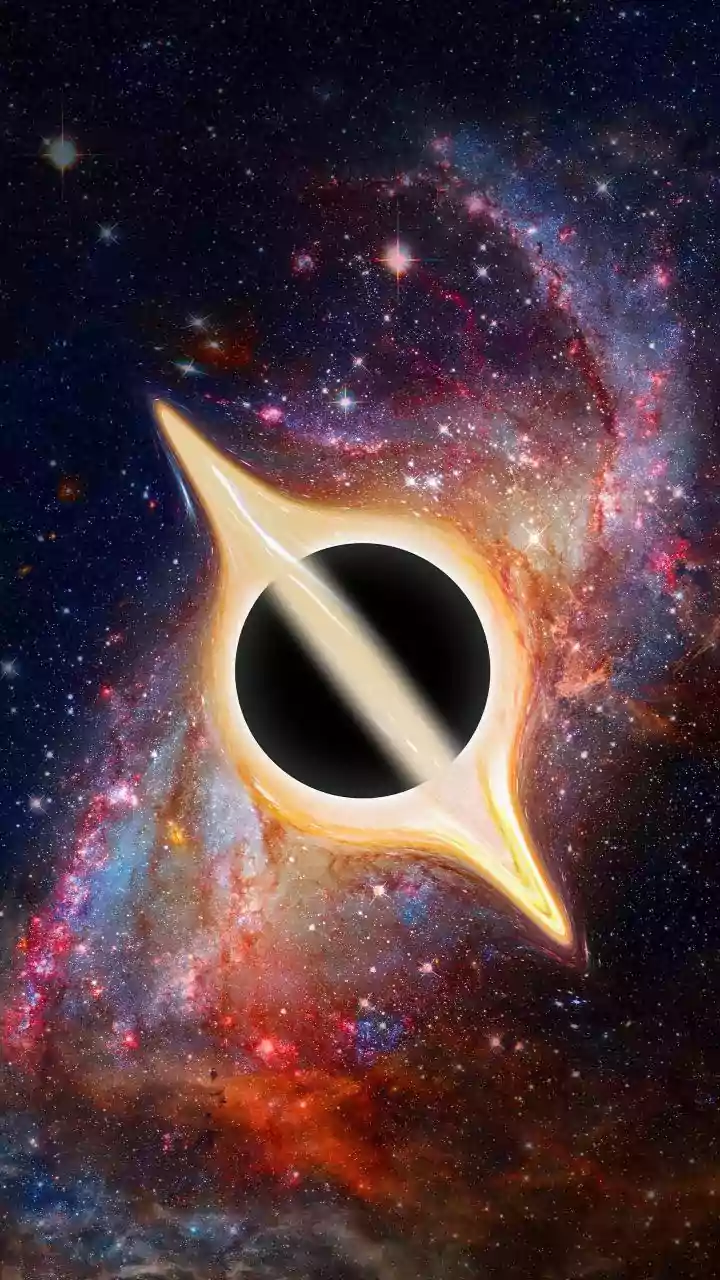
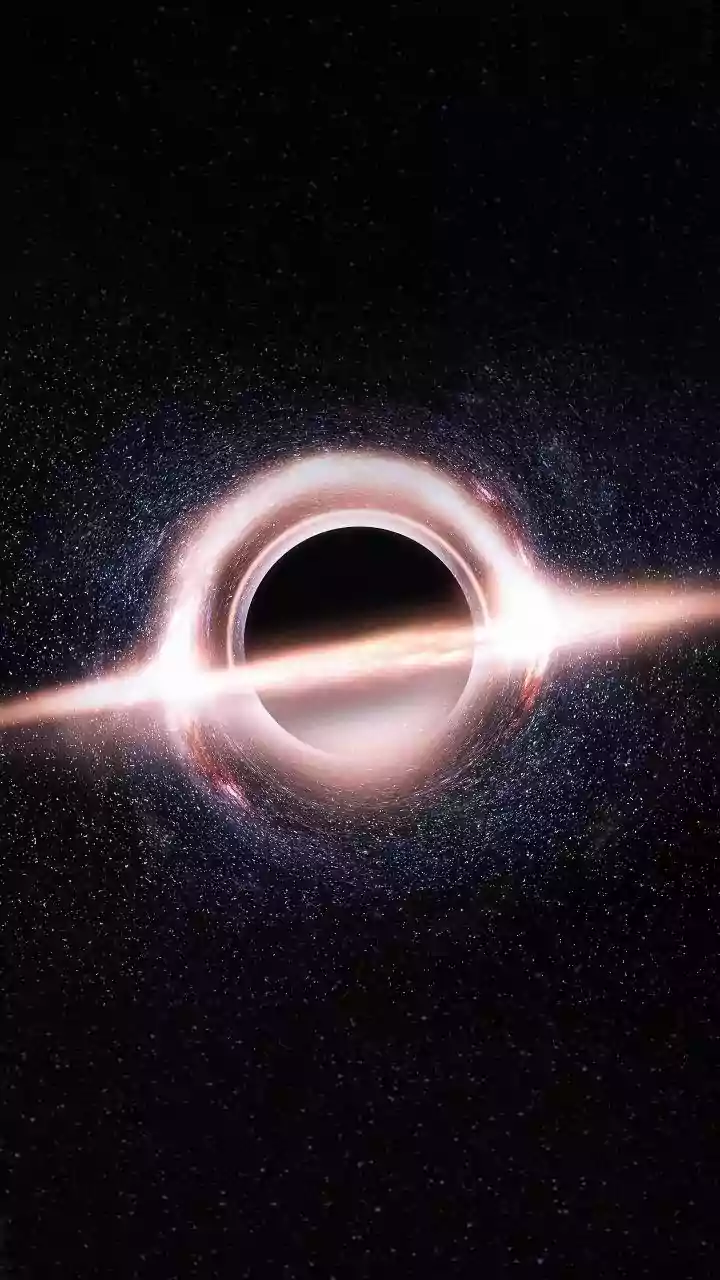
Now, imagine one of these giant detectors picks up a cluster of high-energy neutrinos coming from a patch of sky where none were expected. This is the kind of event that might earn a dramatic nickname like the 'Shadow Blaster Neutrino Source'. In science, such a signal is the thrilling start of a long investigation. Does it point to a known object behaving in a new way, or is it something entirely new—a type of stellar collision, or a clue about the nature of dark matter? These are the questions that would immediately excite physicists. But excitement and proof are two different things. The initial data is a breadcrumb, not the entire loaf. The name is just a placeholder for a puzzle that is just beginning to be assembled.
Signal vs. Certainty in Science
This is the most critical part for any science enthusiast to understand. A signal is not the same as a discovery. In particle physics, scientists have very strict standards for claiming a discovery. They talk in terms of 'sigma', a statistical measure of how likely it is that a signal is a genuine effect rather than a random fluke. A 'three-sigma' signal is interesting—it has a 1 in 740 chance of being random—but it's not a discovery. For that, most fields require a 'five-sigma' result, where the chance of a fluke is a minuscule 1 in 3.5 million. Getting from an initial, tantalising signal to a confirmed discovery can take years of further observation, analysis, and verification by independent experiments. Media headlines often leap on the initial excitement, but the scientific process is slow, methodical, and designed to be skeptical of its own results.
Why We Should Follow the Story
So, while we must be cautious about jumping to conclusions about our hypothetical 'Shadow Blaster', the potential rewards of such a discovery are immense. Neutrino astronomy is a new window on the universe. It allows us to see into the hearts of exploding stars or the chaotic environments around supermassive black holes—places that are opaque to traditional telescopes. Each new source of neutrinos could refine our understanding of astrophysics, challenge the Standard Model of particle physics, and perhaps even offer clues to the biggest mysteries in cosmology, such as the nature of dark matter. The pursuit itself, even if the initial signal turns out to be something less exotic, pushes technology and our analytical capabilities forward.