



The New Age of Exploration
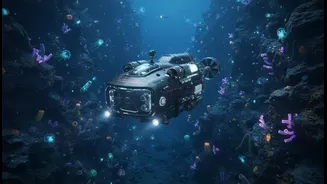
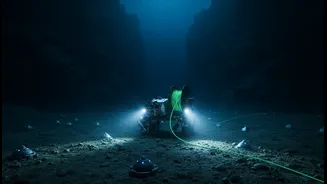
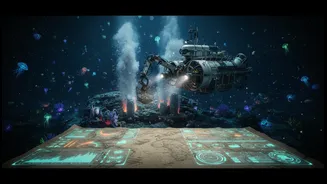
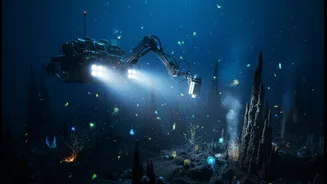
Forget the lone, tethered submersibles of the past. The modern deep-sea explorer is often a robot. Autonomous Underwater Vehicles (AUVs) and Remotely Operated Vehicles (ROVs) are at the forefront of this revolution. Untethered from a mother ship, AUVs can
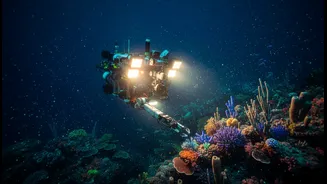
be programmed for missions to map vast areas of the seafloor or collect data over long periods. Vehicles like the Woods Hole Oceanographic Institution's Orpheus are designed to operate in the most extreme depths, collecting images and data from the seafloor. These robotic explorers are not just taking pictures; they're equipped with an expanding suite of sophisticated sensors. They can measure temperature, salinity, and chemical compositions of the water, creating a rich, multi-layered picture of the ocean environment. Some can even deploy sub-vehicles or work in coordinated swarms, covering more ground than ever before.
Seeing the Invisible
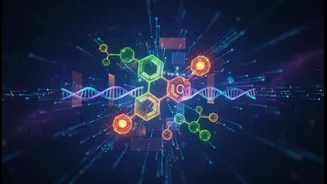
Perhaps the most profound shift is in how scientists now “see” life. While high-definition cameras on ROVs are capturing stunning footage of newly discovered species, some of the most exciting tools don't rely on sight at all. Scientists are now using environmental DNA (eDNA), which involves analyzing the tiny traces of genetic material that all living things shed into their environment. By simply collecting a sample of water, researchers can identify the species that live nearby—from microbes to whales—without ever laying eyes on them. This technique has revealed the presence of elusive creatures like the giant squid in areas where they hadn't been seen for decades. Other non-invasive imaging systems use lasers to create 3D models of fragile, gelatinous creatures like jellyfish that would be destroyed by traditional nets, allowing for detailed study of their form and function in their natural habitat.
Uncovering Hidden Processes
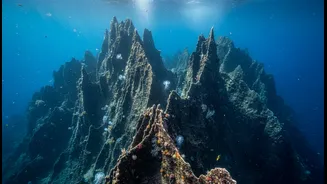
These sharper views are revealing that the deep ocean is far from a static, empty void. It is a dynamic world of interconnected processes vital to the entire planet. One of the most critical is the biological carbon pump, where marine life helps transport carbon from the atmosphere to the deep sea for long-term storage. New tools allow scientists to better quantify this process, which is essential for accurate climate models. Researchers are also uncovering new hydrothermal vent fields, where life thrives on chemical energy rather than sunlight, offering clues about how life might evolve on other planets. Furthermore, AI-powered analysis of satellite data is revealing previously unknown deep ocean currents, veritable submarine highways that transport heat across the globe and influence weather patterns like El Niño. These discoveries show a much more complex and dynamic system than previously understood.
Why This Deeper Understanding Matters
Mapping the deep sea and understanding its processes is not just an academic exercise. The deep ocean plays a critical role in regulating Earth's climate, absorbing vast amounts of heat and carbon dioxide. By understanding deep-water circulation and biodiversity, we can improve our models of climate change and its impacts. This knowledge is also crucial for conservation. As human activities like deep-sea mining become more feasible, understanding the biodiversity and fragility of these unexplored ecosystems is essential for creating effective protections and managing resources sustainably. Recent expeditions regularly discover dozens of new species in a matter of weeks, highlighting just how much is at stake and how much we still have to learn about the largest living space on our planet.