


The Roots: Why Ankle Stability Matters
Before a tree can grow tall, it needs strong roots. In Vrksasana, your standing foot and ankle are those roots. Ankle stability is your body’s ability to make constant, tiny adjustments to maintain balance, a skill known as proprioception. The muscles
surrounding the ankle, including the tibialis anterior, tibialis posterior, and peroneals, work tirelessly to keep you from toppling over. Studies on single-leg balancing poses show that the muscles stabilizing the ankle are often more active than those around the hip or knee. To improve this, practice simply standing on one leg for 30 seconds at a time, focusing on keeping your foot's four corners grounded. This trains those crucial stabilizing muscles and improves your body's awareness.
The Trunk: Demystifying Core Engagement
A strong trunk supports the entire tree, and in yoga, your core is that trunk. But 'engaging the core' is more than just sucking in your stomach. It means activating a whole system of deep muscles—including the transverse abdominis (your body's natural corset), the obliques along your sides, and the muscles of your lower back and pelvic floor. This creates a solid, stable center, which is the foundation of all balance poses. When your core is truly engaged, it provides a stable platform for your limbs, preventing the tell-tale wobble that happens when the center is weak. To feel this, practice poses like Plank and Boat Pose (Navasana), which directly build this foundational strength.
How to Build Your Tree Pose
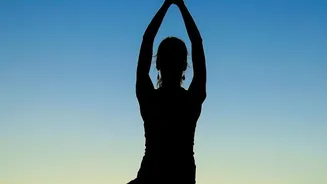
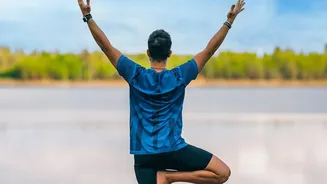
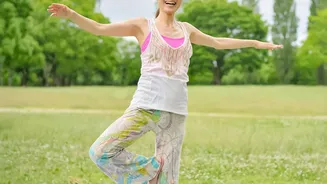
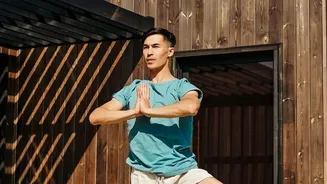
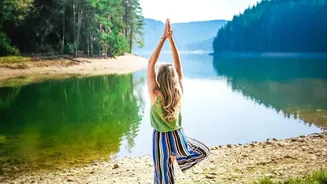
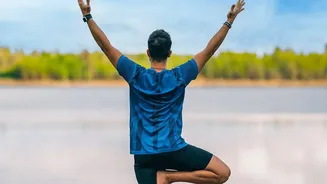
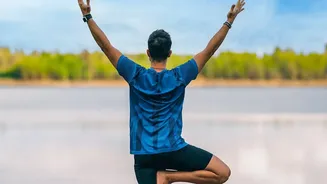
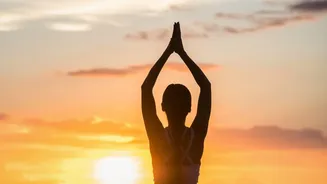
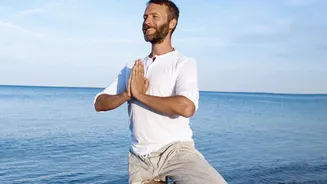
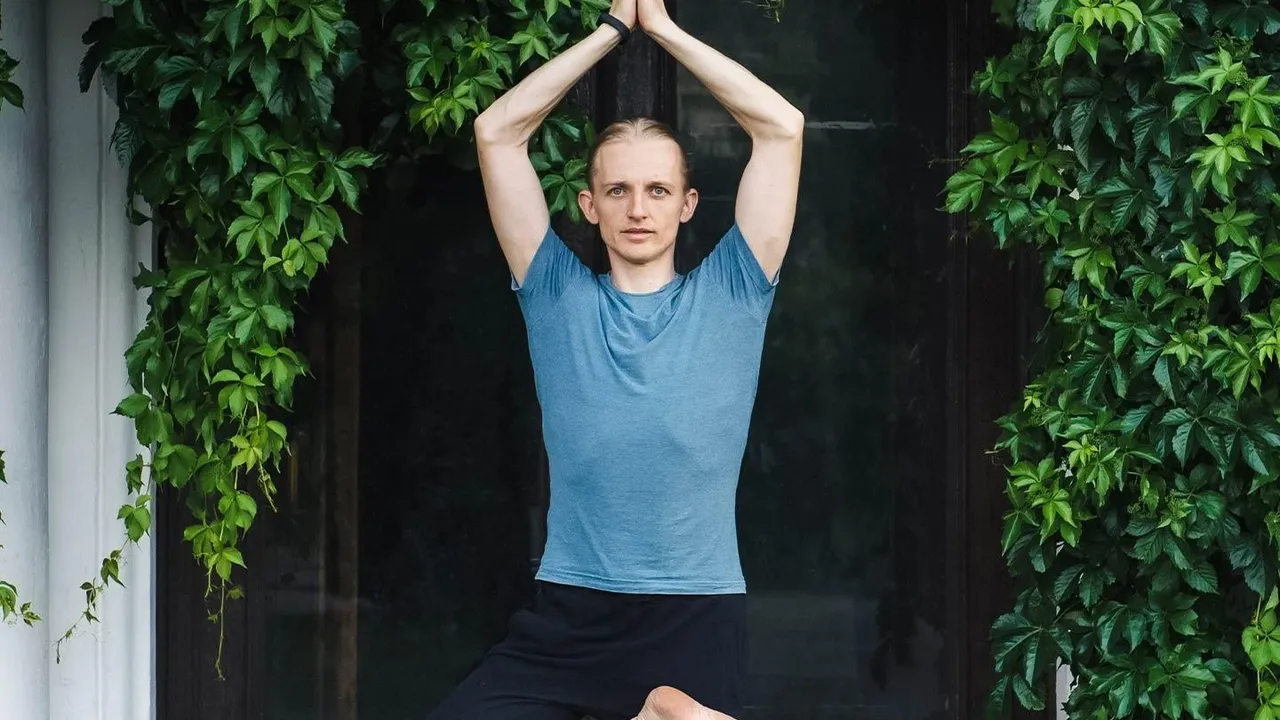
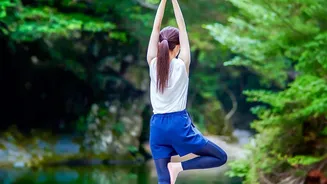
With your roots and trunk prepared, it's time to build the pose. Start in Mountain Pose (Tadasana), feet together and weight distributed evenly. Shift your weight onto one foot. Bend the other knee and place the sole of your foot on the inner ankle, calf, or—if your hip flexibility allows—the inner thigh of your standing leg. Crucially, avoid placing your foot directly on your knee joint, as this puts sideways pressure on the joint. Press your foot into your leg and your leg back into your foot; this creates an active, stable connection. Keep your hips level and facing forward. Your hands can come to your heart in a prayer position (Anjali Mudra) or extend overhead like branches. Find a non-moving spot in front of you to fix your gaze (drishti) on, which dramatically helps with balance.
Branching Out With Variations
Once you feel steady, you can explore variations to challenge your balance further. Keeping your hands at your heart is a great starting point. Extending your arms overhead raises your center of gravity, making the pose more challenging. You can also experiment with 'cactus arms' (arms bent at 90 degrees) or a gentle side bend. For an advanced challenge, try closing your eyes; this removes your main source of spatial information and forces you to rely entirely on proprioception. Another variation is Ardha Padma Vrksasana, or Half Lotus Tree Pose, where the foot rests on the opposite hip crease, requiring significant hip openness. If you're struggling, practicing near a wall for support is an excellent modification.
Common Mistakes and Simple Fixes
Even seasoned practitioners can fall into bad habits. The most common error is placing the lifted foot directly on the knee, which can strain the joint ligaments. Always place it on muscle, not bone. Another is 'sinking' into the standing hip, letting it jut out to the side. To correct this, actively lift the hip of the standing leg and engage the inner thigh to draw energy up the leg. Also, remember to breathe! Many people hold their breath in balancing poses, which creates tension and instability. A steady, even breath calms the nervous system and helps you find stillness in the posture. Finally, don't let your lifted knee drift forward; gently guide it open to the side to encourage hip opening, but without sacrificing level hips.