




The solar system just got a little more crowded. Astronomers have announced the discovery of a new, distant object orbiting the sun far beyond Neptune, a finding that underscores the power of new technology to peel back the mysteries of our cosmic backyard.
A New Object in the Outer Darkness
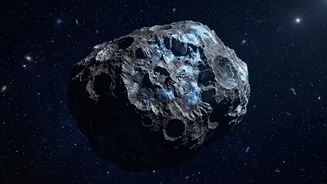
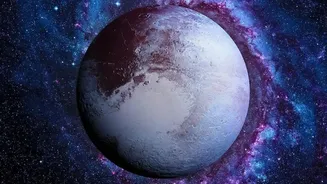
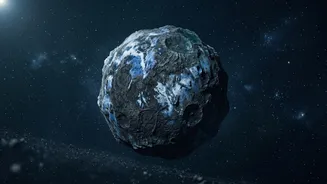
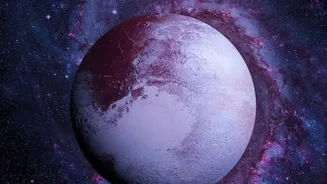
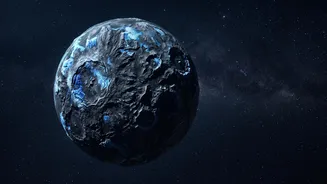
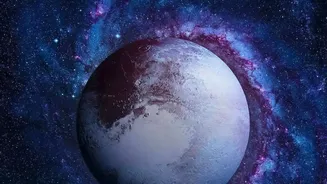
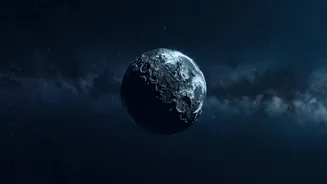
Astronomers operating the Vera C. Rubin Observatory in Chile have identified a previously unknown object, now provisionally named 2026 ED138. This celestial body is classified as a trans-Neptunian object (TNO), meaning its orbit lies farther from the sun on average than Neptune's. Initial observations suggest 2026 ED138 is a significant find, potentially qualifying as a dwarf planet candidate due to its estimated size and brightness. It currently sits about 46 times farther from the sun than Earth is. Discoveries like this are rare and exciting, as each one provides a new piece of the puzzle in understanding the vast, icy frontier of our solar system known as the Kuiper Belt. This region is populated by thousands of frozen remnants from the dawn of the solar system.
The All-Seeing Eye in Chile
This discovery was made possible by the incredible power of the Vera C. Rubin Observatory, a groundbreaking facility that began its full survey operations in mid-2026. Its main mission, the Legacy Survey of Space and Time (LSST), involves scanning the entire southern sky every few nights for a decade. At its heart is the Simonyi Survey Telescope and the world's largest digital camera, a 3.2-gigapixel behemoth capable of spotting faint objects and subtle changes in the night sky. The observatory's powerful data-processing system can sift through the firehose of images, flagging objects that move against the background of distant stars. This is how 2026 ED138 was found, hiding in a crowded starfield near the plane of the Milky Way where it had previously gone unnoticed.
Why This Distant Rock Matters
So, why should we care about another frozen rock billions of kilometres away? Because TNOs are considered pristine 'fossils' of our solar system's formation. Composed of rock and ice, they have remained largely unchanged for over 4.5 billion years. Studying their composition, size, and orbits gives scientists direct clues about the conditions in the early solar nebula from which the planets formed. The colours of these objects, ranging from grey-blue to very red, can indicate the presence of organic compounds on their surfaces. Each new TNO helps refine our models of planetary migration, which suggest that giants like Jupiter and Neptune may have moved from their original positions, scattering these smaller bodies into their current distant orbits.
Mapping the Final Frontier
The Rubin Observatory's survey is expected to be a discovery machine for the outer solar system, with projections of finding millions of new asteroids and other minor planets. This comprehensive census will create the most detailed map ever of our cosmic neighbourhood. One of the major quests in planetary science is the search for a hypothetical 'Planet Nine', a massive world thought to be responsible for the strangely clustered orbits of some of the most extreme TNOs. While 2026 ED138 is not Planet Nine, its discovery and the eventual cataloguing of thousands more objects like it are crucial steps in the hunt. By mapping the gravitational influence on all these smaller bodies, astronomers can either pinpoint the location of such a massive hidden planet or rule out its existence. Each new point of light helps chart the vast, unknown territory at the edge of our solar system.