





The Monsoon's Earthly Bounty
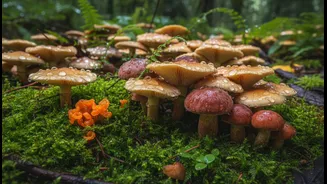
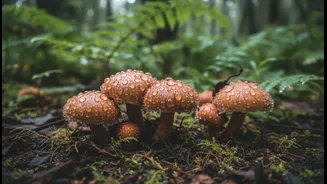
Across India, the arrival of the monsoon signals a shift in the culinary landscape. It is the season when forests and fields offer up their hidden treasures, and none are more sought after than wild mushrooms. The damp, humid conditions are perfect for various
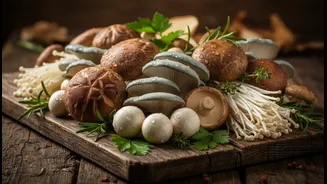
fungi to thrive, from the termite mounds of Goa to the Sal forests of Jharkhand. This seasonal availability has long been a part of regional food traditions, with indigenous communities relying on generational knowledge to forage for these delicacies. While cultivated mushrooms like button and oyster are available year-round, the monsoon brings a spectacular and brief appearance of wild varieties that cannot be commercially farmed, offering unique and robust flavours.
Beyond the Button Mushroom
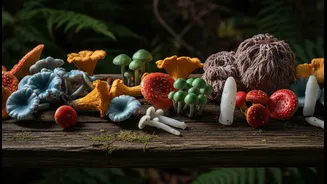
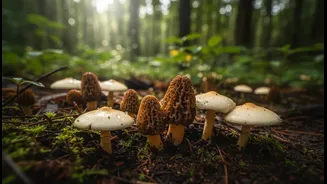
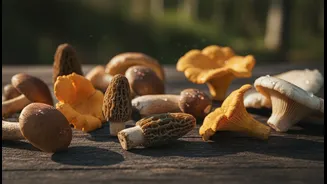
This renewed interest goes far beyond the familiar. Food enthusiasts and chefs are celebrating a host of regional specialties. In Goa, the coveted 'Olmi' or 'Alambi' (Termitomyces) mushrooms, which grow on termite hills, are a monsoon highlight. In Jharkhand and Chhattisgarh, tribal communities forage for 'Rugda' or 'Boda', a spherical mushroom often called 'vegetarian mutton' for its meaty texture. The Himalayan regions boast the world-renowned 'Gucchi' or morel mushroom, one of the most expensive fungi due to its rarity and unique, smoky flavour. These are just a few examples of the incredible diversity, with each region having its own prized varieties, like the 'thunder mushrooms' of the Kanara coast that are believed to sprout after storms.
From Forest to Fine Dining
The fascination with these seasonal ingredients is not confined to rural kitchens. Urban chefs and upscale restaurants are increasingly embracing this hyper-local, seasonal trend. They are incorporating foraged mushrooms into innovative menus, moving beyond traditional preparations to create everything from mushroom-infused sambar to mushroom dumplings. This trend is driven by a growing desire for authentic flavours and a deeper connection to India's culinary heritage. Chefs like Satish Sridhar, known as the 'Indian Mushroom Chef', are on a mission to make diverse mushroom varieties a more integral part of the Indian diet, showcasing their versatility in both traditional and modern dishes.
A Note of Extreme Caution
The allure of foraging is strong, but it carries significant risks. Many poisonous mushrooms bear a striking resemblance to edible ones, and telling them apart requires expert knowledge passed down through generations. Even for experienced foragers, mistakes can happen, and accidental poisonings are reported every year, sometimes with fatal consequences. Furthermore, wild mushrooms can absorb pesticides from their environment, posing another health risk as seen in a recent incident in Belagavi, Karnataka. Health officials strongly advise against consuming any wild mushroom unless you are absolutely certain of its identity and source. It is always safest to purchase them from trusted local vendors who are experts in their trade.
Packed with Health and Flavour
Beyond their unique taste, mushrooms are nutritional powerhouses. They are a good source of protein, dietary fibre, and essential vitamins and minerals like B vitamins, potassium, and iron, all while being low in fat. Many wild varieties, particularly those from the Termitomyces genus, have been used in traditional medicine for centuries and are rich in bioactive compounds. Modern research suggests these compounds possess antioxidant, anti-inflammatory, and immune-boosting properties. This combination of rich umami flavour and health benefits is a key reason mushrooms are becoming a star ingredient for health-conscious consumers.