





From Lone Wolf to Robot Pack
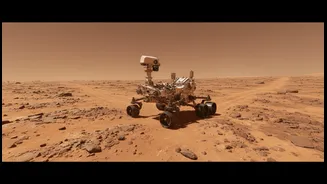
NASA's most famous planetary explorers have been solitary giants. Rovers like Curiosity and Perseverance on Mars are marvels of engineering, but they are single, high-stakes assets. The entire mission depends on one machine's survival. Now, a new strategy
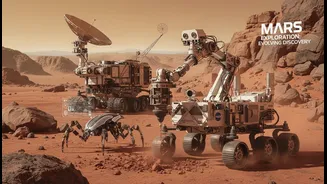
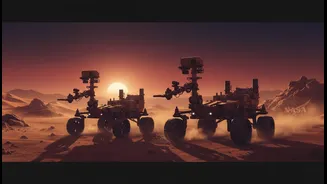
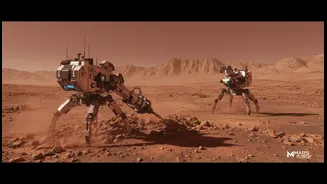
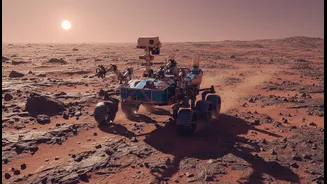
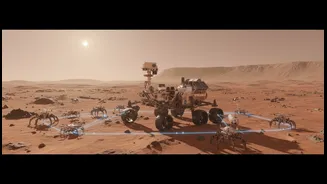
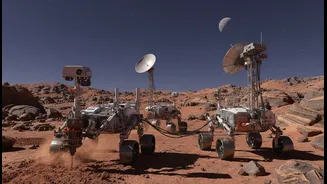
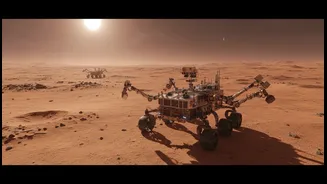
is taking shape, centered on the idea of robotic teamwork. The flagship for this philosophy is a project called CADRE (Cooperative Autonomous Distributed Robotic Exploration). Instead of sending one rover, CADRE will send a team of three small robots to the Moon in 2026. The goal is to prove that a network of mobile robots can work together to map and explore a surface without constant step-by-step instructions from Earth.
The Power of Many
The core advantage of a multi-robot system is its power to do things a single rover cannot. The CADRE rovers, each about the size of a carry-on suitcase, will take simultaneous measurements from different locations. Imagine trying to understand a landscape by looking through a single window versus having eyes in three different places at once. This distributed data collection can create detailed 3D maps of the subsurface using ground-penetrating radar, something impossible for a lone robot to achieve efficiently. There's also strength in numbers. If one rover encounters a problem or fails, the mission can continue. The remaining rovers can adapt and continue the work, having already shared their data across the team's mesh network. This redundancy dramatically lowers the risk compared to single-rover missions.
Thinking for Themselves
Perhaps the most significant leap forward is the autonomy built into the software. Mission controllers on Earth won't be micromanaging every turn of a wheel. Instead, they will give the team a high-level objective, like “explore this area.” From there, the rovers take over. They will autonomously elect a “leader,” which then assigns tasks to the team members. This cooperative artificial intelligence allows them to navigate, coordinate their movements, and ensure they stay in formation to gather scientific data, all on their own. This demonstration, planned for a 14-Earth-day period on the Moon, is NASA's first fully autonomous mission involving multiple rovers working as a single system.
Beyond the Moon to Mars and More
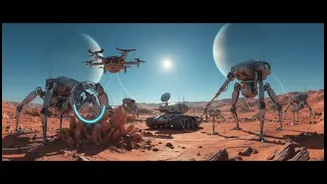
While the first test for CADRE is the Moon, the implications are solar-system-wide. This technology is not just about rovers; the software could be adapted for teams of flying robots or a mix of ground and air vehicles. Just this month, NASA's STRIDE initiative awarded contracts to seven companies to design the next generation of robotic mobility systems for Mars, focusing on accessing hard-to-reach areas. Imagine swarms of robots exploring Martian lava tubes, searching for water ice in permanently shadowed craters on the Moon, or even swimming through the subsurface oceans of icy moons like Europa. These cooperative teams could cover far more ground than a single explorer ever could, accelerating the pace of discovery.