







The Hidden Risks of a Damp Bed
A seemingly harmless damp bed is a perfect breeding ground for bacteria, mould, and fungi. The constant moisture, combined with your pet's body heat, creates a microclimate where skin infections can thrive. This can lead to persistent itching, redness,
unpleasant odours, and even painful fungal infections like pyoderma, which are common during the monsoon. Dampness doesn't just affect the skin; inhaling mould spores can lead to respiratory issues for your pet. Furthermore, a wet sleeping area is simply uncomfortable and can disrupt your pet’s rest, making them lethargic. Ensuring their personal space is consistently dry is one of the most effective preventative health measures you can take.
Choose the Right Materials
The type of bedding you choose can make a significant difference. Heavy fabrics like cotton absorb moisture and take a long time to dry in humid weather. Instead, opt for materials that are breathable and quick-drying. Raised or elevated beds are an excellent choice as they allow air to circulate underneath, preventing moisture from getting trapped between the bed and the floor. Look for beds with covers made from performance fabrics like polyester, nylon, or specialised 3D air mesh, which are designed to wick moisture away. A waterproof liner is also a great investment; it protects the inner cushion from getting wet, meaning you only need to wash and dry the outer cover.
Establish a Monsoon Cleaning Routine
During the rainy season, your regular cleaning schedule needs an upgrade. Aim to wash your pet’s bedding at least once a week, or more often if it gets visibly soiled or feels damp. Having at least two sets of bedding per pet is a practical strategy. This allows you to immediately replace the bedding with a fresh, dry set while the other is being washed and, more importantly, dried completely. Given the lack of sunshine, getting bedding fully dry can be a challenge. If possible, use a high-heat setting in your dryer to kill germs and ensure no moisture remains. On the rare sunny day, take advantage of the natural sunlight to air out the bedding.
Location Matters More Than You Think
Where you place your pet’s bed inside the home is also crucial. Avoid placing it near damp walls, leaky windows, or in poorly ventilated corners like basements. These areas harbor moisture and can make even a dry bed feel damp over time. Choose a well-ventilated spot away from drafts to ensure the bed stays as dry as possible. If your home is particularly humid, using a dehumidifier in the room where your pet sleeps can help manage the overall moisture level in the air, benefiting both your pet’s bedding and your own furniture.
Prevent the Dampness from Coming Inside
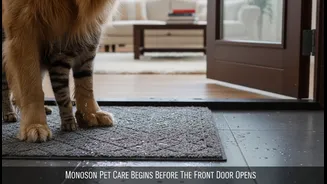
The best way to keep the bed dry is to prevent your pet from getting on it while wet. Designate a clean-up station near your home’s entrance. Keep a highly absorbent microfibre towel ready to dry your pet thoroughly after every walk, paying special attention to their paws, belly, and underarms where moisture gets trapped. Wiping their paws with a clean cloth or pet-safe wipes can remove mud and water before they track it through the house. For dogs who tolerate them, a lightweight raincoat and waterproof booties can be a game-changer, significantly reducing how wet they get in the first place.