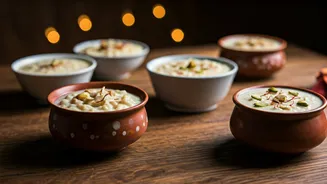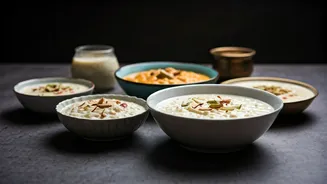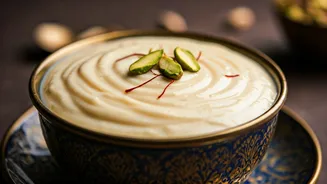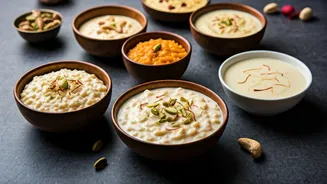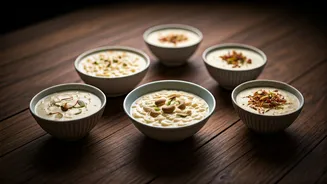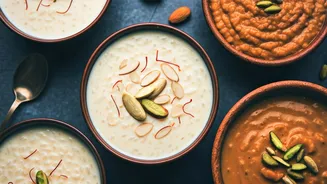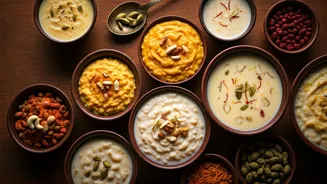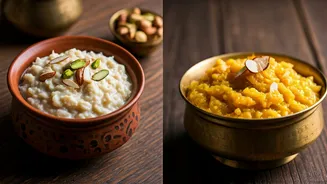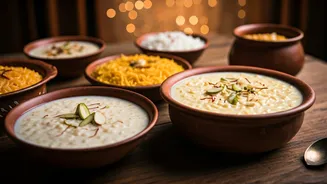



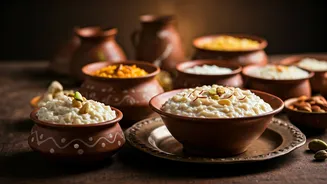
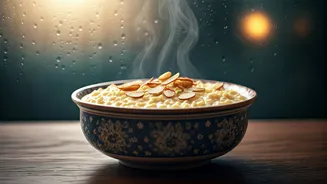


Nolen Gurer Payesh from West Bengal
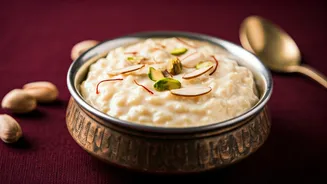
Come winter in Bengal, and the air fills with the aroma of Nolen Gurer Payesh. [18] This isn't your everyday kheer; its soul is 'nolen gur' or fresh date palm jaggery, a seasonal delicacy with a smoky, caramel-like flavour that is uniquely fragrant. [25,
18] Traditionally made with Gobindobhog rice, a short-grained, aromatic local variety, this payesh (the Bengali word for kheer) is slow-cooked in full-fat milk until thick and creamy. [26, 27] The jaggery is typically added towards the end, off the heat, to prevent the milk from curdling, infusing the pudding with its signature golden-brown hue and earthy sweetness that requires no other flavouring like cardamom or saffron. [26, 29]
Palada Pradhaman from Kerala
Travel south to Kerala, and you'll encounter the magnificent Palada Pradhaman, a cornerstone of the celebratory Onam Sadya feast. [16, 20] What sets this payasam apart is the use of 'ada', which are delicate, sun-dried rice flour flakes or pasta. [21, 16] These are cooked in milk with sugar, but the true art lies in the slow-cooking process. [21] Traditionally, the milk and sugar are simmered for hours, which caramelizes the lactose and gives the payasam a natural, beautiful pink hue and a rich, creamy consistency without any artificial colouring. [23, 16] Unlike many other kheers, classic Palada Pradhaman is elegantly simple, often omitting nuts or cardamom to let the flavour of the reduced milk and soft ada shine through. [21, 22]
Gil-e-Firdaus from Hyderabad
Meaning 'Clay of Paradise', Gil-e-Firdaus is a royal dessert from the Nizami kitchens of Hyderabad. [19] This creamy, luscious pudding is a staple at Hyderabadi weddings and celebrations. [32, 19] It features a unique and delightful combination of ingredients: grated bottle gourd (lauki), sago pearls (sabudana), and sometimes crushed basmati rice, all slow-cooked in rich, full-fat milk. [8, 32] The addition of khoya (milk solids) and cashew paste gives it an incredibly rich and melt-in-the-mouth texture. [19] The subtle flavours of cardamom and saffron enhance its fragrance, making it a truly heavenly experience. [8]
Chhena Poda from Odisha
While not a liquid kheer, Odisha's Chhena Poda deserves a special mention as it's often described as a baked cheese dessert akin to a cheesecake. [5, 11] The name literally translates to 'burnt cheese'. [5, 14] It originated serendipitously in the village of Dashapalla when a confectioner, Sudarshan Sahu, left leftover sweetened chhena (fresh cottage cheese) in a warm oven overnight. [5, 12] The result was a stunning dessert with a caramelized, browned crust and a soft, spongy interior. [5] Made by kneading fresh chhena with sugar and semolina, it's baked for hours, often wrapped in Sal leaves to impart a distinct aroma. [12, 5] The flavour is derived primarily from the caramelization of sugar, creating a unique sweet and slightly smoky taste. [5]
Kheer Komola from West Bengal
Another gem from Bengal, Kheer Komola is a refreshing and surprising dessert, especially popular in winter when oranges are abundant. [9] 'Komola' means orange in Bengali, and this dish daringly combines citrus with milk. [9] The process involves thickening full-cream milk into a rich, creamy base, sweetening it, and then letting it cool completely. [6] This cooling step is crucial; adding orange segments or juice to hot milk would cause it to curdle. [6, 10] Once at room temperature, fresh, sweet orange segments are gently mixed in. [9] The result is a delicate, fragrant kheer where the creaminess of the milk is beautifully cut by the bright, tangy flavour of the oranges. [10]
Lauki ki Kheer from North India
Using a vegetable in a dessert might sound unusual to some, but Lauki ki Kheer is a popular and beloved pudding across North India, especially during fasting periods like Navratri. [7, 31] Also known as Dudhi Kheer, it's made by sautéing grated bottle gourd (lauki) in ghee until it softens, which removes its raw taste. [31, 37] This is then simmered in milk until the mixture thickens and the gourd becomes tender. [35] Sweetened with sugar or condensed milk and often flavoured with cardamom and saffron, the lauki absorbs the milky richness, resulting in a creamy, light, and surprisingly delightful dessert. [7, 31]