


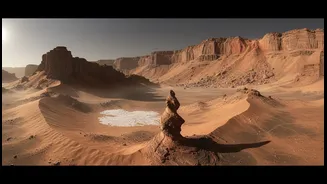




A Surprising Discovery in an Ancient Lakebed
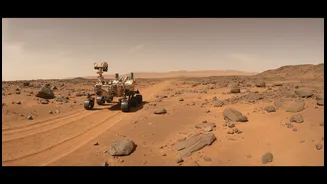
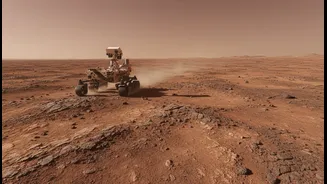
On the floor of Jezero Crater, a 45-kilometre-wide basin once home to a vast lake, NASA's Perseverance rover found something unexpected. Scientists had anticipated finding sedimentary rocks—layers of mud and sand deposited by ancient rivers, which are
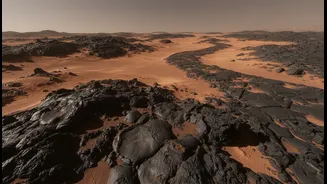
ideal for preserving signs of past life. Instead, the rover’s initial exploration of the crater floor revealed that it is largely made of igneous rocks. These are volcanic in origin, formed from cooling magma. This discovery was a welcome surprise, as these dark, volcanic stones act as geological time capsules, holding secrets to the Red Planet's fiery beginnings.
A Tale of Two Rocks
The landscape now being explored by Perseverance is one of stark contrasts. There are the familiar light-coloured, dusty grounds, which are often sedimentary rocks hinting at a watery past. And then there are the dark materials. These are primarily igneous rocks, rich in minerals like olivine and pyroxene, which form when molten rock cools. Some of these rocks, found in a formation nicknamed "Séítah," are believed to have formed from a thick body of magma cooling slowly underground. Others appear to be the result of lava flowing across the surface. This patchwork of light and dark tells a story of a world that was once both volcanic and wet, with different geological chapters laid bare across the crater floor.
Reading Mars's Geological History
The presence of both volcanic and sedimentary rocks in one location is a goldmine for scientists. Igneous rocks are excellent for dating. By analysing the crystals within them, scientists can determine precisely when they formed, establishing a timeline for major events in Mars's history. Crucially, many of these dark rocks also show evidence of being altered by water after they formed. This means researchers can now bracket the timeline of water on Mars. They know the volcanic rocks came first, and the lake came later. This helps answer a huge question: when was Mars's climate conducive to rivers and lakes, and for how long? The samples being collected by Perseverance for a potential future return to Earth could provide definitive answers.
From Volcanic Plains to the Search for Life
While volcanic rock is great for dating, sedimentary rock is better for preserving the delicate signs of ancient life, or biosignatures. The discoveries in Jezero Crater provide the best of both worlds. Scientists can use the dark, igneous rocks to understand the age and environmental context of the ancient lake, while searching the lighter, sedimentary layers for fossilised evidence of microbes. The rover has already found organic molecules—the building blocks of life—in these rocks, which is a tantalising clue, though not definitive proof of life itself. By understanding the full history of the area—from fiery volcanic activity to the calm waters of a deep lake—researchers can build a more complete picture of whether an environment capable of supporting life ever existed on the Red Planet.