



What Exactly Is This Eclipse?
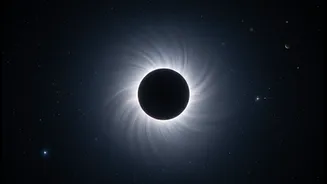
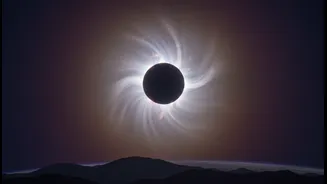
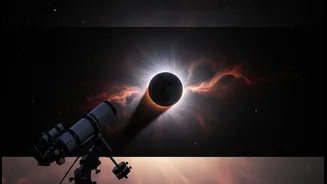
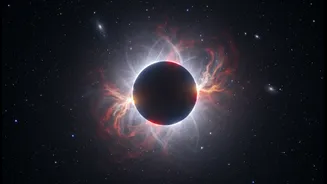
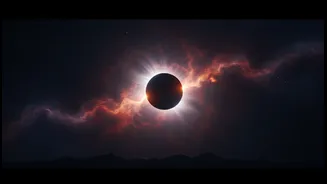
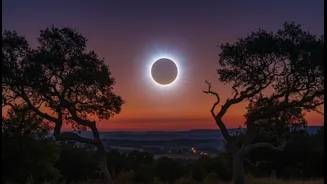
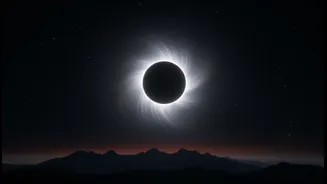
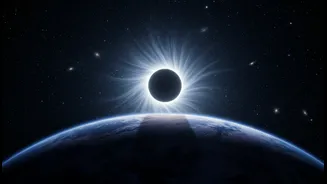
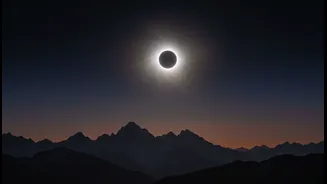
The event on August 12, 2026, is a total solar eclipse. This happens when the Moon passes directly between the Sun and Earth, completely blocking the face of the Sun. For a few brief minutes, day will turn into a deep twilight, and the Sun’s spectacular
outer atmosphere, the corona, will become visible. This is a much more dramatic event than a partial or annular eclipse, where the Sun is only partly obscured. The experience of totality is often described as a deeply moving, once-in-a-lifetime spectacle, as the temperature drops and the world is cast in an eerie light.
Can We See It From India?
The short and direct answer is no, the total solar eclipse will not be visible from India. The entire event takes place when it is nighttime across the subcontinent, from approximately 9:45 PM IST on August 12 to the early hours of August 13. Because the eclipse is not visible, traditional religious observances such as Sutak Kaal are not applicable. There are no restrictions on daily activities for people in India. While the eclipse itself is not visible, it remains a significant astronomical event that has captured global attention.
The Path of Totality: A Global Journey
The Moon’s shadow will trace a narrow path across the planet, starting in a remote part of Russia's Arctic. From there, it sweeps south over Greenland, the western coast of Iceland, and across the Atlantic Ocean. The path then makes landfall in northern Spain, crossing the country from the Atlantic coast to the Mediterranean, and touching a tiny corner of Portugal before ending over the Balearic Islands like Mallorca and Ibiza at sunset. Cities like Bilbao, Zaragoza, and Valencia are directly in the path of totality. A much wider area, including most of Europe, northwestern Africa, and parts of North America, will experience a partial eclipse.
Why This Eclipse Is So Special
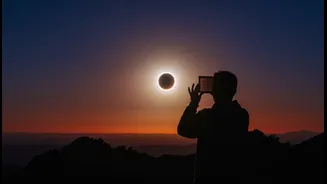
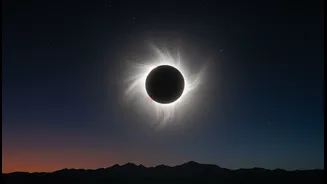
Several factors make this more than just another eclipse. Firstly, it is the first total solar eclipse to be visible from mainland Europe since 1999, making it a long-awaited event for the continent. For Spain, it's the first since 1905. Secondly, the event provides a rare celestial double feature. August 12 is also the peak of the annual Perseid meteor shower. Since a solar eclipse can only happen during a new moon, the night sky will be exceptionally dark, providing perfect conditions for watching for shooting stars after the eclipse excitement has passed. Finally, for viewers in Spain and the Balearic Islands, this will be a 'sunset eclipse', where the totally eclipsed Sun will hover just above the horizon, promising breathtaking and incredibly rare photo opportunities.
Safety First, Always
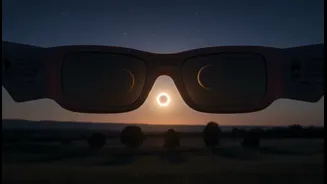
It is never safe to look directly at the Sun without proper protection, except during the very brief moment of total totality. During the partial phases, which make up the vast majority of the event, looking at the Sun without specialised eye protection can cause severe and permanent eye damage. Regular sunglasses are not sufficient. Anyone viewing the partial phases must use certified eclipse glasses or a handheld solar viewer that meets the ISO 12312-2 international standard. An alternative is to project an image of the Sun using a pinhole projector or binoculars (without looking through them). Only those physically inside the narrow path of totality can safely remove their glasses for the minute or two when the Sun is completely blocked.
How to Watch From India
Even though we can't see the eclipse in person, we won't be left out entirely. Major scientific and astronomical organisations like NASA typically provide high-quality, live-streamed coverage of total solar eclipses from various locations along the path of totality. This allows viewers from anywhere in the world to experience the awe of totality in real-time, complete with expert commentary explaining the science as it happens. These streams will be the best and safest way for people in India to witness this remarkable celestial alignment as it sweeps across the globe.