




The Billion-Dollar Problem of Breathing
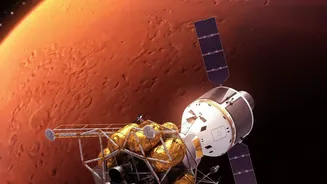
For decades, a human mission to Mars has been the ultimate goal for space agencies and private companies alike. But the logistics are staggering. Beyond the food, water, and shelter, a crew of astronauts would need a constant supply of breathable air.
Even more challenging is the return journey. A rocket powerful enough to lift off from the Martian surface and travel back to Earth requires a massive amount of liquid oxygen to burn its fuel—somewhere between 30 and 50 metric tons. Launching all that oxygen from Earth along with the crew is almost impossibly expensive and complex. It would be like packing not just your own air for a trip, but also all the fuel for your car to drive home, dramatically increasing the weight and cost of the mission. The solution, scientists have long argued, is to live off the land. This principle, known as In-Situ Resource Utilization (ISRU), means making what you need from the materials available at your destination. On Mars, the most abundant resource is its atmosphere, which is about 96% carbon dioxide (CO2).
A Toaster-Sized Tree on the Red Planet
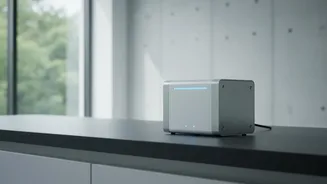
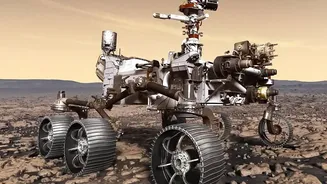
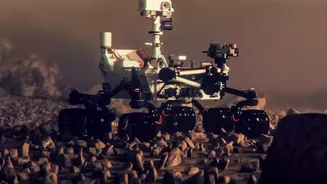
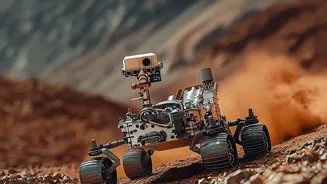
The proof that manufacturing oxygen on Mars was possible arrived with NASA's Perseverance rover in 2021. Tucked inside the rover was a car-battery-sized instrument called MOXIE, short for the Mars Oxygen In-Situ Resource Utilization Experiment. MOXIE's job was simple in concept but revolutionary in practice: to act like a mechanical tree, inhaling the Martian carbon dioxide and exhaling pure oxygen. It did this through a process called solid oxide electrolysis. The device would heat the thin Martian air to around 800 degrees Celsius and use an electric current to split the CO2 molecules, stripping away one oxygen atom and releasing carbon monoxide as a byproduct. Over 16 successful runs between 2021 and 2023, MOXIE proved the technology works in the harsh, real-world conditions of Mars, producing high-purity oxygen day and night, across different seasons. In total, it generated 122 grams of oxygen—enough to sustain a small dog for about 10 hours. While a small amount, it was a monumental first step, marking the first time humans had ever manufactured a resource on another planet for our own use.
From a Small Breath to a Rocket Tank
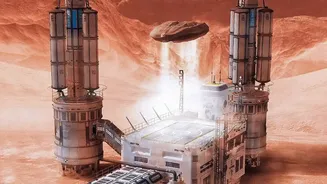
The success of MOXIE was a technology demonstration, proving the fundamental chemistry and engineering could withstand the Martian environment. The headline-making news now is the critical next phase: scaling up. Planetary scientists and engineers at institutions like MIT are now designing MOXIE's successor—a full-scale system capable of supporting a human mission. This involves a colossal leap in output. While the original MOXIE produced about 10 grams of oxygen per hour, a full-scale version would need to generate 2 to 3 kilograms per hour. This scaled-up system, perhaps called 'Big MOXIE' or something similar, would be a robust industrial plant, not a small experiment. It would likely be sent to Mars on a separate mission, landing years before astronauts arrive. Over a period of more than a year, it would work autonomously, day and night, to fill a large tank with the tens of tons of liquid oxygen needed for the Mars Ascent Vehicle to bring the crew home.
Powering the Future of Mars Exploration
A machine capable of producing several hundred times more oxygen than MOXIE will require a significant power source. Engineers estimate the scaled-up oxygen plant would need about 25 to 30 kilowatts of continuous power—far more than a rover's solar panels or radioisotope generator can provide. This means any future human landing site on Mars will first need its own dedicated power station, likely a deployable solar farm or a compact nuclear fission reactor, sent there specifically to run the oxygen-making hardware and other life-support systems. This approach fundamentally changes the architecture of a Mars mission. Instead of one massive, all-in-one launch from Earth, it becomes a series of precursor missions that build up essential infrastructure on the ground. By producing fuel for the return trip on-site, this technology dramatically reduces the mass that needs to be launched from Earth, making human missions more affordable, sustainable, and ultimately, repeatable. It turns the Martian atmosphere from a liability into a valuable asset, paving the way for a permanent human presence.