



Cosmic Crash Test Dummies
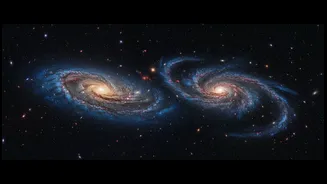
Across the vastness of space, astronomers observe countless galaxies in various stages of interaction. These galactic pairs, locked in a gravitational dance, serve as a natural laboratory. By studying these real-time collisions and mergers, scientists
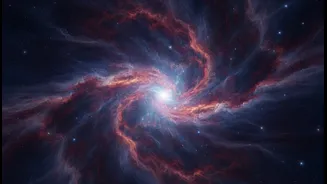
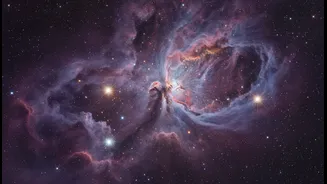
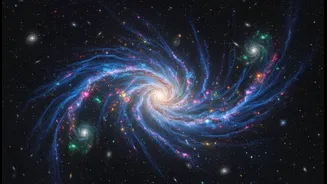
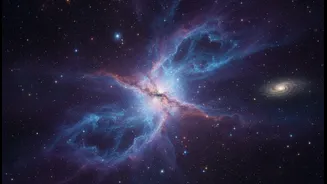
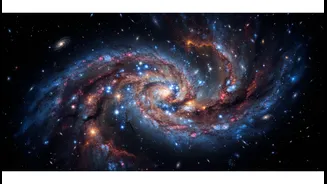
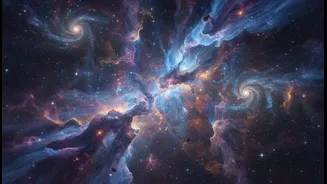
can witness the physical processes that unfold over millions of years. They look for tell-tale signs like distorted spiral arms, long streamers of stars and gas known as tidal tails, and bursts of new star formation triggered by colliding gas clouds. These interacting pairs are essentially cosmic previews, showing what happens when galaxies of different sizes and types get too close. This allows scientists to build and refine computer models that can simulate these epic events.
Simulating the Future
Predicting the future of a galaxy isn't about gazing into a crystal ball; it's about computation. Scientists use powerful supercomputers to run complex simulations involving the gravitational forces of billions of stars, gas, and dark matter. These models are first tested against observations of known interacting galaxies. If a simulation can accurately recreate a collision we can see, like the famous Antennae or Mice galaxies, scientists gain confidence in its predictive power. For our own galaxy, they input data from missions like the Hubble Space Telescope and Gaia, which have made precise measurements of the Andromeda galaxy's motion toward us. These simulations can then fast-forward billions of years to see the most likely outcomes.
Our Date with Andromeda
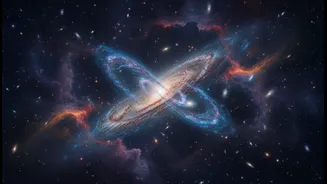
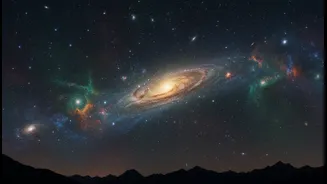
The primary subject of these predictions is the Andromeda Galaxy, our largest galactic neighbour. It's currently hurtling towards the Milky Way at about 110 kilometres per second. For years, a head-on collision was considered almost inevitable in about 4.5 billion years. However, more recent and precise data have added nuance to this prediction. Some 2025 studies suggest the odds of a merger within the next 10 billion years are closer to 50-50, taking into account the gravitational influence of smaller satellite galaxies. Even if they miss on the first pass, gravity will likely draw them back together for an eventual merger. This long, drawn-out process will result in the two spiral galaxies combining to form a new, giant elliptical galaxy, which some have nicknamed 'Milkomeda'.
A New Night Sky
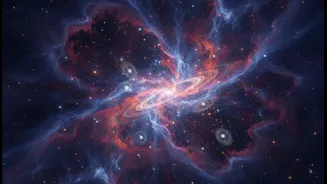
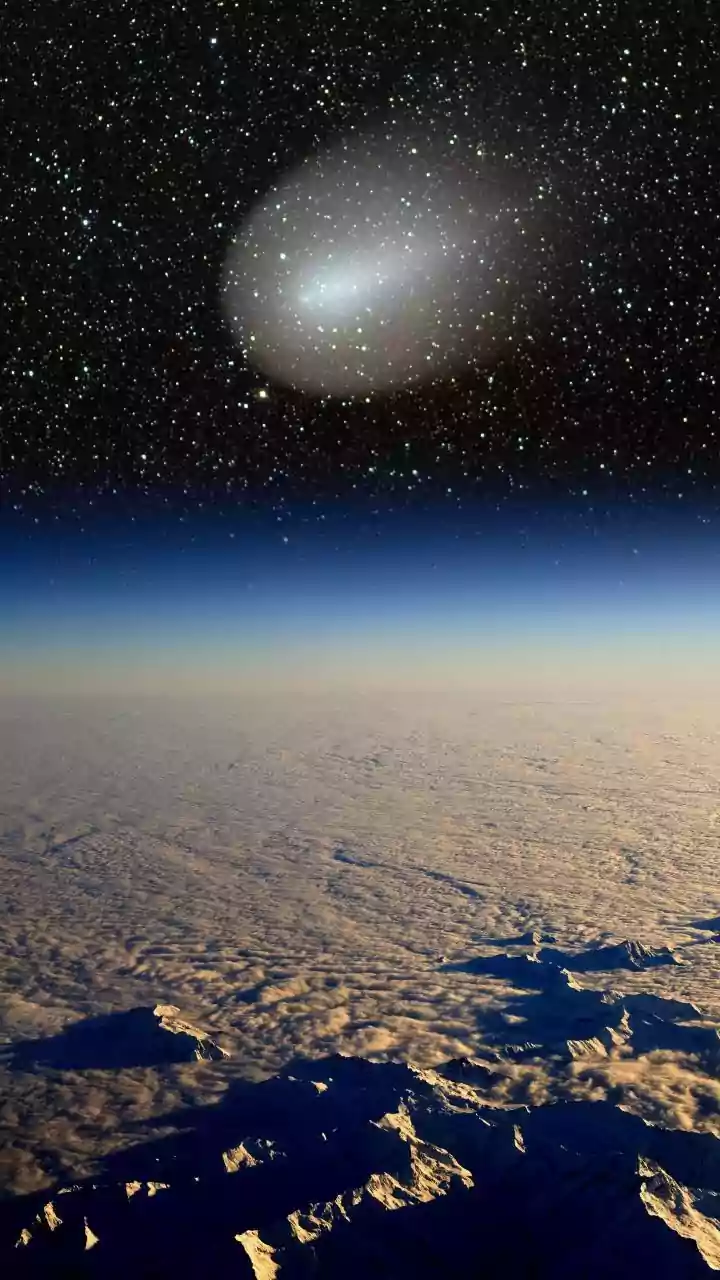
What would this cosmic merger mean for a hypothetical future observer on Earth? Contrary to what action movies might suggest, individual stars are highly unlikely to collide. The space between stars is simply too vast. Instead, the event would be a slow, gravitational re-shuffling. Over millions of years, the structure of our galaxy would be completely distorted. The night sky would put on a spectacular show as Andromeda grows to fill the view, and the collision of interstellar gas clouds would trigger massive bursts of star formation, lighting up the cosmos. Eventually, the two supermassive black holes at the center of each galaxy would also merge, a process that could release incredible amounts of energy. Our solar system would likely survive but could be flung into a new, more distant orbit within the new Milkomeda galaxy.