




What Exactly Are Reflective Roof Coatings?
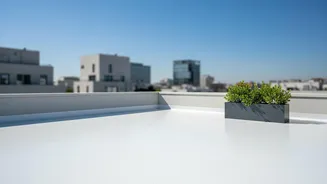
Reflective roof coatings, often called 'cool roof' paints, are specialised paints designed to reflect more sunlight and absorb less heat than a standard roof. Think of it like choosing to wear a white shirt instead of a black one on a hot day; the lighter
colour keeps you cooler. These are not just ordinary white paints; they are engineered with advanced technology and materials to provide significant cooling effects. While a standard grey concrete roof might absorb 70-80% of the sun's heat, a good quality reflective coating can reflect 70-85% of it away from your building. This simple principle has a profound impact on the temperature of your roof and, consequently, your home.
The Science of Staying Cool
The effectiveness of a cool roof coating is measured by two key properties: solar reflectance and thermal emittance. Solar reflectance is the ability of the surface to reflect sunlight. Thermal emittance is its ability to release any heat it has absorbed. A good coating has high values for both. To make it easier for consumers, these two properties are combined into a single value called the Solar Reflective Index (SRI). The SRI scale goes from 0 (a standard black surface that absorbs most heat) to 100 (a standard white surface). The higher the SRI value, the cooler the roof will stay under the sun. For the harsh Indian climate, a high SRI rating is crucial for lowering indoor temperatures and reducing energy costs.
The Big Claim: A Four-Degree Drop?
The headline's claim of lowering indoor temperatures by up to four degrees Celsius is well-supported by studies, particularly for rooms directly under a treated roof. Research in Indian cities shows that on a concrete slab roof, a good quality coating can lead to a room temperature drop of 2°C to 4°C. Some studies show even greater reductions in certain conditions. The roof's surface temperature can drop dramatically, by as much as 15°C to 22°C. This prevents a massive amount of heat from ever entering the building in the first place. The exact reduction depends on factors like the building's insulation, ventilation, the quality of the coating, and the intensity of the summer sun in your city.
More Than Just a Cooler Room
The benefits extend far beyond just feeling more comfortable. For homes with air conditioning, a cooler roof means the AC unit doesn't have to work as hard, leading to significant energy savings. Studies and product manufacturers report reductions in cooling costs from 15% to as high as 30%. This not only saves you money but also reduces strain on the electrical grid during peak summer demand. Furthermore, by reducing the extreme temperature fluctuations that cause materials to expand and contract, these coatings protect your roof from cracking and degradation, potentially extending its lifespan. On a larger scale, widespread adoption of cool roofs can help reduce the 'urban heat island' effect, where cities are significantly warmer than surrounding rural areas.
Choosing and Applying the Right Coating
With the market full of options, it's important to choose wisely. Don't just opt for the cheapest white paint; look for products specifically marketed as 'cool roof' or 'heat reflective' coatings and check for a high SRI value. White is the most effective colour, but some modern coatings in light pastel shades can also offer good performance. These coatings come in various types, such as acrylic, elastomeric, and silicone-based, each with different properties regarding durability and water resistance. Proper application is key to their success. The surface must be thoroughly cleaned and prepared before applying the coating, usually in two layers, to ensure it adheres properly and performs as expected. Failing to do so is a common reason for coatings failing in India's harsh climate.
The Cost Factor: Investment vs. Expense
The cost of applying a reflective roof coating in India can vary widely based on the brand, the type of coating, and labour charges. For a typical 1,000-square-foot roof, you might expect to pay anywhere from ₹60,000 to ₹2,00,000. While this is a significant upfront cost, it's best viewed as an investment. The savings on electricity bills can lead to the investment being recovered in as little as two to three years for an air-conditioned home. When you factor in the increased comfort, the extended life of your roof, and the reduced maintenance, the long-term value becomes clear. It is a practical and effective way to combat the summer heat.